FDA approves GSK’s Votrient for new licence
pharmafile | April 30, 2012 | News story | Sales and Marketing | Cancer, FDA Approval, GSK, Votrient
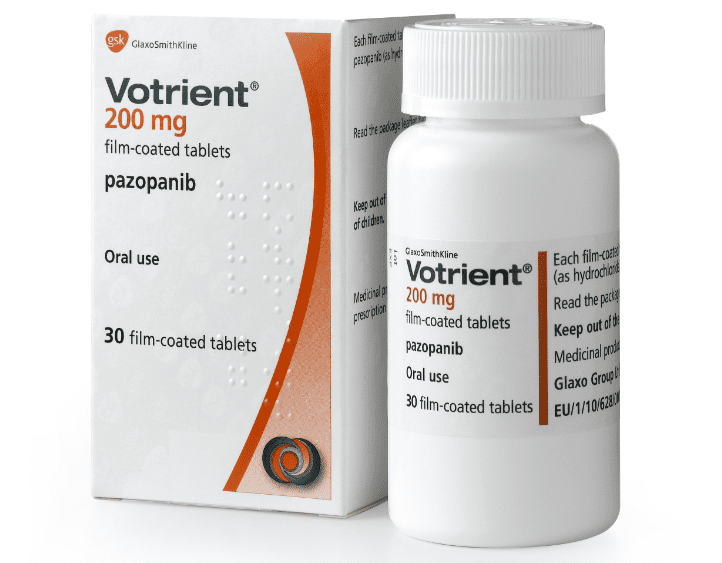
The FDA has approved GlaxoSmithKline’s cancer pill Votrient for the treatment of a rare group of cancers – but has insisted on stringent label restrictions.
The US regulator has already approved Votrient (pazopanib) for the treatment of kidney cancer, and has now done the same for patients with advanced soft tissue sarcoma (STS) who have received prior chemotherapy.
Soft tissue sarcomas are a group of cancers that originate in the mesenchymal cells, which are associated with fat, muscle, nerve, blood vessels and other connective tissues.
The patient population for this indication is small, but the drug’s US label will emphasise that Votrient has not been shown to be effective in patients with adipocytic STS or gastrointestinal stromal tumours.
“It is such a great moment to bring forth this treatment option for patients, as it represents one of the few new medical options to be provided to patients with advanced STS over the last 30 years,” said Paolo Paoletti, president of GSK Oncology.
The FDA approval is based on the Phase III PALETTE trial, on which GSK collaborated with the European Organization for Research and Treatment of Cancer.
The study did not look at patients with GIST or adipocytic sarcomas.
However, severe and fatal hepatotoxicity has been observed with Votrient in trials, and doctors are advised to closely monitor hepatic function.
The American Cancer Society says there were just 11,000 patients with STS in the US last year, and fewer of those were advanced cases.
Despite this, it is a therapy area in which pharma companies are interested: for example, PharmaMar’s Yondelis (trabectedin) is recommended by the UK’s NICE as a possible treatment for people with advanced STS.
And in February, Merck KGaA signed a $25 million agreement with Threshold Pharmaceuticals to develop the small molecule drug TH-302, which is in a Phase III study with Johnson & Johnson’s Doxil (doxorubicin), versus Doxil alone in STS patients.
Lilly is also looking at STS as part of a wider clinical develop programme for its cancer drug tasisulam.
Meanwhile Votrient has been approved in the US for advanced renal cell carcinoma (RCC) since 2009 and is considered to be a potential market leader.
Analyst Decison Resources says the drug will become the leading RCC agent by 2019, overtaking Pfizer’s Sutent in 2016 and gaining a market share of 49 per cent.
Adam Hill
Related Content

GSK’s Exdensur receives MHRA approval for asthma and rhinosinusitis
GSK’s Exdensur (depemokimab), a twice-yearly biological medicine, has received approval from the UK Medicines and …

Central nervous system cancer metastases – the evolution of diagnostics and treatment
The current forms of immunotherapy, how T cell therapy works and what the future holds

BioMed X and Servier launch Europe’s first XSeed Labs to advance AI-powered antibody design
BioMed X and Servier have announced the launch of Europe’s first XSeed Labs research project, …