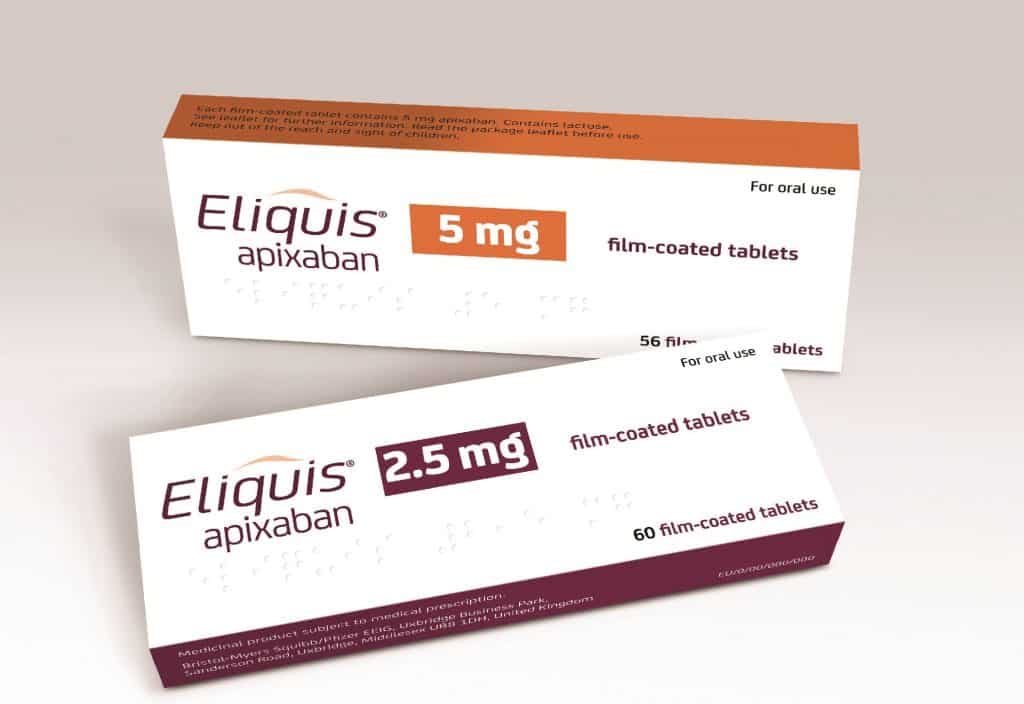
Eliquis approved by NICE
pharmafile | February 28, 2013 | News story | Sales and Marketing | BMS, Eliquis, NICE, Pfizer
In a move which will cheer Bristol-Myers Squibb and Pfizer, NICE has recommended oral blood-thinner Eliquis for use on the NHS in patients with the most common type of irregular heartbeat.
NICE’s final guidance says Eliquis (apixaban) can be used as an option for the prevention of stroke and systemic embolism in some people with non-valvular atrial fibrillation (AF).
At around £800 per year, NICE decided the drug is cost effective compared with the 50-year old warfarin, being more effective at preventing strokes or systemic embolism, and causing less bleeding in patients.
“Intracranial bleeding has a high mortality rate and a large impact on a person’s quality of life, and is the most feared bleeding outcome for people taking any type of anticoagulant,” explained Professor Carole Longson, NICE Health Technology Evaluation Centre director.
Eliquis was made available in the UK in this indication last December after approval in Europe – the first time the drug has been authorised for this patient group anywhere in the world.
AF sufferers are more likely to develop blood clots because their erratic heart rhythm causes turbulent blood flow within the heart, leading to a five-fold increase in stroke risk – it is believed to cause 12,500 strokes in the UK every year.
The NICE decision is an important breakthrough for the BMS/Pfizer alliance since rivals such as Bayer’s Xarelto (rivaroxaban) and Boehringher Ingelheim’s Pradaxa (dabigatran) have already been approved as options by NICE.
Eliquis is an oral direct Factor Xa inhibitor, taken twice a day, which targets a key blood-clotting protein to prevent clots forming.
The ARISTOTLE and AVERROES studies compared Eliquis to warfarin in 18,000 patients with NVAF, and Eliquis to aspirin in 5,500.
“The Appraisal Committee heard from patient experts that warfarin can have a greater impact on a person’s quality of life than AF itself,” commented Longson.
As well as needing regular monitoring, warfarin also has multiple interactions with food, alcohol and drugs that can cause further inconvenience for patients.
NICE’s guidance also recommends that the decision about whether to use Eliquis should be made after an ‘informed discussion’ about its risks and benefits compared with warfarin, Xarelto and Pradaxa.
Eliquis is already indicated for the prevention of venous thromboembolic events in adult patients who have undergone elective hip or knee replacement surgery.
Adam Hill
Related Content

Digital mental health technologies – a valuable tool in supporting people with depression and anxiety
The potential benefits of digital mental health technology for managing depression, anxiety and stress, together …

Combination treatments: Takeda’s Implementation Framework and the broader landscape
Pharmafile talks to Emma Roffe, Oncology Country Head (UK & Ireland) about the combination treatment …
NICE recommends Pfizer’s new once-weekly treatment for haemophilia B on NHS
Walton Oaks, 21st May 2025 – Pfizer Ltd announced today that the National Institute for Health and Care …