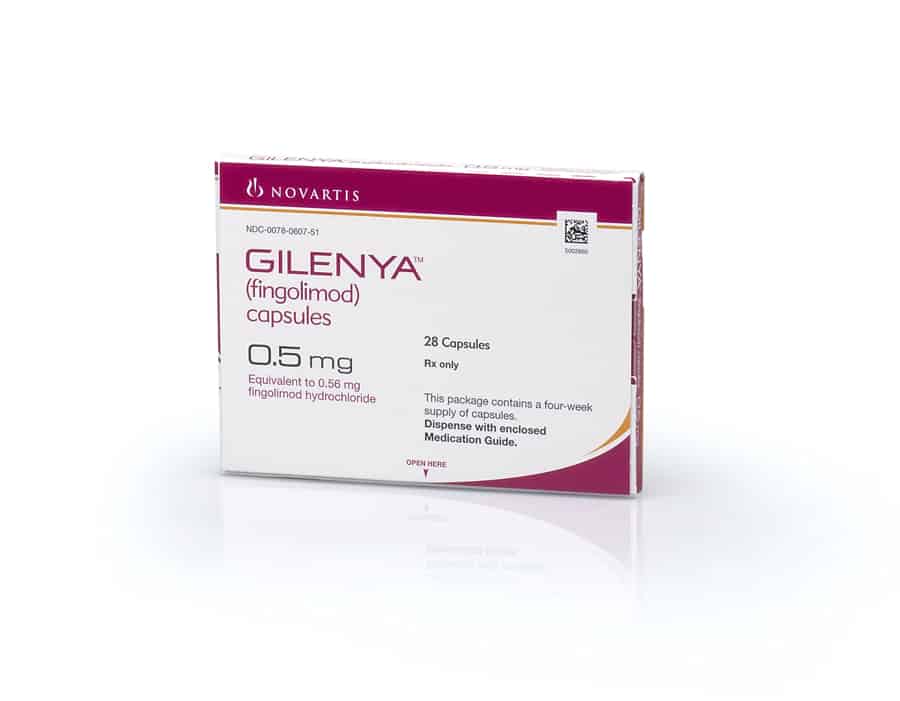
Discount fails to sway NICE on Gilenya
pharmafile | December 1, 2011 | News story | Sales and Marketing | NICE, Novartis, gilenya
NICE has once again rejected Novartis’ multiple sclerosis pill Gilenya despite the firm offering a patient access scheme.
In its second draft guidance the watchdog said it could not recommend Gilenya (fingolimod) for highly active relapsing-remitting multiple sclerosis (RRMS) and for patients who experience at least one relapse in a year despite being treated with beta interferon.
The watchdog says the drug is not cost effective when compared to existing, NICE-recommended treatments.
Since the last draft guidance, Novartis has also offered a new patient access scheme that will reduce the cost of its drug, but the details of the price cut remain confidential.
But this was still not enough to sway the watchdog given its ongoing concerns about the drug’s cost-effectiveness when compared to Avonex, Rebif and best supportive care.
Andrew Dillon, chief executive of NICE, said: “While Novartis submitted evidence that shows [Gilenya] can reduce relapses, our independent committee has not been convinced that it is a cost-effective treatment option for the NHS, even with the proposed patient access scheme.”
But despite the setback, Novartis told Pharmafocus that it had won some concessions with this second draft guidance, and was confident that it would eventually be recommended in the final guidance due next April.
One of the concessions is that NICE has now decided that Biogen’s injectable Avonex (interferon beta 1a) is a direct comparator to Gilenya, whereas before it had stated that Avonex was not widely used in the NHS.
In one key clinical study Gilenya was more effective in reducing relapse rates and relapse frequency whilst also resulting in less deterioration when compared to Avonex, and was the main trial used in Novartis’ submission to NICE.
NICE is also now comparing the drug to Merck Serono’s interferon treatment Rebif and ‘best supportive care.’
Avonex currently costs £9,061 per year and Rebif costs £9,088 for a normal dose and £12,068 for a higher dose form of the drug.
NICE is giving equal weighting to these treatments and is saying that Gilenya’s annual cost of £19,665 per patient is not cost effective .
Novartis says it agrees with NICE that Rebif and Avonex should be used as direct comparators, but disputes that best supportive care should be considered, as their drug can never be cost effective when compared to a treatment that costs nothing.
But it should be noted that Gilenya is a much more expensive drug than the beta interferon products, and would still be at the higher end of NICE’s pricing formula.
NICE has also said it no longer believes that Biogen’s Tysabri (natalizumab) is any longer a direct comparator, after it was given new information on the use of MS treatments in the UK.
Tysabri costs just £14,730 per year, but includes additional administration costs. In its submission, Novartis claims that Tysabri’s administration increases its total cost to £21,257.
This negative decision rounds off a disappointing week for Novartis after NICE did not recommend NHS funding of its eye disease drug Lucentis (ranibizumab), for two of its new licences.
‘Disheartening news’
Dr Jayne Spink, director of policy and research at the MS Society, said: “This is incredibly disheartening news for people with MS and it will leave some people with no effective treatment option.
“We would like to see Gilenya freely available to all those that could benefit and remain hopeful that this will happen.”
Spink added that this was not a final decision, and said the MS society would encourage people with multiple sclerosis to contact NICE with their views.
Ben Adams
Related Content

Digital mental health technologies – a valuable tool in supporting people with depression and anxiety
The potential benefits of digital mental health technology for managing depression, anxiety and stress, together …

Novartis receives SMC approval for early breast cancer treatment
Novartis has announced that its treatment for early breast cancer, Kisqali (ribociclib), has received approval …

Combination treatments: Takeda’s Implementation Framework and the broader landscape
Pharmafile talks to Emma Roffe, Oncology Country Head (UK & Ireland) about the combination treatment …