Conservative claims on cancer drugs disputed
pharmafile | April 6, 2010 | News story | Sales and Marketing | NHS, NICE, election
A think tank has disputed Conservative claims that funds can be diverted to pay for greater access to new cancer drugs on the NHS.
The Conservative Party says that if it wins the general election, it would not raise the National Insurance tax as Gordon Brown’s Labour party has pledged to do, and would instead divert cash spent on raising these taxes into a new fund for cancer treatment.
The Tories say it would cost the £200 million to implement the 1% National Insurance (NI) tax rise, but the King’s Fund think tank say this promise is flawed.
Speaking to the BBC, King’s Fund chief economist John Appleby, the King’s Fund said the cash was “not there to be saved”.
“The £200 million they say will be needed to fund extra cancer drugs essentially has come out of the current budget. That means stopping something else for other people.”
The think tank said that as the NI increase has not yet been implemented, and given other pressures on the NHS budget, the £200 million funding would need to be generated by planned cash-releasing efficiency savings.
He concluded: It’s a sleight of hand in the sense that the money is not there to be saved.”
But Appleby has now felt it necessary to clarify his statement, making it clear he was not accusing the Conservative party of dishonesty.
In a statement, the think tank said: “If the phrase ‘sleight of hand’ used when commenting earlier today suggested this, he would wish to withdraw it.”
The NHS will be a key election battleground, and the Conservatives have identified access to cancer treatments as being particularly resonant with voters.
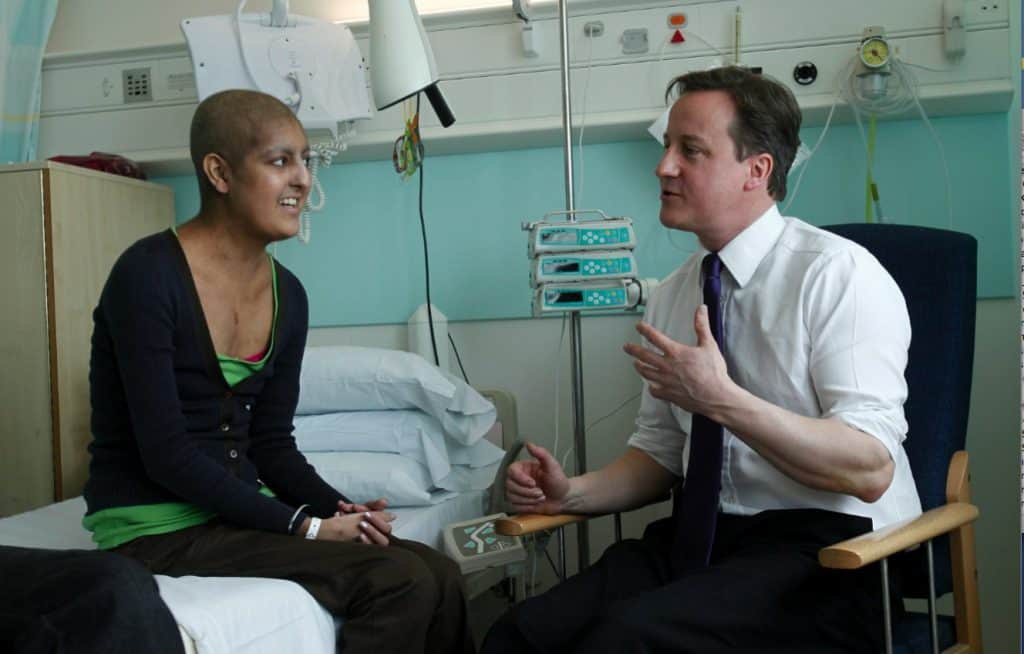
Speaking to kidney cancer drug campaigners at his constituency in Witney, Oxfordshire on 3 April, David Cameron said: “We want to get drugs together more quickly. In the UK today there are thousands of people who want a certain cancer drug, whose doctors tell them they should have one, who don’t get it.
Shadow Health Secretary Andrew Lansley said: “We’ve got to arrive at a point where people who have cancer, who know there is a new cancer medicine that sometimes is clearly shown to extend life, or improve the quality of life, and their prospects, that those drugs are going to be available on the NHS.”
Since November 2008, NICE has considered 14 new treatments for cancer and approved nine of these for NHS patients, based on clinical evidence of efficacy balanced by cost-effectiveness.
The Conservatives have said that they are not criticising NICE, but wanted to see a “shift in the balance of decisions”.
The Conservatives have also pledged to reform how pharma companies are reimbursed for medicines. The party says it will adopt ‘value based pricing,’ with prices linked directly to how effective medicines are judged to be.
Related Content

Digital mental health technologies – a valuable tool in supporting people with depression and anxiety
The potential benefits of digital mental health technology for managing depression, anxiety and stress, together …

A community-first future: which pathways will get us there?
In the final Gateway to Local Adoption article of 2025, Visions4Health caught up with Julian …

The Pharma Files: with Dr Ewen Cameron, Chief Executive of West Suffolk NHS Foundation Trust
Pharmafile chats with Dr Ewen Cameron, Chief Executive of West Suffolk NHS Foundation Trust, about …