China accuses GSK of large scale bribery
pharmafile | July 12, 2013 | News story | Medical Communications, Research and Development, Sales and Marketing | Avandia, China, GSK, Seroxat
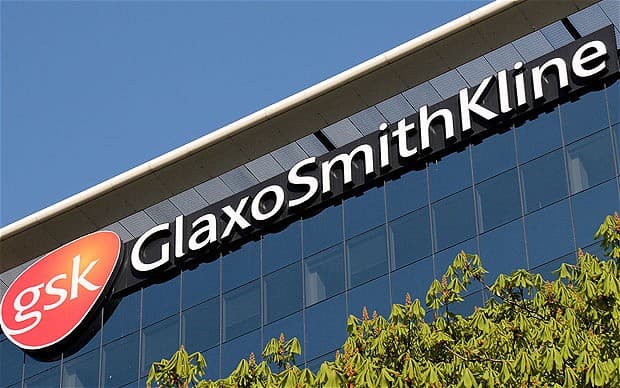
Health officials in China say they have found evidence GSK tried to generate sales and raise drug prices by bribing government officials, industry associations, hospitals and doctors.
The allegations have come from China’s Ministry of Public Security which said yesterday afternoon that: “Following initial questioning, the suspects have confessed.”
The Ministry said that the case was however still ongoing, but refused to name the members of staff involved, or their roles within the company. Under China’s legal system, the GSK executives will be formally charged after the completion of the preliminary investigations.
It added: “There are many suspects, the illegal behaviour continued over a long time and its scale is huge.” GSK is already under investigation in the country, alongside a number of other firms, into allegations of price fixing.
Last month GSK also dismissed its top researcher in China following claims of fraud in a scientific paper.
The Telegraph newspaper is reporting that at least 30 GSK employees are under house arrest and under constant surveillance in the country, in line with these new allegations.
GSK said in a statement: “We continuously monitor our businesses to ensure they meet our strict compliance procedures – we have done this in China and found no evidence of bribery or corruption of doctors or government officials. However, if evidence of such activity is provided we will act swiftly on it.”
China is seen as an important market for GSK and all of big pharma, given its 1.3 billion population size and growing middle class who can afford better healthcare. The firm has invested heavily in the region, but revenue from the Chinese market only accounted for 3% of the company’s global sales last year.
Tarnished reputation
The bigger threat will be to GSK’s reputation, as the London, UK-based firm which has spent a number of years trying to lift its public image under the tenure of Sir Andrew Witty.
But this latest allegation will only add to a string of problems for the firm, which saw it pay a $3 billion (£2 billion) fine in 2012 over accusations it continued to sell diabetes drug Avandia, despite it raising the rise of cardiovascular events, and for unethical marketing practices for a number of drugs at the turn of the millennium.
In April this year the company was also accused of market abuse on the UK by the Office of Fair Trading, which is currently investigating whether it paid rivals to delay the release of generic versions of GSK’s antidepressant Seroxat. It found guilty, it could be fined up to £2.6 billion.
Ben Adams
Related Content

GSK’s Exdensur receives MHRA approval for asthma and rhinosinusitis
GSK’s Exdensur (depemokimab), a twice-yearly biological medicine, has received approval from the UK Medicines and …

Multiple myeloma treatment approved in Japan
GSK’s Blenrep (belantamab mafodotin) combinations have been approved by Japan’s Ministry of Health, Labour and …

CARBOGEN AMCIS manufacturing license advances services in China
Swiss pharma manufacturing company, CARBOGEN AMCIS, has announced that its facility in Shanghai, China, has …