Cheaper vaccines for developing countries
pharmafile | March 24, 2010 | News story | | Vaccine, developing world, vaccines
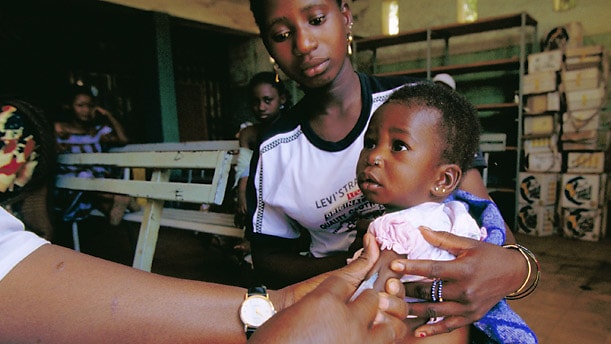
GlaxoSmithKline and Pfizer have signed a deal to supply anti-pneumococcal drugs to developing countries at steeply discounted prices.
GSK will supply doses of its vaccine Synflorix over ten years, while Pfizer will do the same with its Prevenar 13 brand.
The companies have signed up to an Advance Market Commitment (AMC), a new type of funding arrangement that guarantees the availability of initial purchase funds, thereby enabling vaccine makers to invest in development and manufacturing capacity.
Public-private health partnership the GAVI Alliance and five donor countries – the UK, Canada, Russia, Norway and Italy – will provide funding for the initiative.
In return GSK and Pfizer have agreed to make vaccines available for ten years at a maximum price of $3.50 per dose even after donor contributions have ceased.
“The coalition that has made this possible is providing new means to transform global public health,” said GSK chief executive Andrew Witty.
“The typical 15-20 year ‘vaccine gap’ between access in developed countries versus the world’s poorest countries is unacceptable.”
The AMC means children in Africa will start to receive the vaccines this year, he added.
“Pfizer is dedicated to broadening access around the world to our medicines, and public-private partnerships such as the one involving the AMC are critical to achieving true inroads on this front,” agrees Pfizer chief executive Jeffrey Kindler.
WHO estimates that pneumococcal disease is the leading cause of vaccine-preventable death worldwide in children under five.
The condition takes in a group of illnesses caused by the bacterium S. pneumoniae, including bacteremia/sepsis, meningitis, pneumonia and acute otitis media.
The UK, Italy, Canada, Russia, Norway and the Gates Foundation have committed $1.5 billion to the project, with GAVI pledging $1.3 billion to 2015.
GAVI estimates that it could prevent more than seven million childhood deaths by 2030.
To date 45 countries are GAVI-eligible, receiving access to drugs for yellow fever, Hepatitis B, rotavirus, measles, pentavalent and Haemophilus influenzae type B as well as pneumococcal.
Related Content

BioNet receives positive EMA opinion on new pertussis vaccine
BioNet has received a positive opinion from the Committee for Medicinal Products for Human Use …

Recipharm offers manufacturing support to vaccine trial from ImmBIO and iiCON
Recipharm, a contract development and manufacturing organisation (CDMO), has successfully manufactured PnuBioVax, a new protein-based …

EMA lifts temporary ban on chikungunya vaccine Ixchiq following safety review
After completing a safety review of Ixchiq – a vaccine for chikungunya – the European …