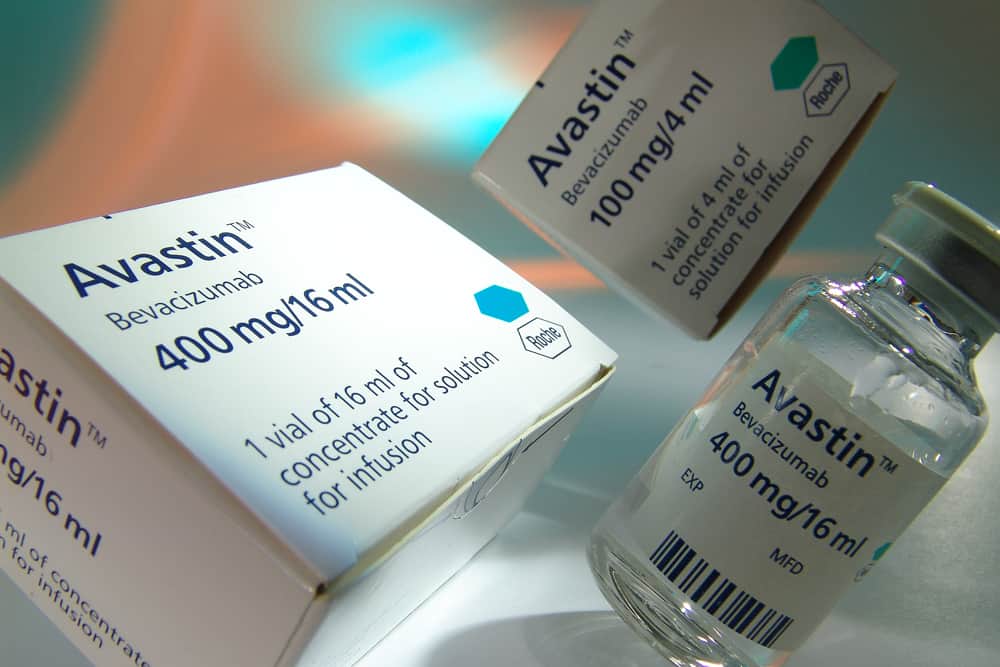
Avastin gets GBM approval
pharmafile | June 18, 2013 | News story | Research and Development, Sales and Marketing | GBM, Roche, avastin
Roche has received a major boost with the first approval in early treatment of the most aggressive form of brain cancer for its anti-angiogenic therapy Avastin.
The drug, which has multiple indications for a variety of cancers worldwide, can now be used in Japan for the treatment of newly-diagnosed glioblastoma (GBM).
It is available in 60 other countries for patients with progressive GBM following prior therapy, but the manufacturer will hope the Japanese Ministry of Health, Labour and Welfare’s decision opens the floodgates in this new indication.
In the Phase III AVAglio trial last year, Avastin (bevacizumab) helped people with newly-diagnosed GBM live longer without their disease worsening.
Each year around 240,000 people worldwide are diagnosed with the disease – the most common and aggressive type of glioma, which is in turn a prevalent type of malignant primary brain tumour.
In Japan it will be marketed by Roche subsidiary Chugai Pharmaceutical and can be used for patients with malignant glioma, including newly-diagnosed GBM in combination with radiotherapy and temozolomide chemotherapy, and as monotherapy for recurrent GBM following other treatments.
“People with newly diagnosed glioblastoma who received Avastin plus radiotherapy and temozolomide chemotherapy in the pivotal study experienced a significantly longer period of time without their cancer worsening,” said Roche’s chief medical officer Hal Barron.
The approval was based on AVAglio, the Phase II BRAIN study and on a Japanese Phase II study (JO22506), and applications for first-line treatment have been filed in the EU and Switzerland.
While GBM is an attractive area for pharma, it is also fraught with problems: earlier this year Merck’s oncology programme suffered a setback as a Phase III trial of its investigational integrin inhibitor cilengitide failed in patients with newly-diagnosed GBM.
The drug did not meet its primary endpoint of significantly increasing overall survival when added to the current standard chemoradiotherapy regimen (temozolomide and radiotherapy).
It was particularly unwelcome news because cilengitide was the first in this new class of targeted anticancer therapies to have reached Phase III: the drug is thought to work by targeting integrins involved in tumour cell growth and which are over or aberrantly-expressed in many cancers.
There is also another Phase I/II trial of the drug ongoing in non-small cell lung cancer (NSCLC).
Actelion’s dual endothelin receptor antagonist Macitentan is currently being investigated in in patients with recurring GBM.
Apart from GBM, Avastin is approved in Europe for advanced breast, colorectal, non-small cell lung, kidney and ovarian cancers and in the UK for NSCLC, colorectal and kidney cancers.
Adam Hill
Related Content

Roche adds 2,176 NVIDIA Blackwell GPUs to its hybrid-cloud AI factory
Roche has expanded its global AI infrastructure with a NVIDIA AI factory, adding 2,176 high-performance …
Roche receives CE Mark for blood test to help rule out Alzheimer’s
Roche has been granted CE Mark approval for its Elecsys pTau181 test, the first in …

Roche candidate shows early promise for treating haemophilia A
Roche has announced encouraging early results from its phase 1/2 trial of NXT007, an investigational …