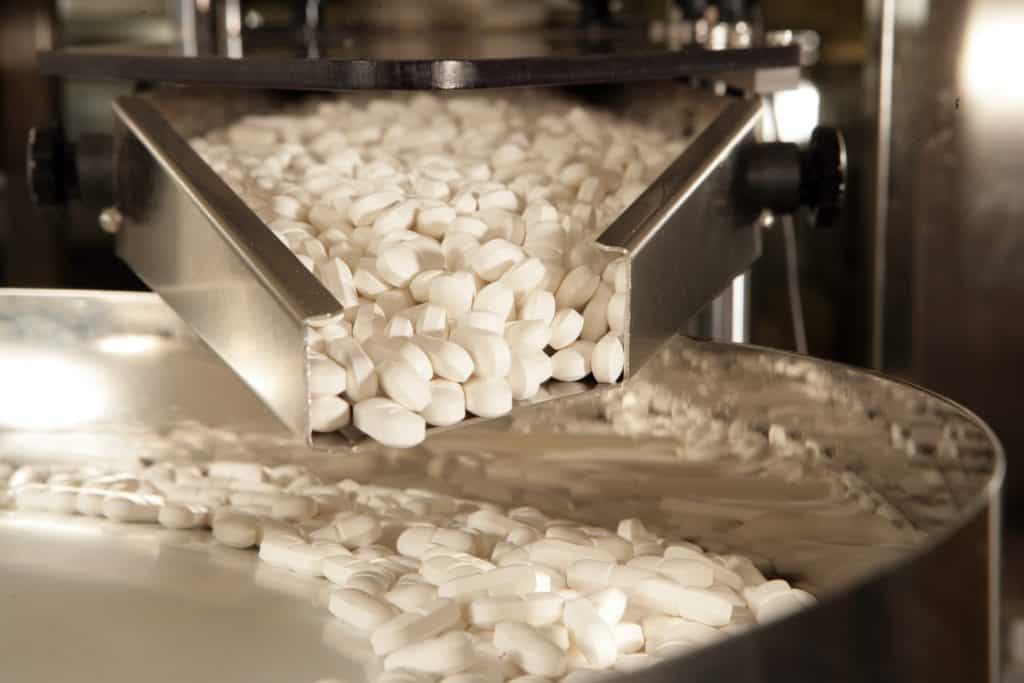
Augmentin recall expanded on contamination fears
pharmafile | July 26, 2011 | News story | Manufacturing and Production, Sales and Marketing | Augmentin, GSK, recalls
GlaxoSmithKline has been drawn further into concerns about contamination of pharmaceuticals, foods and beverages with plasticiser compounds, after authorities in Hong Kong ordered a second recall of its Augmentin antibiotic.
Last month, Hong Kong’s Department of Health issued recall notices for powdered Augmentin (amoxicillin and clavulanic acid), as well as other pharmaceuticals such as Well Tab – a drug for gastric complaints made by Taiwanese firm China Chem and Pharm Co. Ltd – and five products made by Marching Pharmaceutical Ltd.
Now, GSK has also been ordered to recall 375mg tablet forms of Augmentin, while Vietnam has said it plans to test samples of the company’s product for plasticisers.
The plasticisers under scrutiny include DEHP (diethylhexyl phthalate), DIDP (diisodecyl phthalate) and DINP (diisononyl phthalate), according to Hong Kong’s Department of Health.
Analyses carried out by Hong Kong’s Government Laboratory found levels of DIDP in samples of Augmentin up to 2.7 parts per million, as well as 1.1ppm of DEHP and 3.5ppm of DINP.
Taiwan initiated an export ban last month on various categories of food and beverages which have been affected by the contamination scandal, including sports drinks, juices, tea drinks, fruit jams, jellies and syrups and supplements in tablet, powder and capsule form.
The sources of the plasticisers in Augmentin have yet to be established. In other cases, at least one case of DEHP contamination has been traced to Taiwanese firm Yu Shen Chemical Co, while another Taiwan-based supplier – Pin Han Perfumery – has been accused of adding DINP to clouding agents that can be used in food and pharmaceutical applications.
The IPEC Federation – an international group representing excipients suppliers and users – said it appears that in some cases plasticisers have been added as a low-cost replacement for the more expensive palm oil, a form of economically motivated adulteration.
Other phthalates are approved for use in pharmaceuticals, such as diethyl phthalate (DEP) and dibutyl phthalate (DBP) and do not pose safety concerns in these applications, according to IPEC.
Phil Taylor
Related Content

GSK’s Exdensur receives MHRA approval for asthma and rhinosinusitis
GSK’s Exdensur (depemokimab), a twice-yearly biological medicine, has received approval from the UK Medicines and …

Multiple myeloma treatment approved in Japan
GSK’s Blenrep (belantamab mafodotin) combinations have been approved by Japan’s Ministry of Health, Labour and …

US FDA expands Jemperli (dostarlimab-gxly) plus chemotherapy approval to all adult patients with primary advanced or recurrent endometrial cancer as the first and only immuno-oncology-based treatment to show an overall survival benefit
PHILADELPHIA–GSK plc today announced the US Food and Drug Administration (FDA) has approved Jemperli (dostarlimab-gxly) in combination …