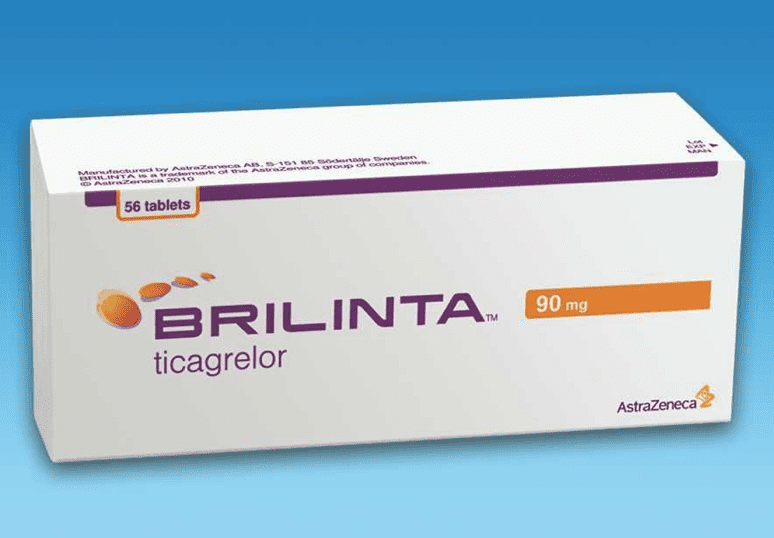
AstraZeneca’s troubled Brilinta gets welcome lift
pharmafile | January 14, 2015 | News story | Sales and Marketing | AstraZeneca, Brilinta, FDA, US Department of Justice, acute coronary syndrome, ticagrelor
AstraZeneca has reported positive primary endpoint results for its anti-clogging drug Brilinta to treat patients who have had a heart attack or severe chest pains.
Clinical trials involving over 21,000 people found that the treatment aids patients far beyond a year after their acute myocardial infarction (AMI).
Furthermore, those that took a combination of Brilinta (ticagrelor) and aspirin 12 months after their first heart attack, had fewer additional AMI problems compared with those who took aspirin and a placebo.
“The results build on existing understanding of the benefits of Brilinta for patients with acute coronary syndrome and offer important clinical insights into its potential role for the longer term prevention of cardiovascular events,” comments Elisabeth Björk, who leads global medicines development at the UK firm.
The pharma giant’s anti-clogging drug works by inhibiting platelet activation, and has been shown to reduce the rate of stroke events in patients with acute coronary syndrome (ACS).
Cardiovascular illness is the leading cause of death both in the UK and worldwide, and is responsible for around 73,000 deaths in the UK each year. In the UK, there are an estimated 2.3 million people living with the condition with around 2 million people affected by angina – the most common symptom of heart disease.
Not all plain sailing
AZ’s AMI pill has not always been accompanied by good news. Last year Brilinta failed to show any significant difference between pre-hospital and in-hospital administration in terms of pre-PCI procedural effectiveness – a technique currently used in the treatment of heart disease.
But what it did demonstrate was that giving patients the drug before they reach the hospital conveys no increased risk of bleeding.
Brilinta has encountered several setbacks throughout the treatment’s history – in 2010 the FDA delayed its initial review twice, and two years ago the EMA demanded more information on the medication during an investigation by the US Department of Justice.
But following today’s positive endpoint results for the heart attack drug, shares rose by 1.9% according to Bloomberg, which will no doubt please the UK pharma firm seeking $3.5 billion in sales for Brilinta by 2023.
Furthermore, and in the wake of last year’s fruitless Pfizer takeover bid, AstraZeneca has publicised revenue forecasts to reach over $45 billion for 2023 – and chief executive Pascal Soriot has identified Brilinta as being a key driver towards reaching this goal.
Tom Robinson
Related Content

MRM Health’s ulcerative colitis treatment receives FDA Investigational New Drug clearance
Microbial Resource Management (MRM) Health has announced that its lead programme, MH002, has received Investigational …

Complement Therapeutics’ geographic atrophy treatment receives FDA Fast Track designation
Complement Therapeutics has announced that CTx001, its gene therapy treatment for geographic atrophy (GA) secondary …

Johnson & Johnson submits robotic surgical system for De Novo classification
Johnson & Johnson has announced the submission of its Ottava Robotic Surgical System for De …