ABPI slams NHS findings
pharmafile | October 18, 2012 | News story | Sales and Marketing | ABPI, Lucentis, NICE, UK
The ABPI has expressed concern at a report by the NHS’s Health and Social Care Information Centre (HSCIC) which suggests that drugs approved by NICE are being underused by doctors.
Figures from ‘Use of NICE-appraised medicines in the NHS in England, in 2010 and 2011’ suggest that such medicines are not being taken up by the NHS in half of all disease groups.
Out of the 13 groups where the HSCIC says a comparison could be made, NHS use in England was higher than predicted for six of them, and lower than expected for another six.
With one medicine, Novartis’ Lucentis (ranibzumab), use was higher if measured in milligrams but lower when measured in vials.
The report illustrates that some drugs, including Alkermes’ alcohol dependency treatment Vivitrol (naltrexone), and Sanofi’s motor neurone disease medicine Rilutek (riluzole) have been even more underused last year than they were in 2010.
“We’re not moving in the right direction,” an ABPI spokesman told Pharmafile. “The picture is not great. We continue to lag behind Europe when it comes to access and take-up.”
The ABPI also says few of the newest medicines have been included in the figures, and while the HSCIC has said the report is ‘experimental’, suggesting a work in progress, the ABPI is not impressed.
“That could be seen as a bit of an excuse,” the spokesman said. “We want more medicines included in the report in future – specifically new medicines.”
The HSCIC counters that all NICE-approved drugs were considered for inclusion. But it adds: “Many were subsequently excluded because of significant difficulties with the calculation of predicted or observed use.”
ABPI believes barriers to uptake include local formulary and protocols being slow to include NICE guidance, as well as the fact that some re-appraise medicines after the NICE appraisal, creating ‘significant’ delays.
Some Trusts also require more evidence than NICE’s guidance on cost effectiveness, while even when formularies include the new medicine clinicians are not using them due to local funding pressures.
“It is vital that we understand when NICE recommended medicines are not reaching patients,” said ABPI chief executive Stephen Whitehead.
“This year’s report shows that many medicines, including new medicines, still continue to be underused. It is also clear that there is too much unwarranted regional variation – so in some parts of the country people can access a medicine, whereas just a few miles away, another person can’t,” he added.
Adam Hill
Related Content

Digital mental health technologies – a valuable tool in supporting people with depression and anxiety
The potential benefits of digital mental health technology for managing depression, anxiety and stress, together …

Combination treatments: Takeda’s Implementation Framework and the broader landscape
Pharmafile talks to Emma Roffe, Oncology Country Head (UK & Ireland) about the combination treatment …
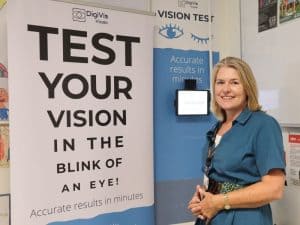
Addenbrooke’s hospital offers first self-service digital eye test
Addenbrooke’s Hospital, Cambridge, has become the first in the UK to deploy a digital self-testing …