ABPI: NHS must change to allow stratified drugs
pharmafile | November 21, 2014 | News story | Research and Development, Sales and Marketing | ABPI, NHS, george freeman, personalised, rawal, stratified medicines
The development of stratified medicines – especially in therapy areas outside of oncology – will have a significant effect on the NHS, according to a new report which highlights both opportunities and difficulties.
The ABPI, which represents most of the major pharma companies operating in the UK, says its research shows that 90% of clinicians and other health professionals expect non-cancer stratified medicine “to have a positive impact on the health system in the UK”.
Yet a whopping 98% of them said there are ‘significant challenges’ to their implementation, with 90% suggesting that the NHS will need to change to do so effectively.
Stratified – or personalised – drugs target a particular subgroup of patients based on their risk of disease as predicted by diagnostic tests and have been successful in treating various forms of cancer.
The ABPI’s report – ‘Stratified medicine in the NHS: An assessment of the current landscape and implementation challenges for non-cancer applications’ aims to demonstrate that there is a rising number of such products outside cancer in development and some are already making a difference in the NHS.
While 61% of doctors polled for the report said there was a ‘high interest’ in emerging uses of these medicines, only 25% of them felt there was ‘good access’ to them on the NHS.
Around 40% of respondents feel the NHS is achieving ‘little or no’ benefit from non-cancer stratified medicine but 32% think they give patients access to treatments they otherwise would not have had.
This dichotomy is one of the reasons why the ABPI has been calling for a multi-stakeholder strategic review of stratified medicines and their use in the NHS – to identify key challenges and recommend further policy measures that would improve patients’ access to these innovative medicines.
“Stratified medicine has real potential to change the way we identify and manage health problems and we have an exceptional opportunity in the UK to realise the benefits of stratified medicines for patients and the health service,” says Bina Rawal, ABPI’s research, medical and innovation director.
“Already significant progress has been made in the treatment of a number of cancers and this report highlights the number of non-cancer applications already in use in the NHS and the increasing interest and enthusiasm amongst health professionals of further adopting their use,” Rawal adds.
The report shows there are 41 applications for non-cancer stratified medicines in the NHS at the moment, with the main therapy areas infection, respiratory and cardiovascular disease
“Although overall progress in stratified medicine has perhaps been slower than hoped, it represents important steps towards realising the significant benefits to patients, prescribers and healthcare payers of a stratified medicine approach,” Rawal concludes.
The looming general election does a good job of concentrating politicians’ minds, and the ABPI has pointed out that access to treatments is a big issue for many British voters: the UK government has this week launched a review into getting more innovative pharma products more quickly to patients.
The ABPI’s ‘manifesto’, published before this announcement, is calling on the next Parliament to “redouble efforts to boost patients’ access to innovative medicines”.
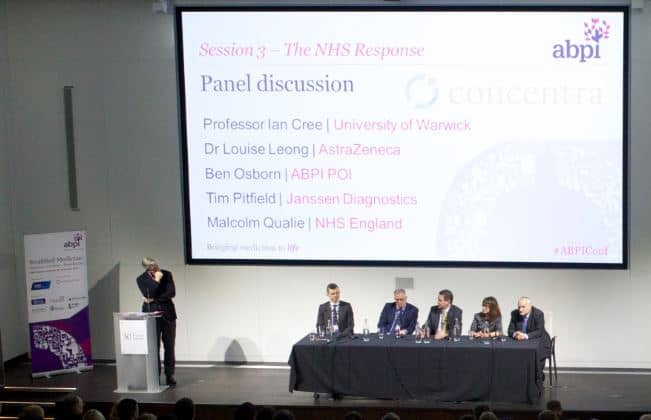
Speaking at yesterday’s ABPI conference on stratified medicines in London, George Freeman the new UK minister for life sciences said: “In the new landscape we will have fewer one size fits all blockbusters.
“We want them, and we hope there will be more – but more of our medicines are going to be targeted, stratified, some of them ultimately personalised and that’s going to be profoundly disruptive to the landscape and we welcome it. We are trying to put together a landscape in Britain that welcomes it.”
Charity body Genetic Alliance UK’s Alastair Kent was also at the event, who added: “I think stratified medicine is the green fields beyond in many instances, but actually changing the system and doing the research, getting the economics right is going to be a big challenge.”
Adam Hill
Related Content

Digital mental health technologies – a valuable tool in supporting people with depression and anxiety
The potential benefits of digital mental health technology for managing depression, anxiety and stress, together …

A community-first future: which pathways will get us there?
In the final Gateway to Local Adoption article of 2025, Visions4Health caught up with Julian …

The Pharma Files: with Dr Ewen Cameron, Chief Executive of West Suffolk NHS Foundation Trust
Pharmafile chats with Dr Ewen Cameron, Chief Executive of West Suffolk NHS Foundation Trust, about …