£25m flagship manufacturing & research facility for University of Nottingham
pharmafile | November 30, 2016 | News story | Manufacturing and Production, Research and Development | University of Nottingham
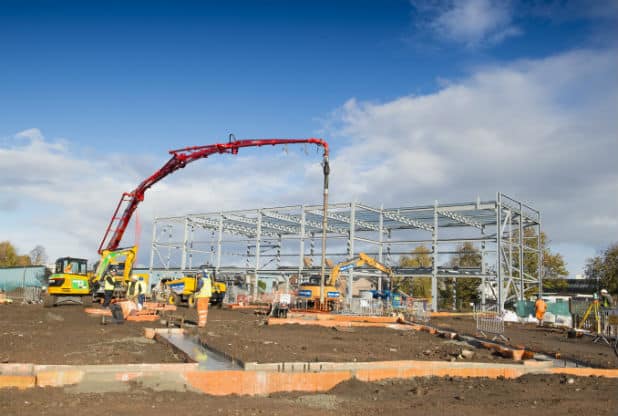
Earlier this month, the University of Nottingham began work on a ‘pioneering’ Advanced Manufacturing Building. The £25 million, 9,011 square-metre research and training facility extends from the University’s existing Faculty of Engineering and will be the new home of 699 researchers, staff and students.
The new addition will create additional teaching spaces, laboratories, workshops and offices to energise research in fields including robotics, nano-scale production and large-scale aerospace demonstrator components; a cleanroom will also be built to focus on the study of 3D-printed pharmaceutical devices.
“The new facility will host several world-leading research groups and accommodate some of the most advanced manufacturing technologies related to automation, precision manufacturing, 3D printing and light weight composite materials,” stated Professor Andy Long, pro-vice-chancellor for the University’s Faculty of Engineering. “It will also house our flagship Rolls-Royce University Technology Centre in Manufacturing Technology. This faculty will allow for diverse engineering and science disciplines to collaborate and contribute to pioneering developments for a range of sectors including aerospace, automotive, marine, energy generation, food and drink, chemical products and pharmaceuticals, helping to underpin the economy at both a regional and national level.”
“”We expect to see 3,000 students graduating over the next 10 years in manufacturing-related subjects,” he added.
Construction group G F Tomlinson will handle the contract; managing director Andrew Sewards believes the work “truly demonstrates the University of Nottingham’s position as a beacon in manufacturing research. The completed scheme will be home to world-class research facilities and revolutionary research activity, helping to nurture collaboration and innovation between education and industry.”
The project is part of a greater seven-year construction push by the university, costing around £600 million. The facility is due to be completed in 2018.
Matt Fellows