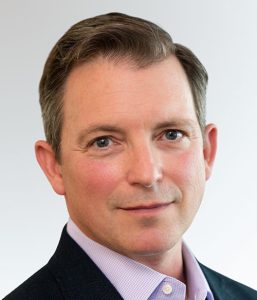
Working Life: Shire’s Paul Beresford
pharmafile | August 19, 2013 | Feature | Business Services, Manufacturing and Production, Medical Communications, Research and Development, Sales and Marketing | Paul Beresford, Shire
How did you find your way into your current role?
After graduating, I joined IMS in London where I was fortunate to travel all over the world and work with many different pharma companies in a wide range of therapeutic areas. Apart from being a lot of fun, it gave me a great insight into the pharmaceutical industry in Europe, the US, Japan and South Korea.
After six good years, I decided that the pharma industry would be my next move.
I joined Bayer in 1993 as an analyst within the Business Development department. At Bayer, I was fortunate to be able to broaden and deepen my commercial experience in marketing (cardiovascular and anti-infectives) and sales management. This is where I really learnt my trade: Bayer provided an excellent grounding in the fundamentals of marketing and sales.
I left Bayer to take on a leadership role in a ‘dotcom start-up’, which I did for a year until the ‘dotcom’ stock crash. This experience was like a rollercoaster and opened my eyes to risk-taking and really tough decision-making.
Following this, I wanted to get back into the pharma industry and I had heard about Shire. Although I did not know much about this new, small pharmaceutical company, there was something about its people and the culture which was exciting and dynamic – a company with ambitious plans and a ‘can-do’ attitude.
My first role at the firm was UK Sales & Marketing director, where I was responsible for launching a number of products in various therapeutic areas and was involved in due-diligence projects. I then took on the role of setting up the International Commercial Operations department, and subsequently became the lead for the launch of Shire’s flagship Neuroscience product in Europe and other international markets.
This is primarily a commercial role, but I have had general management responsibility to ensure the launch plans are co-ordinated and optimised cross-functionally. In this role, I relocated to Shire’s new European hub in Switzerland in 2010.
How is your field changing?
The external environment is ever more complex and challenging. The important thing is to remain ultimately focussed on the needs of the patient and let this guide everything else.
Obviously the pathways into markets are changing and evolving, so anyone in the pharma industry should be acutely aware of the need to address the needs of payers, policy-makers, patient groups and other stakeholders, as well as prescribers. We need to provide all these groups with relevant, evidence-based information.
Health economics and outcomes research, coupled with pricing and reimbursement skill-sets are now as pivotal to the future of the industry as traditional R&D and regulatory expertise. We need to anticipate needs and invest early in generating evidence beyond just Phase III registration data.
Furthermore, from a marketing perspective, there is no doubt that the marketing mix is evolving, and now should embrace social media and technology, but this cannot replace face-to-face contact with customer groups. There is no question that customer-facing roles should continue to evolve and develop in order to ensure that we reach the relevant stakeholder groups with the correct skill-sets.
What are the most enjoyable things about your role?
Variety, complexity and working with talented people who are prepared to challenge the status quo. Shire has attracted a lot of experienced, very bright people and this keeps me on my toes!
Being based in Switzerland, I also like the international dimension, which has opened up my mind to different ways of thinking and doing things. I have the opportunity to work with colleagues in many different countries and this is very stimulating.
Furthermore, working closely with functional experts on regulatory strategy, P&R, country launch plans, as well as sales and marketing strategy, has taught me about many different aspects of our industry. Launching a medicine that addresses an unmet need is important and this in itself makes it extremely enjoyable too.
And the least enjoyable?
Jetlag!
What are the most common misconceptions about your field and the people in it?
Some people seem to believe that the pharma industry is solely driven by profits at the expense of everything else. This is frustrating for those of us who have worked in the industry and know this not to be the case for the overwhelming majority of companies and people in the field.
Profits are needed to reinvest back into R&D to discover more innovative medicines that benefit patients. This operating model has been incredibly successful and has led to significant breakthroughs in medical research because it identifies the best products.
There is no doubt though that the industry needs to continue to learn from any mistakes made, as reputations are easily broken and take a long time to repair. The senior management of pharma companies have a very important role in setting the right culture, because culture should transcend operating frameworks, company structures and organisational charts.
I have been fortunate to work for companies who believe this. Decisions can sometimes be highly complex and difficult to make, but when patients’ welfare is central to the decision-making process then decision-making is somewhat easier and more straightforward.
Having said this, of course, corporate decision-making models are important and managerial processes are a pre-requisite for good governance, but patient-centric values and culture should always be at the forefront.
More specifically to my field, I work in Shire’s Neuroscience Business Unit. Neuroscience disease states can have different levels of perception and acceptance because they can sometimes be difficult to distinguish and diagnosis symptoms from the continuum of human behaviour. Disease states can also be confounded by co-morbidities.
Shire produces a range of educational programmes and information for healthcare professionals and others to help the understanding of these conditions.
Is there someone in your field who has inspired you or from whom you have learnt a lot?
Over the years I have worked with some excellent people who have inspired and helped me, and I realise that these have been people from all areas of my field – colleagues, bosses, customers, KOLs. I’ve taken different things from different people at different times.
IQ and EQ are both important and some people have more of one than the other. I think that ‘inspiration’ is in the moment and contextual – it depends on the situation and what’s needed.
Similarly, is there someone (or something) outside your field who has been a source of inspiration for you?
My kids are a constant source of inspiration and I am sure many people will relate to this sentiment. After a busy day, they have a way of reminding me about what’s important!
While I was growing up there were certainly one or two teachers at school who inspired me, but more recently I think it’s hearing about great achievements that capture my imagination the most – some of the winners at last year’s Olympics were very impressive, not least Bradley Wiggins!
What is the secret to a happy working life?
I am not sure I know the secret, but I do think that in the longer term you have to believe fundamentally in what you are doing! If you do not believe in what you’re doing and don’t think it’s important or worthwhile, then do something else, even if this involves making tough decisions. The older you become, the harder this is of course (particularly if you are paying a mortgage!).
At work, focus on the key things that make a real difference, avoiding unnecessary distractions and ‘noise’. Variety is important too – our industry is changing fast so this should not be a problem – actively seek opportunities to learn new skills because this keeps things interesting. And on a very practical level, avoid a long commute!
If you had advice for anyone starting out in your field now, what would it be?
If I look back on my career there have been highs and some lows, so the important thing is to learn from both the ups and downs. Try to disentangle good luck from good judgement, and bad luck from bad decision-making.
A lot of things happen in business that can be outside one’s control, but focus on what you can influence (which is actually quite a lot) and do it to the best of your ability. Don’t lose your eye for common sense either!
Sometimes ‘Group Think’ can set in, whereby decisions are taken which do not feel right, so speak up and ask questions – don’t be afraid to do so (the chances are that others feel the same way) – but think carefully about how you go about it, asking advice from someone you trust if need be.
Do not take things too personally either, remember it’s business after all. And as you gather more experience in the frenetic pace of day-to-day life, take time to reflect on what went well and what could have gone better, and learn from it!
Related Content

Takeda plans to vacate all 1,000 staff from US HQ by the year’s end
Takeda has announced its plans to vacate all staff from its US headquarters in Deerfield, …
Novartis buys dry eye treatment Xiidra in deal worth $5.3 billion
Japanese multinational Takeda Pharmaceutical has agreed to sell its dry eye drug Xiidra to Swiss …
Top Ten most popular articles on Pharmafile.com this week!
With the completion of Takeda’s £46 billion acquisition of Shire finally done, another even bigger …