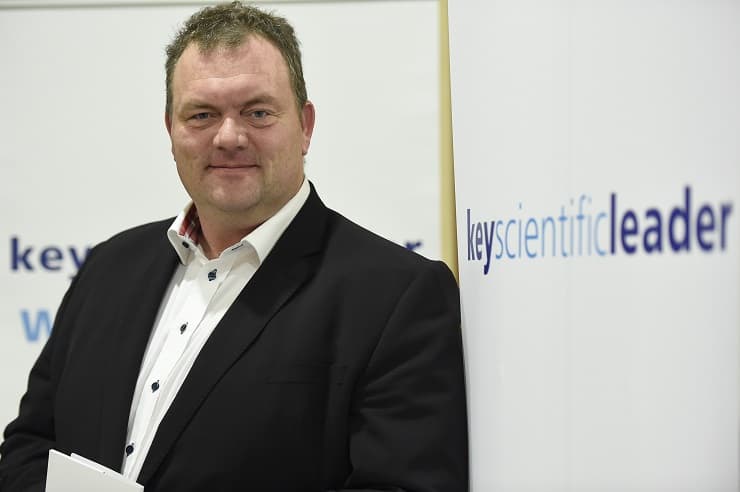
Working Life: Novo Nordisk’s Klaus Henning-Jensen
pharmafile | September 21, 2015 | Feature | Sales and Marketing | Novo Nordisk, Working Life
How did you find your way into your current role?
I started out in medicine at Bispebjerg, which is a large teaching hospital that is part of Copenhagen University. I practiced for some time in orthopaedics, which I found super fun. This led to a collaboration with a former colleague on a new kind of orthopaedic implant for hip fractures. We won venture capital funding based on our prototype and went on to create a company to complete the development, manufacturing and commercialisation of our invention, of which I became the chief executive.
Unfortunately our start-up company did not work out due to patent issues, but the whole experience sparked my interest in developing new products for patients. However, I found that after working in a medical start-up, I did not want to return to normal medicine as I loved being able to use an entrepreneurial mindset to create treatments that could reach and help thousands of patients.
So I went for a half-way house. I applied for a role as medical advisor with Novo Nordisk and said to myself I would try out the company and the pharma industry for three months. I am still at Novo Nordisk 10 years later, as the job is still very interesting and they keep on giving me new challenges. I love what we do at Novo Nordisk and I have been excited to work here because of the number of patients that I and my team can make a difference to through our new and better medicines and initiatives.
How is your field changing?
At Novo Nordisk we have a strong heritage in diabetes, a disease which is growing in importance and impact in the UK. Diabetes now costs 10% of the total NHS budget – primarily due to complications that are preventable. We are proud that we provide treatments for many of the people with diabetes in the UK.
However, while we may innovate, there is a strong demand from the NHS and from other European payer authorities on proving financial value and outcomes. This means planning and anticipating the studies to show value and outcomes that need to be baked in early in the development process. The specific requirements needed to document value may even be unclear until quite late on and may not be the same as those needed for regulatory approval.
Frustratingly, if the right value data is not available at launch it will take years to get the medicine to patients who need it right now. This used to be more of a grey area, but austerity has driven a clampdown on healthcare professionals’ choices. We support the need to be responsible with NHS resources and to show value, but sometimes it seems it has gone too far and the individual needs of the patient are overlooked.
Sometimes a patient does need something truly different from everyone else and there needs to be a way for patients in the UK to access these treatments. With the scale of diabetes in the UK, there is an increased scrutiny of societal impact and cost of treatments from payers. While we may innovate, payers look for the cheapest treatment – which is often not the best for the patient.
What are the most enjoyable things about your role?
I love the diversity of my role and leading a team that brings new treatments to the NHS and is ultimately making a difference to patients’ lives. I enjoy providing medical counsel and leadership and advising other parts of the business on how we can negotiate the medical and scientific challenges in the UK. I am, at heart, still a clinician and I really enjoy working with my team to organise and run clinical trials.
Good clinical trials are how we can show that our medicines are safe and meet the increasing value and outcome demands that the NHS places on us. Through our work on clinical trials I have also had the exceptional pleasure of working with many of the best clinical and scientific experts in diabetes. Our objectives tend to be the same: we want to get innovative medicines to the right patient as soon as possible. It’s only by working with British clinical experts that we will really move ahead as a company in the UK.
And the least enjoyable?
I have been shocked to observe the amount of hostility towards our industry from some healthcare professionals. As a medical doctor working for a pharma company, I want to bring the best quality treatments to patients, and the vast majority of my colleagues are here for exactly the same reason. Only through open partnership with the NHS can we make this happen. We strive to be an ethical company, so I am always disappointed when I feel that we are treated unfairly.
Also, while my team continues to enjoy the exceptional scientific and clinical dialogue with experts in the UK, we are continually frustrated by the difficulties we face in making our medicines accessible to the right patients due to the ongoing pressure of cost containment.
What are the most common misconceptions about your field and the people in it?
The perception that we are solely focused on making a profit. We are a commercial business and we cannot exist without profits. But we do well as a company by providing good medicines to patients around the world. The many people involved with developing our new products within Novo Nordisk get extremely excited when we see that we can potentially make a big difference to our patients with a new drug candidate.
If we didn’t develop medicines that make a difference to patients and provide value to health systems, we could not be successful. If we, or other companies, had not continuously improved our products, life-saving insulin therapy would still only be available to a lucky few and as an impure extract from dead animals with huge disadvantages compared to the modern insulin products available today. And most diabetes medicines would not be available at all. So far, we have been around for over 90 years by doing well and doing good – and I hope we will be able to do so for much longer.
Is there someone in your field who has inspired you or from whom you have learnt a lot?
I am inspired when I work with highly professional and dedicated doctors who are really patient-focused. A key example for me is Dr Kirstine Brown Frandsen, who leads our global medical affairs function at Novo Nordisk. Kirstine is a very strong leader with a strong and patient-focused mindset. She is an exceptional advocate for the open scientific dialogue between the company and the medical community and she has enabled information and dialogue to flow to and from the company to healthcare professionals in an unfiltered way.
Similarly, is there someone (or something) outside your field who has been a source of inspiration for you?
I have always been inspired by scientists who can communicate an infectious enthusiasm for their field. In particular I have been inspired by my physics professor at university, Jens Martin-Klusen. He is a brilliant scientist, responsible for sending apparatus on the Mars explorer. His extreme engagement and long-term understanding of what to do and how to change things are lasting sources of encouragement.
What is the secret to a happy working life?
Finding deep engagement and pleasure with your work, whatever you do. Be authentic and never continue to spend time on things you do not believe in or can engage in. Also accept that sometimes the boundaries between private and work life may vanish because of what you do, but approach this as an opportunity rather than a problem. If you had advice for anyone starting out in your field now, what would it be? Engage in it wholeheartedly or not at all. Appreciate that it is a choice for your life, not just for your working life. Therefore, do it if you believe in it. Stay away if it is not for you.
Related Content

FDA approves Wegovy for treatment of MASH in adults with liver fibrosis
The US Food and Drug Administration (FDA) has granted accelerated approval for Wegovy (semaglutide) as …

BioMed X and Novo Nordisk partner on oral peptide drug delivery innovation
BioMed X has announced a new collaboration with Novo Nordisk to improve oral delivery of …

Pila Pharma raises SEK 20m to advance new oral obesity treatment
Swedish biotech, Pila Pharma, has raised nearly SEK 20m, equivalent to €1.7m in a capital …