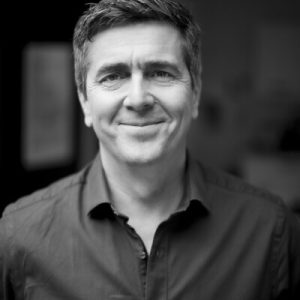
Working Life: Jo Ferdinando
pharmafile | June 22, 2010 | Feature | Manufacturing and Production, Research and Development | Shire, Working Life, careers
How did you find your way into your most current role?
After completing a BSc in Microbiology and Virology at Warwick University I joined a small generics company in London called DDSA Pharmaceuticals in the analytical testing area. I quickly realised my interest was strongest in the formulation field so they kindly sponsored me to do an MSc in Biopharmacy and PhD in Pharmaceutical Technology part-time at King’s College London. I concentrated on the challenges of developing and characterising controlled release formulations.
I then joined Roche in Welwyn, UK, where I led a small team of formulators developing dosage forms for new chemical entities. It was there I faced the challenges of seeking ways to improve the bioavailability of poorly soluble drugs. I worked with a contract research group in Scherer (now part of Catalant) to solve the issue with one of our more challenging drugs. I become increasingly interested in overcoming these types of biopharmaceutical challenges so I joined Scherer leading their European formulation team.
During my time at Scherer I began working on a contracted project for Shire Pharmaceuticals and found, as I got to know the Shire team, that I really enjoyed their approach to development, their bravery, integrity, tenacity and intellect. They treated each other with respect and trust, and extended this to the contract companies they dealt with. The business model is inspired, outsourcing practical work but hiring leaders in their field to manage this work. I later joined Shire where I have been for the past nine years working on an exciting array of drugs for specialty diseases. I began by leading the Global Pharmaceutical Science group managing all development aspects of drug substance synthesis, product formulation, analytical and clinical supplies work in the R&D organisation. Now I lead Non-Clinical Development in the Specialty Pharma part of the Shire business. This encompasses preclinical development, exploratory medicinal chemistry as well as the pharmaceutical sciences.
How is your field changing?
In the past, as well as applying strict scientific rigour to formulation development, there was always an element of the ‘art’ of bringing together excipients and drug in an intuitive, unique way to deliver the quality, manufacturability and biopharmaceutic properties to the new dosage form. In recent years there has been increasing emphasis in developing products using a ‘quality by design’ (QbD) approach. This increases the understanding of the product, the processing limits and variables and allows us to better control the quality of our products over their life span. While this may be more resource intensive in the earlier stages, it can deliver a more robust and predictable product for long-term manufacturability and quality.
The other big change is the shift in focus of registration activities from US and EU to the broader global submissions. This requires a good understanding of the regulatory environments in countries not necessarily traditionally targeted, and planning any extra activities to support filings in those countries (for example extra stability studies under new conditions).
What are the most enjoyable things about your role?
The most satisfying part of my role is seeing products that we have worked on for many years reach the patients. We hear from our patients how much they have improved their lives and this is very heartening. It makes one eager to go to work every day.
And the least enjoyable?
The time wasted at airports is the least enjoyable aspect of my work, although it is a necessary inconvenience to pay for the benefit of working for a global company.
What are the most common misconceptions about your field and the people who work within it?
In the formulation field we may occasionally hear that a promising drug is not ‘developable’ because of poor solubility, short half-life, poor bioavailability or has a food effect on absorption. In fact there are many formulation ways to overcome such issues which can be implemented. This can lead to an optimal product performance and not adversely affect the development timeline if they are addressed early enough in the drug’s life cycle.
Is there someone in your field who has inspired you or from whom you have learnt a lot?
I have been blessed with fantastic bosses at every company where I have worked. Each very different, but all were inspiring an taught me a great deal. At Roche I worked closely with Navnit Shah. He is an inspirational formulator, not only incredibly experienced, but someone with a huge number of new ideas which he conveys with such contagious enthusiasm. We worked together with Carole Bailey on a new formulation of [AIDS treatment] Saquinavir which was poorly bioavailable, and we were able to improve its bioavailability three-fold which made an enormous difference to patients. This innovation was recognised in 2005 when we received the Thomas Alva Edison patent award from the R&D Council of New Jersey.
Similarly, is there someone (or something) outside your field who has been a big influence or source of inspiration for you?
My mother has always been an inspiration, her integrity, zest for life and eagerness to try new things never ceases to amaze and inspire me.
What is the secret to a happy working life?
I have found that to be truly happy at work one needs to choose a field that you are passionate about, one which is exciting and makes you eager to solve the challenges you may encounter. The company culture is also an important contributor to happiness at work – finding one which encourages measured risk-taking, treats people with trust and respect and has great, dedicated people who you can have fun with every day.
If you had advice for anyone starting out in your field now, what would it be?
It is important to choose the right degree (a subject you are passionate about), select companies which are right for you and give you broad experience yet allow you to develop in depth expertise.
Sometimes you will need to be brave with your career choices but always work hard with high quality output and focus on continuing to learn and grow, not only from formal education but also from the challenges you meet along the way.
BIOGRAPHY
Jo Ferdinando is senior vice president of non-clinical development in Shire’s Specialty Pharma Division, and part of the R&D Leadership team at Shire heading up the non-clinical development discipline developing New Chemical Entities for global submissions.
Her group manages the research and development aspects of drug synthesis, analytical testing, formulation, manu-facturing and supply of clinical materials, toxicology, pharmacology, drug metabolism and pharmacokinetics.
Jo’s team also includes exploratory medicinal chemistry to support the continued development of the CarrierWave technology for the delivery of drugs to overcome biopharmaceutical and clinical issues.
If you would like to contribute to a future Working Life, please contact Brett Wells via e-mail at: bwells@wiley.com.
Related Content

Working Life Interview: Fiona Huzarski, Vice President of Global HR, ADVANZ PHARMA
“Every company is different, so you have to be open-minded and receptive to the culture …
Working Life Interview: Kim Stratton, CEO, Orphazyme
“Every professional faces challenges. As a woman in industry, particularly in leadership, it adds another …

Working Life Interview: Dr Andrea Pfeifer, Co-Founder and CEO, AC Immune
What originally set you off on your career path? Was the plan always to go …