Working Life: GlaxoSmithKline’s Thomas Webb
pharmafile | April 2, 2015 | Feature | Manufacturing and Production, Medical Communications, Research and Development, Sales and Marketing | GSK, Hong Kong, Working Life, macau, oncology, thomas webb
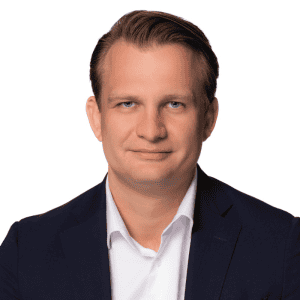
Thomas Webb, launch lead for GSK oncology Hong Kong and Macau
How did you find your way into your current role?
I couldn’t have envisaged the direction that my career has taken since joining GSK in 2009; a journey spanning the discovery of candidate medicines as a lab scientist in Stevenage UK, to launching new medicines in Hong Kong, China.
I trained as a scientist studying biochemistry at the University of Nottingham and as a ploy to continue playing university football I continued to read a PhD in molecular oncology.
I shortly fell in love with the research, which feels more like a hobby than a job – there’s a real buzz when finding out something that no one else has ever discovered.
At the end of my PhD, after flirting with the idea of studying medicine, I decided to move into the pharmaceutical industry to fulfill my ambition of applying science and directly have a humanitarian contribution.
My career with GSK started serendipitously, after finding out about opportunities within the expanding biopharmaceutical unit whilst showing a prospective undergraduate and his father, a GSK scientist, around the university.
I spent three years in Stevenage as an antibody engineer, leading a small team and heading up early discovery and antibody technology projects.
The biopharma team had recently acquired Domantis, a Cambridge-based biotech that had developed an antibody fragment-based technology. This was an exciting start to my career, working with innovative molecules targeting a number of disease areas from oncology to respiratory and inflammatory diseases.
Harbouring the opportunity to learn more about the global GSK organisation, I joined a programme in 2012 called the Esprit programme. This provides associates with scientific, medical, commercial and finance backgrounds to gain a global perspective of the enterprise by way of three to four 12-month rotations.
What is unique about the Esprit programme is that the jobs are individually tailored to fulfil each associate’s own development goals, and they include the opportunity to work internationally, reflecting the need for future leaders to have a truly global mindset of the industry.
After an ‘Apprentice’ style assessment centre (minus Lord Alan Sugar or Donald Trump), I was incredibly fortunate to be offered a place to join the Esprit programme and moved into a role with the R&D strategy development team – a team that supports the R&D organisation to tackle the big industry-wide challenges.
An intriguing part of my role was working with McLaren, specifically a team of engineers called McLaren Applied Technologies (MAT) under a strategic partnership formed in 2011. For GSK this represents an important part of our strategy, to look outside our own four walls for innovation, to look for ways to help us stay ahead of the competition. My role was to incorporate McLaren’s expertise in real time data capture in the way we evaluate the effect of GSK’s medicines in clinical studies and the real world.
Currently I am based in the GSK Hong Kong and Macau local operating company and I am responsible for the launch of a new portfolio of medicines for melanoma, which has represented an entirely different challenge.
For me it was incredibly important to understand the needs of our customers, the physicians, patients and payers, whilst learning about the culture, healthcare environment and business practices in an exciting part of the world.
This spring I will be heading back to Europe and will be working in our vaccines organisation, to build a broad base across the pharma industry, which I hope will provide a platform for exciting future roles.
How is your field changing?
My field for the last year has been in oncology, specifically melanoma, in Hong Kong. Both the healthcare system in Hong Kong and the way in which melanoma is treated is experiencing a transitional period.
The healthcare environment in Hong Kong is very interesting, contributing to one of the world’s longest life expectancies at 84 years, not what many would expect from a city that faces challenges with pollution or a city that only spends 5% of its GDP on healthcare.
Although healthcare spending is almost evenly distributed between the private and public sectors, secondary and tertiary care are heavily reliant on the public sector, with around 90% of in-patient care, whilst the gate-keeping primary care is mostly left to the private sector, accounting for 70% of care.
Increased disease burden from cancers, heart disease and chronic lower respiratory diseases are putting pressure on the healthcare system, raising questions about the long term sustainability of the current healthcare provision. To combat this, the government has been actively reviewing initiatives to maintain a sustainable and more balanced dual-track system.
Voluntary health insurance schemes are one of the latest reform initiatives trying to pull in new complementary financing sources in view of the currently low individual health insurance coverage rate.
Whilst a broad range of medicines are reimbursed by the public sector, a number of medicines are fully self-financed by patients. How Hong Kong improves patient access to new medicines whilst preserving the efficiency of the system will be a key challenge in years to come.
From an oncology perspective the treatment of melanoma has experienced unprecedented change in the last few years, from the introduction of the BRAF and MEK targeting agents to the immune checkpoint inhibitors, offering real hope to patients in a disease which traditionally has presented poor outcomes.
Combinations of targeting agents with the immune checkpoint inhibitors look like they may have the potential to offer durable responses with increasing response rates in a number of cancers, which may be game-changing.
What are the most enjoyable things about your role?
I love the diversity of my current role. Bringing a medicine to the market encompasses managing regulatory, supply, medical and commercial aspects to name a few and therefore no day is the same. Beyond the diversity of the work, the diversity of people is also inspiring.
What are some of the most common misconceptions about your field?
The pharma industry still often evokes sceptical public perception, which reflects the need for the industry to collectively open up and improve the way we engage with the public. We are often still referred to as the ‘manufacturer’ which underestimates the scale of the contribution the industry makes scientifically and socially.
Is there someone in your field who has inspired you or from whom you have learnt a lot?
My PhD supervisor Dr Tyson Sharp, now of the Barts Cancer Institute, was an inspiring mentor and without him I am not sure I would have taken the path into science. He’s a passionate guy that wears his heart on his sleeve and has an infectious humour and energy.
I am incredibly grateful to a number of the managers I have had in my early career within biopharm R&D and the R&D strategy development team from whom I have learnt a huge amount and whose focus on my development has been unwavering.
Similarly, is there someone (or something) outside your field who has been a source of inspiration for you?
As a keen sportsman (plenty of effortless ability) I source inspiration from the sporting world. Last year I had the pleasure of listening to British paralympian Karen Darke speak. Karen was paralysed after a climbing accident, but took her life by the horns and established herself as a paralympic athlete.
She is best known for waiting for her fellow GB paralympian Rachel Morris at the end of the race and finishing with linked hands which consequently cost her winning the bronze medal. She has also conquered other incredible achievements including Mont Blanc and hand-cycling the length of Japan. I find her determination and positivity incredibly inspiring and moving.
What’s the secret to a happy working life?
I think the people you have around you at work can make or break a happy working life. I have had the fortune to work with great people who I consider friends. I am particularly nostalgic about my time in the lab as the camaraderie and humour was special and it’s difficult to replicate that culture in an office environment.
If you had advice for anyone starting out in your field now, what would it be?
Firstly I would encourage working in the field! I think the pharma industry offers such diverse opportunities and the ability to truly have an impact on people’s lives through improving health.
I can’t underestimate the importance of my last two years as part of the Esprit programme, so I would advise people to take challenges and look to reach beyond your visible blind spots – to quote Donald Rumsfeld, the ‘unknown unknowns’.
Related Content

BMS’ Opdivo/Yervoy combination accepted by Scottish Medicines Consortium for colorectal cancer
Bristol Myers Squibb (BMS) has announced that its Opdivo (nivolumab) has been accepted, in combination …
Astellas Pharma’s Vyloy accepted by Scottish Medicines Consortium for gastric cancer
Astellas Pharma, a pharmaceutical company creating medicines to address unmet medical needs, has announced that …

GSK’s Exdensur receives MHRA approval for asthma and rhinosinusitis
GSK’s Exdensur (depemokimab), a twice-yearly biological medicine, has received approval from the UK Medicines and …