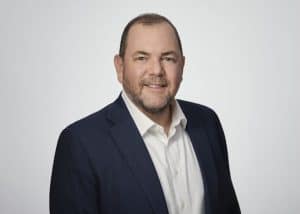
Working Life: Bayer UK & Ireland’s chief executive Alexander Moscho
pharmafile | July 6, 2015 | Feature | Manufacturing and Production, Research and Development, Sales and Marketing | Alexander Moscho, Bayer
How did you find your way into your current role?
I think it started when I was young and I was exposed to a chronic disease for the first time in my life when my brother was diagnosed with diabetes at a very young age. I was roughly nine years old. I was intrigued by science at that point in time. At school I loved biology, chemistry and physics, and when my brother was diagnosed, seeing what it did at that point in time I decided that I wanted to contribute and do something that helps people deal with ailments.
Originally I started more from the scientific perspective. I really wanted to find new pathways and identify molecules that would help, but after having done my studies in biotechnology, having worked at Stanford University as a visiting scholar, I found that science and lab work wouldn’t be the most intriguing thing for me for the rest of my life.
That’s when I decided to find out what managerial roles look like and joined McKinsey, but I always stayed in the healthcare and pharma space, because I really believed and still believe that we can make a difference.
I started at Bayer as the head of an in-house consultancy. In 2006, just before acquiring Schering, Bayer decided that it wanted to build a project group that would be capable of helping bigger projects within the company globally. The first big project that I was trusted with was the Schering integration, which was quite something! That was really the platform on which I could grow this group.
That’s how I got to know Bayer and I was privileged to work together with literally all levels of the organisation, which also exposed me to Werner Wenning, who at that point in time was the chief executive. He felt that as a next step it could be interesting for me to head the corporate strategy function and portfolio management for the whole Bayer group, and that’s what I did for three and a half years.
I was lucky enough to start just before Marijn Dekkers took over, and we had a really fascinating period together. I learnt a lot and was obviously privileged to work on many of the things that have shaped Bayer in the past four years, mainly the big acquisitions that we did – Algeta last year, Merck OTC, a lot of smaller ones – as well as some of our divestments, and especially also the strategic focussing of the group on life sciences with the coming carve out of MaterialScience.
That is something I did for three and a half years, together with Marijn, and then it was time for me to really get my hands dirty. One of the reasons I joined Bayer in the first place was that I was into operations management roles, and after having concluded the strategy work together with Marijn I was offered the opportunity to become chief executive of Bayer in the UK and Ireland.
How is your field changing?
It seems to actually be a continuous evolution in really big jumps. We’ve seen significant breakthroughs in many areas of disease in the past 10 to 15 years – we are on our way, for example, to making cancer a chronic condition, which is a big change. We see areas like haemophilia or diabetes care changing in ways that allow patients to lead normal lives.
But beyond that, a discussion what’s unfortunately more challenging is that there is a lot of pressure at the moment on healthcare systems globally. This is impacting the pharma industry quite significantly because it is probably the easiest part to address in those discussions. Although it only constitutes roughly 10% of the costs globally, it’s much easier to impose limits on that than on the healthcare landscape and that is something I think we need to solve, not as an industry but as a society, because in the end this is endangering the sustainability of innovation and access to that innovation for patients.
What are the most enjoyable things about your role?
I think it’s a fantastic opportunity because it brings together a couple of elements that I find really intriguing. As I’ve said I’m driven by making a difference out in the market, and my role allows me to help our organisation to do that.
Secondly, working together with people and forming environments that inspire and empower them also drives me. It also brings together other elements that I have learnt to love throughout my career, such as strategic vision work, analytical work, and communications leadership.
And the least enjoyable?
The least enjoyable thing is probably finding myself in discussions where arguments don’t count for their content and there are conceptions in the room that are tough to deal with, and where there is limited willingness of participants in those discussions to be open, listen and understand where others are coming from. That is something I would always like to do, but I find myself quite frustrated if I find myself in situations where this is not given.
What are some misconceptions about your field and the people in it?
I think the biggest is the conception that everything is about financial results. Obviously we are companies, we are operating in free markets, and we are expected to generate returns for our investors, but at the same time I think what is really driving us, and why I see our people enthusiastic about what they do, is not the economics – it’s really about the innovation and bringing the innovation to patients.
We want to make sure that over time people understand that we are genuinely concerned about bringing innovation to patients and making a difference for them.
Is there someone in your field who has inspired you or from whom you have learnt a lot?
In my more recent past I was very much inspired by and learnt a lot from Werner Wenning and in particular Marijn Dekkers. Both are very charismatic leaders and they not only inspired me but I learnt a lot from our interactions. I really found it a privilege to work for and with both.
Similarly, is there someone (or something) outside your field who has been a source of inspiration for you?
I think in general it is people who seem to be living their dream. I admire people who think things through, follow what they want to do and then make it happen. On the business side, another person who was really important to me was the chief executive of McKinsey Germany when I joined, Herbet Henzler, who formed and built the German office of McKinsey into one of the most important ones in the world.
I was lucky enough to be picked by him to help and support him for half a year. It was just fantastic to see how important values were for him in the way he dealt, obviously on a very high level, with the challenges of his clients and of the industries he would support. This combination of being professional but adhering to strong values was really intriguing and very important for my formation.
What is the secret to a happy working life?
I think the most important thing is that you have a purpose that you identify yourself with and that inspires you. Periods of frustration are always there, but I think that if you have a purpose that makes you tick there is nothing that can really throw you off.
If you had advice for anyone starting out in your field now, what would it be?
I have one motto that has become really important for me. It’s actually a quote from Herman Hesse, a famous German writer, which goes “you have to try the impossible in order to achieve the possible”. I think that’s something that I took to heart, and I think everybody has dreams and should not easily give up on them. You never know what you are capable of or what you can achieve unless you try, and as long as you believe in those things you can contribute to making the world at least a tiny bit better.
Related Content

Evotec and Bayer announce new kidney disease study
Evotec and Bayer have announced the initiation of a phase 2 clinical study in kidney …

Third application for Orion’s prostate cancer drug submitted by partner Bayer
Finnish pharmaceutical company Orion has announced that its partner Bayer is applying for a third application …

Bayer and Evotec to collaborate on precision cardiology
Bayer and Evotec have announced that they have updated the focus of their collaboration to …