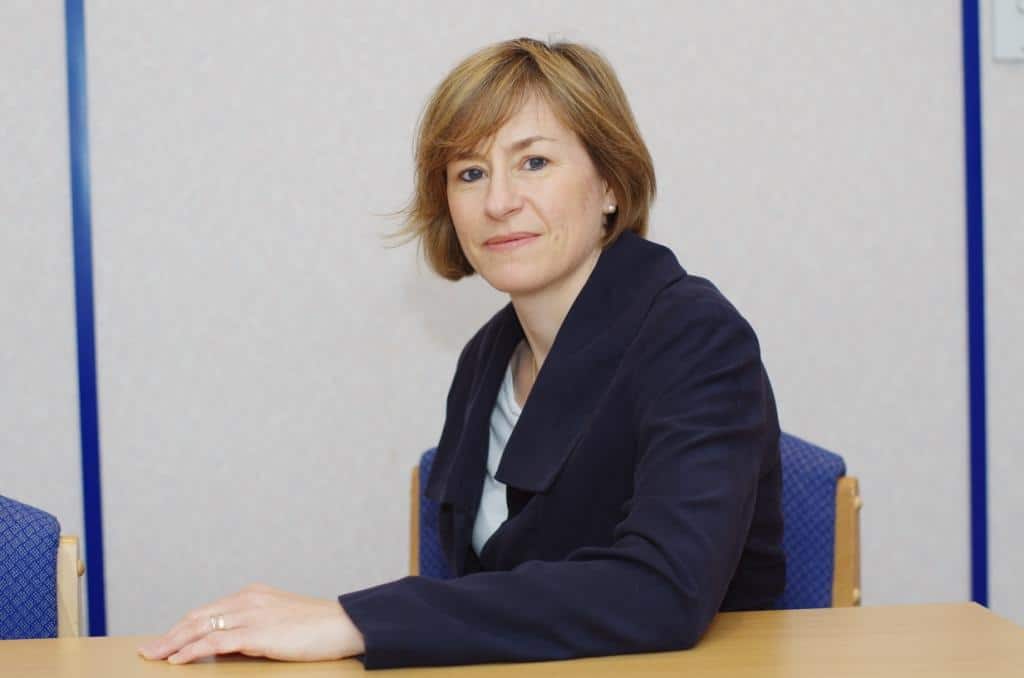
Working Life: Adaptimmune’s Helen Tayton-Martin
pharmafile | October 31, 2011 | Feature | Business Services, Manufacturing and Production, Medical Communications, Research and Development, Sales and Marketing | Adaptimmune, Working Life
Helen Tayton-Martin who is an executive director at Adaptimmune, talks to Pharmafocus about her role and working in cell therapy.
How did you find your way into your current role?
I started out providing part-time support to a previous incarnation of Adaptimmune called Avidex – a post I secured whilst working part-time for another Swiss-based start-up company in a corporate development role. I had a portfolio career going on at that stage. The initial post with Avidex came about through a contact who wanted me to join the company.
That was nearly six years ago and after three years with Avidex – then MediGene who acquired the company in 2006 – I eventually got involved in spinning out Adaptimmune in 2008; everything from the business plan onwards.
How is your field changing?
Working in cell therapy is hugely exciting and demanding at the same time. The field is changing with the advent of recent results in the cancer immune cell therapy area, and with developments in stem cell therapy and regenerative medicine.
There are a whole raft of small companies now turning this kind of approach into a viable clinical and commercial reality, as well as big pharma companies starting to pay much closer attention, plus engineering companies lining up to resolve the production and scaleability issues.
This is not conventional drug development in any sense (for example, we are giving a therapy which will expand and grow in the patient – that is unlike any conventional clinical paradigm and needs some adjusting to as you develop a programme). It is also what makes it so exciting and potentially transformative in medicine.
As more companies are successfully working with these sort of development issues and seeing results, so larger companies are seeing how to get involved and bring their development, logistical and commercial capabilities into the picture. I predict that in the next decade, cell therapies will transform medicine.
What are the most enjoyable things about your role?
The people I work with – both inside and outside the company and the tremendous commitment they all show. It makes you realise that many really good technologies never make it through the clinic in large part, because you don’t have the coalescence of the right people at the right time to drive it through. So much has to go right, but if you haven’t got good people – and good investors – you have your hands tied behind your back.
And the least enjoyable?
Not having enough time in the day!
What are the most common misconceptions about your field and the people in it?
Probably the most common misconception is that ‘autologous cell therapy’ will never be commercially viable, but people have stem cell transplants every day – a procedure that costs around $100,000 and is now routine (and reimbursed).
Is there someone in your field who has inspired you or from whom you have learnt a lot?
Every single one of the clinical investigators we are working with in our trials. They understand the complexity of the science and distil it down to the clinical realities for the patient and standard of care. We are extremely lucky to work with such talented and genuinely decent people.
Similarly, is there someone (or something) outside your field who has been a source of inspiration for you?
I see inspiration everywhere, essentially where ordinary people achieve extraordinary things simply by having belief in other people and what they are doing.
What is the secret to a happy working life?
Realising what you are good at and what others are good at and keeping a close eye on the realities of both! And plan your work so that there is always time for the important people in your life.
If you had advice for anyone starting out in your field now, what would it be?
Find a technology that inspires you and the right environment to work in. Working with the right people, you can achieve a great deal and everyone develops/benefits.
CAREER SUMMARY
Adaptimmune – UK and US
• Chief operating officer (July 2008 to current executive director post)
MediGene Ltd – UK (subsidiary of MediGene AG)
• Senior business development executive (2005 – July 2008)
Allevia AG – Switzerland
• Corporate development officer (2005 – 2006)
London Technology Network – UK
• Technology business devel-opment consultant (2004 – 2005)
Technomark Consulting/Medical Ventures Ltd – UK
• Senior consultant (1995 – 2003)
Sandoz Clinical Development Centre – UK
• International study manager (1994 – 1995)
Merieux UK Ltd (Sanofi) – UK
• Clinical projects associate (1993 – 1994).
Related Content
Adaptimmune receives US FDA Accelerated Approval for engineered cell therapy for a solid tumour
Adaptimmune Therapeutics has announced today that the US Food and Drug Administration (FDA) has given …

Working Life Interview: Fiona Huzarski, Vice President of Global HR, ADVANZ PHARMA
“Every company is different, so you have to be open-minded and receptive to the culture …
Working Life Interview: Kim Stratton, CEO, Orphazyme
“Every professional faces challenges. As a woman in industry, particularly in leadership, it adds another …