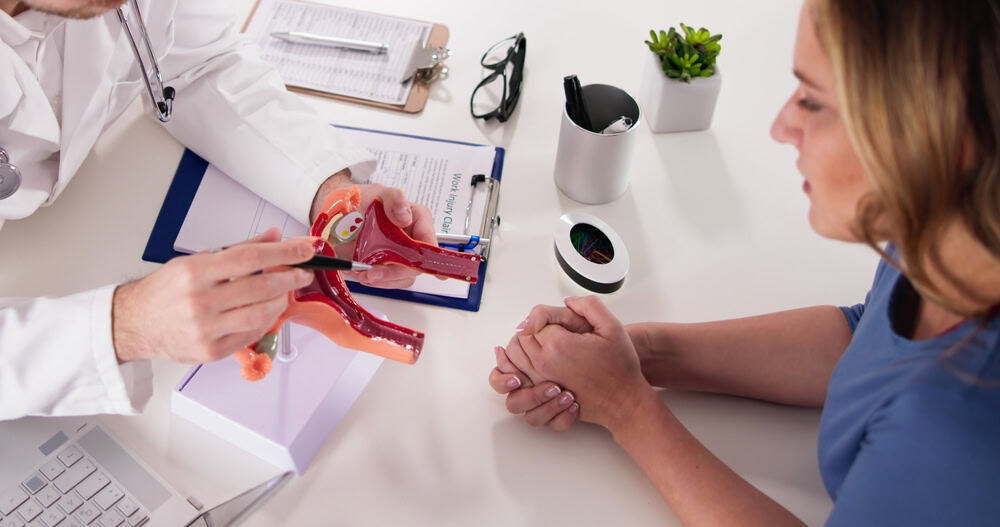
Uterine fibroids and the cost of silence
pharmafile | October 9, 2025 | Feature | Medical Communications, Research and Development | Reproductive health, gynaecological conditions, menstruation, uterine fibroids
By Tina Backhouse
Stigma and shame
Every month, most women on the planet have a period. It’s completely natural – yet somehow, we’re still not comfortable talking about it.1
Shame and stigma around periods mean that people are too often embarrassed to discuss the basic bodily function of menstruation, and how it impacts their lives.1
How then, when gynaecological conditions, such as uterine fibroids, have heavy periods as one of their main symptoms,2 can we ensure that women are empowered and able to access the best care to understand and treat their condition?
What are uterine fibroids?
Uterine fibroids, also known as uterine myomas or leiomyomas, are non-cancerous tumours of the uterus made up of muscle and fibrous tissues. They are actually an incredibly common condition: around two in three women develop at least one fibroid in their lifetime. Some will never know, living symptom-free. But for others, depending on the location, size and number of fibroids, symptoms can be painful.2
Symptoms can include heavy menstrual bleeding, stomach and back pain, feeling a frequent need to urinate and in rare cases fertility complications.2 For some women, heavy bleeding means soaking through clothes, missing work and dealing with chronic anaemia.2 3
Despite the burden, many women wait years before receiving a diagnosis. A study across five European countries (France, Germany, Italy, Spain and the UK) found that up to 33% of women waited five years or more to seek care for fibroid symptoms.4 For black women, barriers to accessing care are complex, with evidence of racial bias in pain assessment, dismissal of symptoms and slow referrals to specialists.5 6 7
A disproportionate burden
Black women are two to three times more likely compared with the general population to develop fibroids. They’re also more likely to develop larger and more numerous fibroids from a younger age. This leads to more severe symptoms, including debilitating bleeding and pelvic pain.8
We can no longer ignore the role that medical misogyny and racism play in this story. They are not abstract concepts. They are evidenced in health outcomes, in treatment pathways and in the choices available to women when they seek help for chronic gynaecological conditions.9 10
The wider impact
When a bodily function has stigma and shame attached to it, a cycle of misinformation begins and a vacuum forms where support should be. We find ourselves in a self-perpetuating cycle that leaves women unable to access areas of society: excluded from spaces such as work, school and social events.11 12
One study estimated that fibroid-related costs in the EU due to productivity losses and healthcare expenses exceed €1.4bn per year.13
This is not just a ‘women’s health issue’ – it’s a public health and economic issue.
How to combat silence
From my perspective, we need to replace stigma and shame with dignity, and the first step is talking about it – without euphemism, without embarrassment and with the urgency it deserves. We cannot be too embarrassed to discuss what is normal, as it stops us from identifying what is not.
Tina Backhouse is Vice President Europe for Government and Policy at Theramex
Tina has over 25 years’ experience in global senior leadership roles in the pharmaceutical industry. She brings experience of launching innovative products across a diverse range of therapy areas within both large and small pharma companies.
Most recently Tina joined Theramex to lead the UK Women’s Health business in July 2020 as General Manager, and has since been appointed as Vice President Europe for Government and Policy for Theramex in 2025. She is also a member of the DWP Menopause Advisory Group.

References
1. Arif N. From shame to solidarity: how we can reverse harmful narratives on period stigma BMJ 2024; 384 :q152 doi:10.1136/bmj.q152
2. Donnez J, Dolmans MM. Uterine fibroid management: from the present to the future. Hum Reprod Update. 2016 Nov;22(6):665-686. doi: 10.1093/humupd/dmw023. Epub 2016 Jul 27. PMID: 27466209; PMCID: PMC5853598.
3. Dykstra C, Laily A, Marsh EE, Kasting ML, DeMaria AL. “I think people should be more aware:” Uterine fibroid experiences among women living in Indiana, USA. Patient Educ Couns. 2023 Feb;107:107584. doi: 10.1016/j.pec.2022.107584. Epub 2022 Dec 1. PMID: 36473404; PMCID: PMC9808590.
4. Downes E, Sikirica V, Gilabert-Estelles J et al. The burden of uterine fibroids in five European countries. Eur. J. Obstet. Gynecol. Reprod. Biol. 2010;152(1):96-102. doi.org/10.1016/j.ejogrb.2010.05.012
5. University of Oxford, NHS Race & Health Observatory. Patients report alarming lack of trust in NHS primary care providers. NHSRHO. 2025.
6. Huang D, Magaoay B et al. Presence of Fibroids on Transvaginal Ultrasonography in a Community-Based, Diverse Cohort of 996 Reproductive-Age Female Participants. JAMA Netw Open. 2023;6(5):e2312701. doi:10.1001/jamanetworkopen.2023.12701
7. VanNoy BN, Bowleg L, et al. Black Women’s Psychosocial Experiences with Seeking Surgical Treatment for Uterine Fibroids: Implications for Clinical Practice. Womens Health Issues. 2021 May-Jun;31(3):263-270. doi: 10.1016/j.whi.2021.01.001. Epub 2021 Feb 18. PMID: 33610438; PMCID: PMC9835088.
8. Jefferies K, Bland L, Oladimeji B, et al. Uterine fibroids and Black people of African descent globally: a scoping review protocol. BMJ Open 2024;14:e085622. doi: 10.1136/bmjopen-2024-085622
9 Palmer, M.J., McCarthy, O.L. and French, R.S. (2025), The Burden of Poor Reproductive Health in England: Results From a Cross-Sectional Survey. BJOG. https://doi.org/10.1111/1471-0528.18133
10. Women and Equalities Committee. First Report of Session 2024-25. HC 337. UK Parliament. 2024.
11. Schoep ME et al. Productivity loss due to menstruation-related symptoms: a nationwide crosssectional survey among 32 748 women. BMJ Open. 2019;9(6):e026186. doi:10.1136/bmjopen-2018-026186.
12. Starr M et al. Epidemiology of menstrual-related absenteeism in 44 low-income and middle-income countries: a cross-sectional analysis of Multiple Indicator Cluster Surveys. The Lancet Global Health. 2025:13(2):e285-e297 doi:10.1016/S2214-109X(24)00468-6
13. Hunt PA, Sathyanarayana S, Fowler PA, Trasande L. Female Reproductive Disorders, Diseases, and Costs of Exposure to Endocrine Disrupting Chemicals in the European Union. J Clin Endocrinol Metab. 2016 Apr;101(4):1562-70. doi: 10.1210/jc.2015-2873. Epub 2016 Mar 22. PMID: 27003299; PMCID: PMC4880176.
Related Content

More than 13,000 women report period changes after COVID vaccine
The number of women who have reported changes to their period to the MHRA after …

Pfizer and Myovant’s menstrual blood loss treatment reports 78% effectiveness
Pfizer and Myovant Science’s relugolix treatment to reduce menstrual blood loss in women with uterine …

Repros Therapeutics says positive results from Phase II trial of uterine fibroids drug; shares jump
Shares in Repros Therapeutics (Nasdaq: RPRX) surged to close over 18% Thursday after the company …