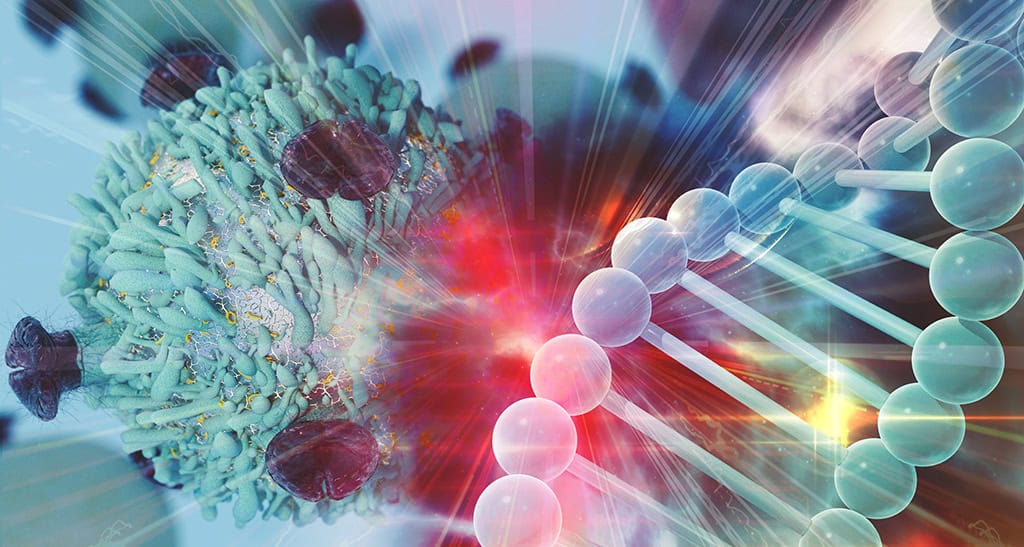
T-cell therapy – the evolution of cancer treatments
pharmafile | July 7, 2025 | Feature | | CERo therapeutics, Cancer, T cell, immunotherapy
The current forms of immunotherapy, how T cell therapy works and what the future holds
Pharmafile talks to Chris Ehrlich, the CEO of CERo therapeutics, about T-cell therapy, a recent form of immunotherapy.
Pharmafile: How does T-cell therapy work?
Chris Ehrlich (CE): In the past 20 years or so, there’s been a revolution of training the body’s own immune system to recognise things like cancer, which it doesn’t, and so cancer runs unchecked. One of the components of the body’s natural immune system is the T or thymus cells. How the process works is, you take the patient’s blood and you distil out the T cells. Then, you reprogramme the T cells with features that allow them to find the key, which is an antigen or a target on a cancer cell, so they can get to work fighting against the cancer cells. That’s been the real revolution in the past 20 years and it’s a very interesting and busy space right now.
Pharmafile: How does T-cell therapy differ from other forms of immunotherapy?
CE: Let me start by giving you a brief history of cancer therapeutics in general. Cancer is a malfunction of protein production in your system, and it grows fast, like other cells in your body (your hair, your skin), but this is one you don’t want. In the 1940s, 50s, 60s and even 70s, doctors would use what you’d call chemically-based chemotherapeutics to fight against cancer, almost like using bleach to kill certain bacteria and viruses. This was not dissimilar to how they would treat infections and antibiotics.
When researchers discovered that taxanes, found in soil and trees, could be used to fight against cancer, there were pros and cons. The good news was that it killed fast-moving cancer, but it also killed things that you needed, like your hair and stomach lining. Pople could become very ill from this treatment and some would choose to just pass away rather than take such a damaging therapy.
In the 70s, when US President Nixon declared war on cancer, the US and the UK, including Cancer Research UK, decided to invest in cancer treatments besides chemotherapy. Until the late 1990s, all that cancer patients had were these very damaging chemotherapeutics. In 1997, one of the first cancer monoclonal antibodies, which come from B cells and act like guided missiles without a warhead, was approved. This was called Rituxan. It was used for treating liquid tumours like non-Hodgkin’s lymphoma, and it worked really well because it was very targeted, and it wasn’t a drug in the sense of chemotherapy. The side effects were very limited.
In 1998, Genentech developed a drug called Herceptin, which targeted the overexpression of protein for women who had breast cancer. Common rhetoric was to get rid of chemotherapy, minimise its use as much as possible and use these high therapeutic index treatments instead.
Then, in the early 2000s, scientists sequenced the human genome and scientists questioned if they could figure out a genetic basis for cancer and edit it to eliminate the disease. They also realised they could take these monoclonal antibodies, which were like a missile without a warhead, and they could add a warhead. They added a number of things like these chemotherapeutics, but in extremely small doses and in a very directive way. These are what they call antibody drug conjugates, that are very popular right now. These drugs passively treated your cancer, leading scientists to consider what would happen if patients were treated actively. What if we used the most powerful therapeutic human beings have, which is your own immune system, and we could train your immune system. This led to CAR T – CAR stands for chimeric antigen receptor – and this is what CERo is doing: using T-cell therapies to train your system to recognise foreign bodies and eliminate them.
Pharmafile: Can you tell us more about the benefits and drawbacks of T-cell therapy?
CE: Yes, and they’re probably going to be different from what you’d expect. Firstly, the benefits are patient-specific, so you shouldn’t have much of an immune response. It’s not an external drug, it’s your own blood, just modified. Secondly, unlike chemotherapy, it should only attack specific targets and does not cause a lot of side effects.
One of the main downsides is the high costs. We’re running a trial right now and it is extremely expensive to take these T cells out and make them – hundreds of thousands of dollars per patient – because it’s patient-specific. And then second is scalability; I can’t just take a drug and put it on a bottle and put it on the shelf. I make each one, like custom-made clothes as opposed to something off the rack. So, at the moment, we only use them to treat very ill patients.
Pharmafile: Building on that, can you explain how CERo’s T-cell therapy differs from other T-cell therapy?
CE: So, as I mentioned, T cells are found in the patient’s blood. They are patient-specific. What they do is identify an antigen that theoretically is only expressed on cancer cells. They then attach themselves to those cancer cells, slice into them and release toxins to kill the cancer cells while sparing healthy cells.
The difference in our approach is that we are co-opting two different kinds of immune systems: dendritic cells and T cells. Dendritic cells are macrophages, which are a type of white blood cell that surrounds and kills microorganisms, removes dead cells and stimulates the action of other immune system cells.1 T cells slice them and macrophages eat them. We want T cells to be able to take both approaches. We engineer the T cell so it can go to the cancer cell, slice it (in its function as a T cell) and then the T cell acts like a macrophage – digesting, destroying and re-presenting the cell to the immune system to educate the immune system. In summary, it’s exactly like the T cell therapy we talked about, but it’s T cell therapy that uses a two-pronged approach instead of one.
Pharmafile: If your lead candidate is approved, how do you anticipate that it will impact patient care?
CE: Pre-clinically, in animals, our lead candidate CER-1236 appears to work in liquid tumours, in a similar way to other CAR T therapies, like lymphomas and other blood cancers. It also presents good data in solid tumours, like ovarian and non-small cell lung, which have been really difficult to treat. We now have two Investigational New Drug applications open with the US Food and Drug Administration for both kinds of tumours. If this translated into humans, you could have one treatment – which, so far, we’ve only given one dose of – and if it worked, you could treat all different kinds of tumours.
Pharmafile: Can you tell us more about the broader potential of T-cell therapy and how you anticipate it advancing?
CE: It’s a field that I’m less involved in, but currently scientists are looking not only at T cells that are engineered for cancer treatments, but also for autoimmune diseases. This is not an area that we are covering, but the key question is, can you expand and genetically modify the immune system to tamp down your body’s reaction? But we currently have our hands full trying to treat liquid and solid tumours. We have more patients than we can treat and these patients are extremely ill. When it takes us three weeks from when we take their blood to actually make the drug, these timelines mean that patients might expire while they’re waiting for the treatment. In biotech, gestation periods can be long; I was working on antibodies in 1998, and it took 20 years before they become mainstream.
Pharmafile: Is there anything else about your work in T-cell therapy that you’d like to add?
CE: I can talk a bit about the business model of small companies and how they take products forward. For example, if our lead candidate gets approved, development will happen quickly. Since the patients are all extremely ill and have a very limited amount of time left, the FDA has outlined a clear, fast-track drug approval pathway. Twenty years is a long time to wait, but looking at current research and fast-track approvals, we are working to expedite things to get therapies to patients in a far shorter period of time – possibly even in a couple of years, rather than 20.
References
1. https://www.cancer.gov/publications/dictionaries/cancer-terms/def/macrophage
2. https://www.cero.bio/about

Chris Ehrlich is the CEO of CERo therapeutics, an immunotherapy company developing T cell therapies which uniquely combine attributes of macrophages and dendritic cells of the innate immune system with those of T cells for the treatment of both haematologic and solid tumour cancers. Recently, its lead candidate, CER-1236 for acute myeloid leukemia has been used to treat one patient and has been granted orphan drug designation.2

This article featured in: July 2025 – The Pharmafile Brief
Related Content

CuraCell granted approval for trial of new therapy for metastatic cancers
Swedish immunotherapy company, CuraCell, has received approval from the Paul-Ehrlich-Institut in Germany to begin a …

Central nervous system cancer metastases – the evolution of diagnostics and treatment
The current forms of immunotherapy, how T cell therapy works and what the future holds
BioMed X and Servier launch Europe’s first XSeed Labs to advance AI-powered antibody design
BioMed X and Servier have announced the launch of Europe’s first XSeed Labs research project, …