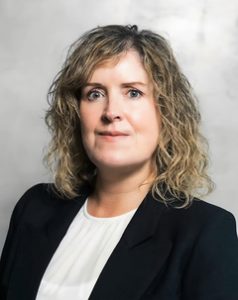
A new kind of patient advocate
pharmafile | July 30, 2008 | Feature | Sales and Marketing | Cancer, campaigner, market access, patient
When I came to interview Kate Spall, it was she, not I, who fired the first few questions. Her approach was neither interrogatory nor guarded, just direct in a simple call for the truth – something she says the patients she helps are denied every day.
Kate was curious about the readership of Pharmafocus – specifically asking if any patients with rare cancers might see the interview, so she could prepare for another volley of requests for her help.
That’s because the 36-year-old from North Wales has become a truly unique campaigner for access to cancer drugs in the UK, as well as a media hero and symbol of hope for many patients denied life-extending treatments.
For nearly a year, Kate has waged a personal campaign against Primary Care Trusts and Local Health Boards who deny patients treatment, and she keeps on winning. She has come to the assistance of 52 patients in England and Wales who have been denied access, and has won all but two of the appeals.
On Kate’s desk in her small office at home sit another 200 requests for help. She means to assist every individual case that comes her way, and says her aim is nothing short of ending ‘postcode prescribing’ in the UK.
The Pamela Northcott Fund
Kate’s involvement began when her mother, Pamela Northcott, was diagnosed with kidney cancer in 2005. When her oncologist recommended Bayer’s Nexavar to help her extend her life, Conwy and Denbighshire NHS Trust in North Wales refused funding for the treatment.
Incensed, Kate and her sister Emma Northcott interrupted a board meeting at the trust and demanded it grant their mother access to Nexavar. After continued campaigning Kate eventually won access to the drug for her mother, but it was too late for Pamela, who died aged 58 in August 2007.
Kate set up the Pamela Northcott Fund a year ago, and since her mother’s death has given up her job as a consultant to charities to focus on her voluntary role, battling for justice.
“I lost my mum a year ago, and this is why I do it. I’ve got to make something good out of it. It was so traumatic, and I always said she wouldn’t die in vain. That is what drives me, but it’s also a distraction as well.”
To help her mount a convincing clinical argument, Kate has studied the field intensively and has enlisted the help of a leading oncologist, Prof Robert Hawkins of the Christie Hospital in Manchester. She otherwise works alone and has no background in medicine or cancer. But her previous experience as an advisor to charities on good governance – how organisations make rules and follow them – has been absolutely crucial.
That’s because Kate has found that many PCTs and LHBs have little knowledge of national or local procedures, and often fail to follow them. Most of Kate’s 50 victories have been won by forcibly reminding trusts of their central governance responsibilities and holding them to account.
Costing lives
So what is it that PCTs are or aren’t doing when it comes to granting access to new cancer drugs?
The government says it is ‘unacceptable’ for PCTs to deny a patient treatment simply because NICE has not yet appraised the drug, yet many PCTs continue to use this to justify withholding access.
Kate has found this to be just one of the many flawed reasons put forward which do not comply with national NHS decision-making rules. She says the workings of the ‘exceptional circumstances’ system are little known to many Trust managers, meaning they frequently arrive at ‘unacceptable’ verdicts.
Kate cited a letter about a current case she had received from a trust executive, informing the patient that the drug he requested was not NICE approved, and was therefore unsafe. The reality, of course, is that the drug’s safety has been approved by the UK regulator, the MHRA, and is prescribed in many other countries around the world.
Kate says this kind of response is far from rare, and shows just how unqualified NHS executives are to make these vital decisions.
“PCT managers are acting way outside their expertise and making clinical judgements on patients when it’s not their job to do so at all. The level of ignorance is shocking,” she says. “But when I see a letter like that it’s great, because I know I’m going to win the case. And that is just one letter of about a hundred.”
She says this pattern can only be either incompetence or deceit, in order to contain costs. “It’s [usually] a cost exercise, and for them to say anything otherwise would be remiss. The bottom line is that a patient clinically needs a drug, and without it they will die. It’s not a PCT’s job to euthanise cancer patients, which is essentially what they are doing.”
Kate spends days searching for such inaccuracies, and her appeals win when a PCT stumbles over its own clumsy bureaucracy and fails to follow policy, which is fundamentally to make patient care a priority. PCTs go unchallenged when patients don’t know their rights or are too sick to argue, but once a patient has the recommendation of their oncologist for a drug, Kate will take up the case from there.
Kate says PCTs seek ways to avoid funding drugs instead of looking for solutions to free up money. She says her lack of clinical background has not proved a disadvantage, and believes it has been her commitment, awareness and general savvy that have been key to winning the drugs for patients.
This is a regrettable state of affairs, she says. “It shouldn’t be about how bright you are, how articulate you are, and how well you can research a system. Whether you live longer than the next cancer patient shouldn’t be down to that.”
Each case demands sifting through enormous amounts of paperwork, which can see Kate can working eight to fourteen hour days, and sometimes into the weekend. She must familiarise herself with the history and prognosis for the specific patient, and then the myriad of PCT policies for exceptional cases, as there is no recognised standard process and Trusts across the country differ greatly in their procedures.
But Kate says PCTs are best beaten with their own bureaucracy, and if anything, the long hours filtering through policy demonstrate an even greater commitment to succeed. A trust can be taken to court over an exceptional case, as Swindon PCT experienced in April 2006, when breast cancer patient Anne Marie Rogers won her High Court battle for Herceptin. But Kate has found that even just the threat of judicial review is enough to force funding from some PCTs – most recently, two agreed to supply treatment just one day before being due in court.
Fighting for the future
Kate says the current situation in England and Wales is unsustainable, and is determined to change forever the way drugs are funded. She says the ‘exceptional case’ system needs to be eliminated altogether and that her work now is just the springboard.
She says: “I never want anybody to go through what we did. My absolute objective is to change this whole system. To ensure cancer patients get the treatment they need, when they need it. That’s what I’m striving for, so we don’t have to go through this horrendous exceptional cases system. That really is when it ends for me, when I get there.”
It’s a highly ambitious task, but Kate’s fame means she is now gathering clout in the corridors of power. She has contributed to the Commons debate on ‘exceptional cases’ by writing a briefing note for Dr Ian Gibson, the Labour MP for Norwich North, highlighting flaws she repeatedly finds in the system and the incompetence she has met among decision makers.
Working with NICE
In a highly significant move, Kate has been asked by NICE to be patient representative for the multiple technology appraisal for kidney cancer. NICE will issue guidance in January 2009 for Bayer’s Nexavar, Sutent from Pfizer, Roche’s Avastin, and Torisel from Wyeth.
In the final consultation process for the guidance this summer, Kate will submit to the advisory board her reasons as to why patients should receive the drugs on the NHS.
Meanwhile, others see the emergence of Kate Spall as a sign of impending change. Karol Sikora, a renowned oncologist and leading campaigner for NHS reform, has publicly praised Kate’s campaign. He says her work could force a lasting change before the next general election, but Dr Sikora also warned of the ethical minefield Kate has entered.
A limited pot exists for NHS drugs which means some rationing will always be necessary. Sikora said more money spent on cancer treatment will mean less for other disease areas – most of which do not have champions like Kate. Disproportionate funding for different diseases and different types of cancer already exist as a result of politics, and could worsen with or without the exceptional case system, according to Sikora.
He said: “The difficulty is that rationing at the moment is completely inequitable, in that those that shout tend to get, and those that don’t shout certainly don’t get.”
Top Up Fees
The government recently announced that it is to review the current ban on ‘top up fees’ – where cancer patients want to pay privately for new drugs not available on the health service while retaining their standard treatment on the NHS.
Some trusts do not allow this dual system approach, and insist that if patients receive specific drugs privately they must also pay for all other services received. The government review looks likely to compel trusts to end this strict enforcement, but the ruling is unlikely to solve the more fundamental problem of funding for the drugs on the NHS.
European comparisons
Sikora points out that Britain already spends the same on cancer services as France – and most of Europe – but there are ten drugs available to patients across the channel that cannot be accessed on the NHS.
Sikora says this indicates inefficiencies in our system, and attributes this waste to PCT managers. He witheringly refers to some of the “low-grade administrators who want to go home at five o’clock.” He says their decisions are made without any true understanding of healthcare, and says this means the NHS is alone in Europe in relying on amateurs to make these decisions.
But if the government could agree to clip the bureaucracy of the British system, according to both Spall and Sikora the budget for medicines could grow significantly.
For the meantime, Kate will persevere and hope to manage her workload by the issue of a patient advocacy pack, consisting of guidelines to fight an exceptional case, meaning patients need not rely so heavily on her time.
A guiding light
Kate does make time to have a life beyond her campaigning. For a recent holiday with her young family, her children demanded she made no mention of cancer in any form for at least two weeks. Her husband and daughters say they are immeasurably proud of her and her achievements, but worry she could burnout from the escalating workload, or suffer by becoming too involved with patients. Kate herself seems aware of the pitfalls, and has coached herself to adopt a business-like approach with patients by way of self-preservation.
Praise from the patients she has helped and the media spotlight have created an image of Kate as a blend between superwoman and guardian angel. But by her own estimation, Kate says her skills and education are nothing extraordinary. She can acknowledge how remarkable her work is, but stays unassuming about its significance.
Asked whether she feels like a hero, she replies: “Its embarrassing that people think that. I realise it’s a huge achievement, and I guess I’ve given people a lot of hope.
“But it’s a real privilege to be able to do that. I’m privileged to work with these people and if I do help in any way, that’s great, but I certainly don’t think I’m anything special.”
She added simply: “I’ve just got a moral obligation to pass it [my knowledge] on and tell people how to get the treatment that they need.”
Box: The new cancer drugs: in demand, but out of reach
NICE has begun assessing the value of four different treatments for kidney cancer, and will pit the efficacy of each medicine against its cost-effectiveness to make a decision that will affect thousands of people.
The four drugs are among those that Kate Spall and her patients have been fighting for: Roche’s Avastin (Bevacizumab), Nexavar (sorafenib) from Bayer, Pfizer’s Sutent (sunitinib) and Torisel (temsirolimus) from Wyeth. The Institute could potentially approve all of them, but many factors exist to make it unlikely.
Only Avastin, perhaps the most famed of the group, has been previously examined by NICE. The body rejected its use on the NHS a year ago for the treatment of colorectal cancer, as it showed only in a limited extension of life despite the high cost.
But in the new indication for kidney cancer, Avastin could hold the advantage over its three competitors. The drug is already launched in the UK as a first-line treatment for the disease to be used in combination with interferon. Rivals Sutent, Nexavar and Torisel are only recommended for patients who no longer respond to interferon.
Moreover, manufacturer Roche has also undercut its rivals by pricing Avastin at around a fifth less than the other drugs, though it still proves costly at around £23,000 per patient per year.
But looking to the SMC, Scotland’s assessment body, for an indicator as to how NICE might rule on the technologies does not offer much hope to patients. The body has already rejected Nexavar and Sutent, said to cost around £32,000 per patient per year, for the same indication. The body is yet to make a judgement on Torisel and Avastin.
Spall is set to submit evidence as a patient representative to NICE in July this year, and argue for approval of all four drugs, though it will January 2009 before the body finalises its review.
Non-small cell lung cancer: Tarceva
NICE rejected the use of Roche’s Tarceva for locally advanced or metastatic non-small-cell lung in April this year.
Trial data suggests patients on the drug are 40 % more likely to survive for at least a year after treatment compared to placebo, and that 15% of patients using the drug survived beyond two years.
But NICE says that its monthly costs of £1,600 or £6,800 for a typical course of treatment were not cost-effective compared to the existing treatment Sanofi-Aventis’s Taxotere (docetaxel).
Roche is now appealing against the decision, with a final decision expected in November. The Scottish Medicines Consortium recommended the drug in May 2006, saying its more convenient oral formulation, more favourable adverse-effect profile and comparable overall survival rate compared to docetaxel meant it should be considered for use.
Roche says it is a clear example of postcode prescribing, since funding for Tarceva is available for patients in Scotland but not England, Wales and Northern Ireland. It adds that patients are 15 times more likely in France and 10 times more likely in Germany to receive Tarceva than patients in England, Wales and Northern Ireland.
Tyverb: advanced breast cancer
GSK’s Tyverb , a new oral treatment for (HER2)-positive advanced breast cancer for patients who have stopped responding to Herceptin was launched in the UK in June. NICE has put it on its fast-track appraisal list, but patients have been seeking access to it for some time. Most notably, the famous cancer patient and fundraiser Jane Tomlinson (who died in September 2007) had to battle for access for the drug on clinical trials, because her local PCT would not fund the treatment.
Abandoned appraisals
A new development which emerged at the end of June is NICE abandoning a number of appraisals of cancer drugs. The Institute says it has been forced to terminate the reviews because manufacturers have failed to submit any evidence, or have submitted insufficient evidence. The appraisals in question are:
* Avastin (bevacizumab) in combination with paclitaxel for the first-line treatment of metastatic breast cancer
* Avastin in addition to platinum-based chemotherapy for the first-line treatment of inoperable advanced, metastatic or recurrent non-small-cell lung cancer; (other than predominantly squamous cell histology)
* Gliadel (carmustine implants) as an adjunct to surgery in recurrent glioblastoma multiforme for whom surgery is appropriate
* Erbitux (cetuximab) for colorectal cancer following failure of oxaliplatin-containing chemotherapy.
Box: The PCT perspective
The system for exceptional cases may not be understood by many of England’s PCTs, but it is certainly familiar to their reps at the NHS Confederation.
The body, which specialises in issues of policy and has a large membership of trust managers, has just issued best practice guidance on how primary care trusts might manage an exceptional request, in the hope of easing the current tensions.
David Stout is director at the NHS Confederation’s PCT network, a new group within the body which was set up at the end of 2006 to represent the interests of PCTs and their leaders. He admitted the mounting controversy and confusion surrounding the system had prompted the Confederation to issue the guidelines, citing the need for the “smooth processes” by which PCTs deal with exceptional cases, and make them “as effective as possible for the benefit everyone involved.”
But unlike Spall, he does not see any real need for the current and controversial system to be much altered. He says the consistency and efficiency of the decision-making might be improved, and said in response there was “appetite” among PCTs to set up shared panels to examine exceptional cases.
Discussion is still underway, but he indicated these panels might exist at strategic health authority level so as to ensure cases within the same region were presided over by the same committee. It would, however, be the discretion of an individual trust to hand over responsibility.
Stout also stood by NICE as an “effective and robust system” of reviewing drugs, though he said the period before appraisal was complex, adding: “Sometimes the evidence base won’t be clear [for a PCT board to make a decision], but a group of PCTs can’t replace the NICE role before it makes an appraisal. Nor would it be sensible for them to do so.”
He said a useful solution could be that put forward by the health select committee last year, which suggested that NICE should make interim judgements on medicines ahead of the full HTA.
When asked if he thought the system could be altered by Kate Spall’s efforts, Mr Stout remained reserved, which seemed to indicate that those within primary care don’t anticipate any radical change just yet: “There are ways in which the system could change, but we will never get away from this being a difficult situation where difficult decisions have to be made.”
Related Content

Central nervous system cancer metastases – the evolution of diagnostics and treatment
The current forms of immunotherapy, how T cell therapy works and what the future holds
BioMed X and Servier launch Europe’s first XSeed Labs to advance AI-powered antibody design
BioMed X and Servier have announced the launch of Europe’s first XSeed Labs research project, …

T-cell therapy – the evolution of cancer treatments
The current forms of immunotherapy, how T cell therapy works and what the future holds