Key product launches of 2011
pharmafile | December 19, 2011 | Feature | Business Services, Manufacturing and Production, Medical Communications, Research and Development, Sales and Marketing | 2011, Actos, Benlysta, Brilique, Eliquis, Eylea, Incivek, Jevtana, Multaq, Victrelis, Xalkori, Yervoy, Zytiga, avastin, gilenya, key products
Avastin
2011 saw a handful of high profile drugs suffer because of new safety and efficacy concerns. Chief among these was Roche’s cancer drug Avastin. In June an FDA advisory panel said Avastin in advanced breast cancer after ruling it neither safe nor clinically beneficial for these patients.
The FDA confirmed the decision in November, revoking its licence in breast cancer, and highlighted its raised risks: severe high blood pressure; bleeding and haemorrhaging; heart attack or heart failure; and the development of perforations in different parts of the body such as the nose, stomach, and intestines.
The decision does not affect Avastin’s other licences in the US, which includes colorectal cancer, or Avastin’s breast cancer licences in other countries. Avastin is currently the biggest selling cancer treatment in the world, making $6.5 billion in 2010, but is expected to lose $1 billion in annual revenues as a result of the decision.
This loss was partially offset with a new licence for Avastin in ovarian cancer, which analysts believe could bring in around $1 billion in peak annual sales. The EMA has restricted Avastin’s use with just one form of chemotherapy in Europe, saying that it believed Avastin could still be beneficial in this setting.
Multaq
Sanofi’s Multaq (dronedarone) was originally touted as a potential blockbuster when it was approved in 2009 for atrial fibrillation (AF), but serious safety concerns have prompted regulators to scale back its use, which have all but finished off the drug.
A series of adverse events – including cardiovascular problems, liver and lung injuries – have been reported with the use of the drug. Reviews of its safety by the FDA and the European Medicines Agency have resulted in it use being restricted to a subgroup of patients, and the FDA is expected to make a decision on the drug next year.
Actos
In June, French and German regulators pulled Takeda’s diabetes drug Actos (pioglitazone) from their markets, after a French study of public insurance data showed a slight increase in the risk of bladder cancer in patients treated with the drug.
The EMA did not feel the increased cancer risk was enough to remove it from the market, but said that new warnings should be added to advise prescribers not to use Actos or Competact in patients with bladder cancer or a history of the disease, or in patients with uninvestigated macroscopic haematuria.
Multiple sclerosis
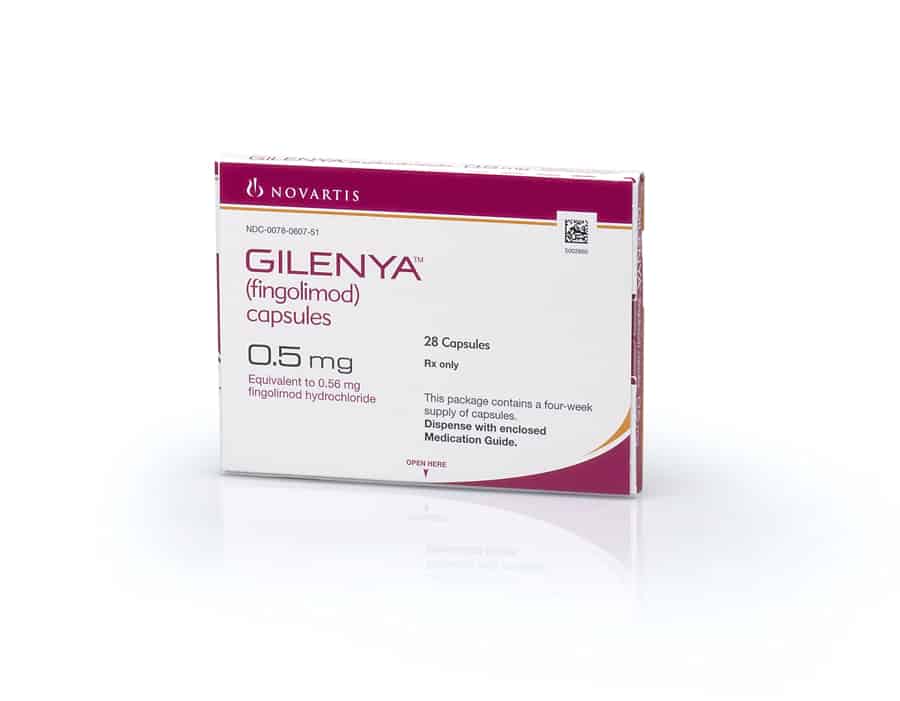
Novartis’ Gilenya become the first oral multiple sclerosis drug on the market when it was launched in April in the UK.
It represents a significant advance in MS treatment, and further rival drugs are expected to generate competition in the next few years. Gilenya (fingolimod) is licensed to treat highly active relapsing remitting multiple sclerosis after beta interferon injections have failed, but for patients whose disease is not severe enough for infusion therapy.
The drug costs £19,665 for an average patient, per year, which includes a one-off observation cost of £502 for patients receiving their first dose – which makes it cheaper than its closest rival, Biogen’s infusion therapy Tysabri (natalizumab).
The drug has impressed in clinical trials, with one key study showing that it cut relapses of MS by 52% at one year compared with interferon beta-1a IM. But it does have a number of common, potentially serious side effects, including reduced white blood cells, irregular heart rhythm and gastroenteritis, and because of this Novartis will be required to implement a pharmacovigilance plan for Gilenya.
The UK cost effectiveness body NICE has already issued preliminary guidance rejecting the drug on grounds of cost.
Lupus
GlaxoSmithKline’s and Human Genome Science’s lupus treatment Benlysta was approved in the US in March, but will have to prove its safety record if it is to remain on the market long-term.
It is the first new lupus treatment licensed by the FDA in more than 50 years, and the regulator fast-tracked its review in recognition of its potential to be a major advance in the disease area.
Benlysta (belimumab) can be used to treat adults with active, autoantibody-positive systemic lupus erythematosus (SLE) who are receiving standard therapy. Lupus is a potentially fatal, autoimmune disease and there are around 300,000 to 1.5 million sufferers in the US, and disproportionately affects women, and African American women.
Following its priority review Benlysta will have to stand up to extended post-marketing data requirements as a matter of course, but the FDA also wants more safety and efficacy information and stronger warnings for patients about side effects.
GSK and HGS will have to produce a medication guide to inform patients of the risks associated with Benlysta, and conduct an additional clinical trial to further evaluate its safety and effectiveness in a particular subgroup of patients.
Anti-thrombosis
Pfizer and Bristol-Myers Squibb are hoping that their new oral anticoagulant Eliquis (apixaban) will prove to be best in class.
Eliquis will compete for dominance of the market with Bayer’s Xarelto (rivaroxaban) and Boehringer Ingelheim’s Pradaxa (dabigatran), which are both now well-established and gaining additional licences.
Eliquis was approved in Europe for the prevention of venous thromboembolic events (VTE) in adult patients who have undergone elective hip or knee replacement surgery.
Antiplatelets
AstraZeneca’s oral antiplatelet Brilique (ticagrelor) is a new, more potent rival to Sanofi and Bristol-Myers Squibb’s Plavix (clopidogrel).
The firm’s PLATO study showed its superiority – treating 54 patients with acute coronary syndrome (ACS) with Brilique instead of Plavix for one year prevented one atherothrombotic event, while treating 91 patients prevented one cardiovascular death with no increase in major bleeding.
The FDA approved the drug (called Brilinta there) in July, despite concerns about risk of bleeding. The drug is predicted to earn around $2 billion in peak year sales. The manufacturer is due to begin enrolling patients into PEGASUS-TIMI 54, a new study of Brilique which looks at its efficacy in people who have suffered a heart attack over the past one to three years.
Hepatitis C
2011 has brought patients with hepatitis C not one but two new groundbreaking medicines to treat the condition.
Merck’s Victrelis (boceprevir) and Johnson & Johnson/Vertex’s Incivek (telaprevir) were both launched in the US in May.
The drugs are both oral protease inhibitors, and promise to significantly improve treatment when added to the current standard treatments for the disease. An estimated 270-300 million people throughout the world have the disease.
Analysts predict Incivek will prevail because it has shown a higher cure rate, and a simpler and faster simpler dosing regimen. But Vertex, which has never launched a drug before, will have to overcome the might of Merck and its new US marketing partner Roche.
Vertex’s belief in the superiority of its product is reflected in its price, which is $49,200 for a 12-week course. This cost is much higher than Victrelis, and is equivalent to the price of a whole 48-week treatment with Merck’s drug.
Incivek has had the best start, earning $420 million between May to October, while the same period saw Victrelis earn a more modest $31 million.
Prostate cancer
Zytiga a new treatment for the most hard to treat cases of prostate cancer, was approved by the FDA in May. Marketed by J&J subsidiary Centocor Ortho Biotech, Zytiga (abiraterone acetate) has been shown to help men with advanced prostate cancer live longer, compared to existing treatments.
The oral treatment is for use in combination with prednisone for metastatic castration-resistant prostate cancer patients who have received prior chemotherapy containing docetaxel.
Analysts predict the drug will reach peak sales of between $800 and $1 billion, and will compete with another new entry to the prostate cancer market, Sanofi’s Jevtana. Zytiga is an oral treatment, compared to the traditional chemotherapy formulation of Jevtana, which should give it the edge.
Zytiga works by suppressing androgens, the male hormones that can help fuel the tumour’s growth. The drug is an oral androgen biosynthesis inhibitor that works by inhibiting the CYP17 enzyme complex, which fuels androgen production in the testes, adrenal glands and the tumour tissue.
Trials showed treatment with Zytiga in combination with prednisone resulted in a 35% reduction in the risk of death, and a 3.9 months difference in median survival compared to placebo plus prednisone. In an updated analysis, results were consistent with those from the interim analysis with a 4.6 months difference between the two arms in median survival (15.8 months versus 11.2 months [HR = 0.74]).
Skin cancer
Yervoy, the new treatment for advanced melanoma has been hailed as a major breakthrough against the deadly disease.
BMS’ drug was approved by the FDA in March, and then in Europe in July. The drug is the first melanoma treatment to increase overall survival, but it also carries a risk of very serious side-effects. The FDA has issued a ‘black box’ warning on the drug after severe to fatal autoimmune reactions were seen in 13% of patients treated with Yervoy.
These included enterocolitis, hepatitis, dermatitis (including toxic epidermal necrolysis), neuropathy, and endocrinopathy. Yervoy (ipilimumab) has been approved as a first and second line treatment for advanced, inoperable or metastatic melanoma, the deadliest and most aggressive form of skin cancer.
Analysts forecast sales of $820m – 1.7 billion by 2015. The US approval was based on impressive Phase III results in which Yervoy increased median overall survival, the gold standard in oncology trials, by 10 months, compared with just over six months when compared to GP-100, an investigational cancer vaccine.
Yervoy is given in a 90-minute infusion every three weeks for a total of four doses, costing $120,000 for a full course of treatment and will become one of the most expensive drugs on the US market. Analysts expect peak yearly sales of around $1.4 billion.
Roche’s Zelboraf (vemurafenib), for the treatment of BRAF positive melanoma, was approved in August. By targeting the BRAF positive mutation Zelboraf can treat about half of all late-stage melanoma patients, and is expected to bring in around $800 million in peak annual sales.
NSCLC and medullary thyroid cancer
The FDA approved Pfizer’s lung cancer drug Xalkori (crizotinib) in August for non-small cell lung cancer patients who over express the ALK gene. A diagnostic kit to detect ALK, made by Abbott, was also approved alongside the drug.
Analysts expect around $2.5 billion in peak sales. AstraZeneca’s Caprelsa (vandetanib), a treatment for late-stage non-operable medullary thyroid cancer, was approved in the US in April. The orphan drug was granted a licence from the FDA based on Phase III data showing six months additional progression-free survival compared to placebo.
AMD
Regeneron and Bayer’s Eylea (aflibercept) was approved in the US in November. A treatment of neovascular (wet) age-related macular degeneration, it will take on Novartis’s Lucentis (ranibizumab).
Another factor in the market is the frequent off-label use of Roche’s Avastin for the condition, especially in the US.
Related Content
Opdivo/Yervoy combo secures FDA approval for malignant pleural mesothelioma
Bristol Myers Squibb’s therapy regimen of Opdivo (nivolumab) in combination with Yervoy (ipilimumab) has secured …

Bristol-Myers Squibb demonstrates potential for long-term survival in kidney cancer patients treated with Opdivo plus Yervoy
Bristol-Myers Squibb has announced updated results from trialing Opdivo (nivolumab) plus Yervoy (ipilimumab) versus sunitinib …

Novartis’ Beovu approved in Europe after outclassing Eylea in wet age-related macular degeneration
The European Commission (EC) has chosen to approve Novartis’ Beovu (brolucizumab) injection, it has emerged, …