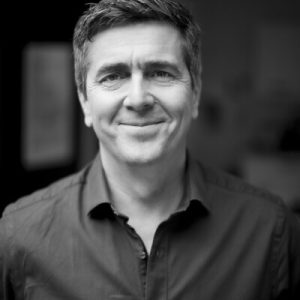
Interview: Rajeev Venkayya, president of Takeda Vaccine
pharmafile | January 19, 2015 | Feature | Manufacturing and Production, Medical Communications, Research and Development, Sales and Marketing | Bush, Ebola, Gates, Rajeev Venkayya, Takeda, brett wells, vaccines
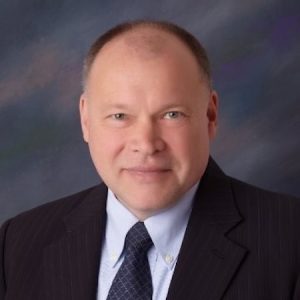
Rajeev Venkayya is the president of the global vaccine business unit at Takeda Pharmaceuticals. He has served as special assistant to former US president George W. Bush and senior director for Biodefense at the White House, and then director of Vaccine Delivery at the Bill and Melinda Gates Foundation.
Can you tell us about yourself and your role at Takeda
I am the head of the vaccines business unit at Takeda. I joined in 2012 when the decision was made to globalise Takeda’s vaccine business, which prior to that had been restricted to the Japanese market where it has had operations for over 60 years.
The goal of the vaccines unit that we established early was to develop vaccines to develop high priority and public health threats. Since then we’ve been working on a pipeline to build on that. I’m in charge of managing the team and driving the development programmes, and building and manufacturing an organisation to support those goals.
We have since launching the division acquired two companies, one – LigoCyte – was a small biotech based in Montana which had the leading vaccine candidate for the norovirus.
The second acquisition is a company called Inviragen based in Colorado, Wisconsin and Singapore. That company had an advanced candidate for Dengue fever, as well as earlier ones for hand, foot and mouth disease (HFMD) – along with one for a virus called Chikungunya.
From our standpoint all of these all addressed high priorities and were attractive to Takeda for building a global business.
Global vaccines are certainly in the spotlight at the moment with a great deal of focus around the Ebola virus, what do you see as the specific challenges are at play here in terms of finding a cure, and quickly?
In this situation which I would now call a global crisis, we have as a community a number of challenges. To begin with there is very limited infrastructure in the region where the outbreak is ongoing in West Africa.
I don’t just mean health infrastructure I mean all infrastructure, which compounds all the problems for a large scale emergency of this nature. On top of that the limited health systems in place in West Africa are just not working very well. Despite investments over the past years we are just not where we need to be.
In terms of the specific outbreak, the transmission dynamics of Ebola are very different in West Africa than they would be in a well-developed country like the US where you have a strong public health infrastructure that can identify, isolate and quarantine individuals that are suspected to have the virus infected or actually have the infection. As a result the transmission that you see from one individual to others is quite low.
In a place where you don’t have a good way of identifying potential cases one person ends up affecting many more people. So that’s where you see the dynamic of the outbreak expanding. So the nature of the communities and the lack of the health and public infrastructure is allowing this outbreak to spread much further than anyone would have expected.
When it comes to specific counter measures (drugs, diagnostics and vaccines) – the second set of challenges behind infrastructure is around the state of development of these technologies. The good news is since the early 2000s there has been an influx of resources into R&D for ebola within this area.
But unfortunately those candidates have not made it far enough along the pipeline so they’re ready for administration to people in large quantities. There are a lot of reasons for that and one of them is that the investments have primarily been made in the name of biodefence.
Even though the US has made significant investments in this area over the past 15 years, when you look at the magnitude of the problem and the number of biodefence threats that we can face – the investment amount for specific diseases is relatively low.
It would take huge resources in order to address all the biodefence threats to the point where advanced compounds were ready for administration, so we have a pipeline that is just not mature enough to address this outbreak now.
The good news however is that the community has mobilised – the global health community – including regulatory agencies and bodies like the World Health Organization (WHO). And so there is general agreement that everything possible should be done to streamline the evaluation and testing process so that products can go into people as quickly as possible without sacrificing safety or quality.
This is not easy to do because – and there is controversy around this now – normally you would conduct randomised controlled clinical trials with placebo groups to evaluate efficacy and safety, and there is huge pressure right now to not have placebo groups in these trials because don’t want to withhold potentially life-saving therapies.
This is the challenge combined with the lack of infrastructure in West Africa to do good clinical trials. People are working hard to put that in place, but it takes time. Until it is there it will be difficult to evaluate the many compounds that are coming to the surface.
WHO has defined the Ebola virus as the most severe biological threat in the world, what are the implications of that compared to what you’ve seen before – and is it more important to contain the spread of Ebola than to treat the disease itself?
It is of course both, you have to do your best to give infected individuals the best treatment possible, but from a societal and population standpoint it’s critical to control the spread. Isolation and quarantine – these public health interventions are absolute necessities.
In terms of a contrast to previous outbreaks, the transmissibility of Ebola is much lower than say pandemic influenza that we saw in 2009. So that’s good news, but the lethality is much, much higher than we saw with the H1N1 virus.
In Africa lethality for Ebola is between 60 and 70% and that is close to the lethality of the H5N1 avian influenza virus that first emerged in the 2003-2004 timeframe in south-east Asia. But the good news with that virus is that it never developed the combination of high lethality, with high transmissibility which you would see with a true pandemic influenza virus.
So Ebola how does it rank against what we’ve seen in the past – well, I would say it’s about as bad an outbreak of infectious disease from a lethality standpoint that we have seen in a very long time at this scale.
And the scale itself is much greater than we’ve seen with prior outbreaks of diseases with high lethality.
Chinese drugmaker Sihuan Pharmaceutical Holdings is seeking fast-track approval for its JK-05 drug that it says can cure Ebola, but it is of course sits among many offerings from companies such as J&J, GSK, Tekmira and so on – has Takeda got anything in the pipeline?
We are looking very carefully at our pipeline, and we’ve identified potential candidates that might have an impact on the evolution of the infection and we’re currently evaluating those – but it’s too early to say whether those will actually show potential efficacy and whether we would take them into people for this purpose but we’re looking at this.
Can you name those compounds yet?
I can’t name them yet it would be premature, and I wouldn’t want to get anybody’s hopes or expectations up unnecessarily until we have more data.
Turning away from Ebola, what can you tell us about your role as special assistant to the president and senior director for Biodefense at the White House?
After 2001 when the Anthrax attacks happened in the US, and of course after the events on 11 September that year – there was established in the White House a group called the Homeland Security Council that focussed on domestic security issues.
Within that was created a biodefense directorate, which was a group of technical experts in medicine to look at things like Smallpox, Anthrax, Ebola and Botulism – and indeed any other agent that could be used deliberately to harm the population.
From this effort sprung things like the Bioshield effort – which is legislation that invests in counter-measure developments for biodefense threats, among other legislative acts to create a biodefense enterprise in the US.
So our office in the White House was responsible for all this strategy and overseeing the execution of this for the threats. When pandemic influenza became a concern in 2005, the responsibility for developing a strategy and implementation came to our office because we were the only group of technical experts who also managed policy.
So that was the natural home for the pandemic influenza efforts, and that’s important when you have an event like this that requires mobilisation of all instruments of power globally and in the US (ideally from the White House) – is to respond and have strong co-ordination.
Similarly you were the director of Vaccine Delivery at the Bill and Melinda Gates Foundation – another high profile appointment, what can you tell us about that?
A few years ago at the Gates Foundation vaccines became the highest priority, and there were two main efforts: polio eradication – and the rolling out of vaccines to children in poor countries.
Our group oversaw those activities to ensure that we were doing everything possible to make sure polio was eradicated and we made substantial investments here, and we also were the lead for engaging with and funding the Global Alliance for Vaccines and Immunizations (GAVI) towards rolling out new vaccines for pneumonia and diarrhoea.
The goal of the group was to ensure that children everywhere in the world irrespective of their social economic status or where they live, will have access to the same life-saving interventions.
Is there anything that surprised you in these prominent roles – for example do you know what people outside our industry there think of pharma and its reputation?
I think as an industry we’ve made progress in bridging the divide between industry and non-governmental organisations (NGO) and governments, in terms of aligning goals and what to achieve. Largely because of the creation of organisations like GAVI, which have all of the relevant players around the table.
That’s important when you have an ongoing priority, like keeping children healthy or an emergency like Ebola. You have to have very strong public-private partnerships in order to save lives. Structures that allow open communication and collaboration here are critically important.
We will have no interventions to address Ebola without industry – period. Academia cannot do this alone, NGOs and foundations cannot do this alone – and neither can governments. Industry has to play a role.
It’s wonderful this collaboration now where companies have stepped up and are working with the above in affected regions to address this problem, which is exactly what needs to happen.
My hope is that we can look back and see how we can leverage such collaboration effectively in advance of the next crisis – in order to improve our portfolio of products to deploy in a shorter period of time.
Pharma often faces accusations of not being interested in pursuing cases such as Ebola and other similar diseases, simply because there’s not enough money to be made there – no ‘low hanging fruit’?
I disagree with that we have many examples of where industry has taken up the challenge of developing new drugs, diagnostics and vaccines for problems like HIV, tuberculosis, malaria – and many of the neglected tropical diseases that have very small markets.
Having said that people need to understand that companies that need to respond to shareholders, do have to make decisions that take business considerations into account. And so firms are often limited in how much they can do.
One thing that has really helped is the influx of resources from entities like the Wellcome Trust and Gates Foundation – and indeed the Department for International Development (DFID) in the UK – who are making substantial investments in product development partnerships to essentially de-risk the programmes for pharma.
They’re basically saying: “You are a company and you know how to develop products – we will give you the money so you don’t have to justify the programmes to the shareholder board on the basis of economics. So we take the R&D cost off of your expenses and you just go ahead and apply your talent to bring these products forward.”
With that done there will be a market, not necessarily a blockbuster one but the company would not be losing money. And that with that model of partnership it has been shown to work and it’s that model that can work with Ebola – and is what we need to optimise.
Brett Wells
Related Content

Von Willebrand disease – increasing awareness and access to vital care
Pharmafile talks to Anthea Cherednichenko, Vice President Franchise Head Haematology and Transplant at Takeda about …

Combination treatments: Takeda’s Implementation Framework and the broader landscape
Pharmafile talks to Emma Roffe, Oncology Country Head (UK & Ireland) about the combination treatment …

Takeda presents positive results from trial of chronic kidney disease treatment
Takeda Pharmaceuticals has announced positive results from a proof-of-concept study of mezagitamab (TAK-079) to treat …