Forecasting future launch success
pharmafile | September 8, 2011 | Feature | Sales and Marketing | Champix, Enbrel, forecast planning, forecasting
Pharmaceutical companies are moving into new and sometimes very different (often specialised) therapy areas, because of global market conditions and competitive pressures.
But companies may have little or no expertise in these areas, making it difficult to judge what is likely to succeed and whether their strategic thinking will help them maximise the potential for their new molecule.
So, how can lessons from other disease areas be transferred to a specific product in a specific market when a launch is approaching? And how do we ensure our thinking is relevant and innovative for our new brand? The key to success is getting the most of out of the appropriate planning tools.
Secret to success in forecasting launch products
Most companies have a defined and timed process – the agreed series of ingredients required for the commercialisation of a new chemical entity.
No surprises there, pharma companies have been doing well for many years and generally know what needs to be done, and how to bring a product to launch. We all know there is a need to identify target patients, fine-tune the product indications and their position in the disease management process; plan the phase III/IV clinical trials; conduct stakeholder needs and mapping research; gain understanding of the launch patient segment; develop robust global, regional and local launch plans; and finally develop sales forecasts – plus make resourcing and portfolio prioritisation decisions.
But we have to make sure we are asking the right questions at the right time. Above all, we must not accept answers that are weak or haven’t been thoroughly thought through.
In addition, launch excellence is getting harder to achieve due to a number of key factors:
• Increasing competition in major disease areas
• Molecules with sometimes only minor points of differentiation
• Increasing scrutiny from national and local payer bodies on new medicines
• Increasing focus and pressure on requiring the first line use of generics.
So how do we maximise our chances of success in a an unknown or unfamiliar market? Simply put, a successful product launch is strongly correlated with a clear understanding of the marketing issues around the product and its potential competitive arena.
Here we look at how not understanding the potential size of your market accurately can impact hugely on the commercial success of your product.
Really understanding market potential
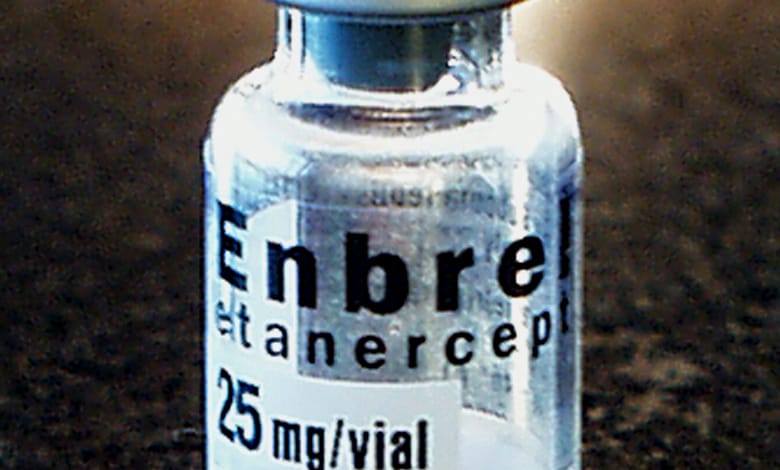
In November 1998, the FDA approved Enbrel (discovered by Immunex), a new genetically engineered version of a natural biological compound, for treating adult rheumatoid arthritis (RA) patients as a last line of treatment. Enbrel works by binding to and inactivating certain tumour necrosis factor (TNF) molecules before they can trigger inflammation.
The RA market at the time was estimated to be approximately five million patients in the economically developed regions of the world, with two million patients in the US alone. Though Enbrel was eventually approved for indications outside RA, here we are focusing only on the initial indication and the associated clinical studies.
In September 1997 Edward Fritzky, chief executive of Immunex, stated that one third of RA patients in the US were not adequately controlled on their existing therapies and would therefore be ideal candidates for Enbrel; estimated to be around 650,000 patients.
In March 1998, Fritzky revised its overall potential to approximately 1.8 million patients. This had increased from the initial predictions, as Immunex now believed the drug would eventually be approved for earlier stage RA patients as well.
In July 1998 analysts projected a core patient base in the US of 400,000 – 500,000 patients for Enbrel, representing the number of persons who failed all traditional therapies. This was then increased with the addition of European markets following Wyeth, American Home Product’s (AHP’s) pharma division and the marketing partner for Immunex, filing an application in Europe.
Then in May 1999 the FDA approved Enbrel for use in juvenile RA. This essentially doubled the market potential from 500,000 to 1,000,000 patients.
According to the analysts, sales were expected to be $139 million in 1999, $341 million in 2000 and $441 million in 2001. Immunex believed Enbrel revenues would be above $250 million in its first 12 months on the market, but sales far exceeded forecasts, and it earned in $360 million in its first six months. At first glance, the success of Enbrel looks fantastic, but the impact of this poor forecasting was very bad news, because it meant the companies weren’t ready to meet demand. Immunex had to then invest in additional facilities to manufacture Enbrel, but of course this takes time.
Demand for the brand continued to exceed supply, and subsequently the manufacturing constraints inhibited Enbrel’s success for around another three years. By July 2003, thousands of patients were still on the waiting list, meaning millions of dollars in lost revenue and many disappointed doctors and patients.
So what went wrong?
The good news was that Enbrel surpassed nearly everyone’s expectations. By March 1999, 20,000 patients were signed up, with an additional 1,000-2,000 signing up each week. Chief executive Fritzky also said that company executives were conservative about sales figures because they were concerned the initial response might simply be from trial users.
Clearly Immunex did not adequately research its primary market segment (or potential market) to forecast adoption rates of Enbrel. Though it appears they correctly sized the market, Immunex seem to have overestimated the ‘drop out rate’, at which patients would try Enbrel but then not continue with it. They would have gained insight with a more rigorous and effective marketing research campaign during the clinical trials.
So how should a company approach forecasting for a breakthrough product with no analogue for comparison, as was Enbrel? Forecasting demand for a first-in-class, revolutionary product is a more complex than for an evolutionary product.
Enbrel was the first biologic created to treat RA; apart from Epogen and Procit, there were no other biologics on the market to compare it with. The novel nature of the product meant authorities were concerned about potential immunological problems (e.g. cancer as secondary effects) with Enbrel but safety proved to be higher than anticipated.
So how do we do it?
The traditional patient flow and particularly the more detailed patient journey are our guides, but we need to ensure we are really testing the possibilities. Immunex understood the total market potential – those people suffering from RA – but badly underestimated how their brand would be used. What we need to really tease out is where our molecule will fit in the existing treatment paradigm and the potential it has to influence that.
If we were trying to predict the success of Champix (varencicline) a smoking cessation treatment before its launch in 2000, and just used the existing prescription market – which at the time was $200m worldwide – the product would have never made it past phase IIb- there was no analogue.
Clearly the challenge for Pfizer was to understand if and how they could encourage smokers to go to the doctor for a smoking cessation aid rather than use an OTC nicotine replacement product.
This requires a thorough understanding of behaviour within the patient’s journey. This would include understanding the total population who would be prepared to seek help, and the barriers to that change and how they could be overcome.
Dealing with Enbrel was also about understanding some significant unknowns given the nature of the treatment. Yes there was no analogue for comparison, but Immunex and Wyeth clearly didn’t push to find the answers to the critical questions.
They did not adequately explore the nature of the unmet need, what was required to open up that opportunity and how quickly physicians would adopt the new entity. But let’s be careful how we evaluate the molecule. Safety and efficacy endpoints are vital, but in our cost-constrained healthcare environments, pharma needs to go further and really understand what represents value in the eyes of the decision-maker beyond simple price and efficacy.
What is ‘value’?
In pharma marketing there can be a habitual view that ‘value’ is the value proposition in the market access dossier and no more. This is wrong. Each customer will make decisions on their perception of value, each customer/stakeholder perceives value differently and as we know, perceptions of value drive choice. Clinicians will be looking at the brand in terms of how it meets the medical/clinical and therapeutic needs with a nod towards the patient. So the value and the associated message(s) for clinicians are generally focused around the therapeutic benefits and outcomes. Patients or caregivers will be far more personal outcome focussed with their criteria for value e.g. pain, anxiety, social/emotional well-being, role functioning etc.
And thirdly, payers and decision- makers will be interested in the way the brand helps tackle the population-based healthcare burden, and associated economic benefits in using the brand. Changes within cash-strapped healthcare systems such as the NHS mean we need to understand what they value. These include:
• Better use of technology to ‘fill the gaps’
• Better prognostics and diagnostics
• Earlier, faster, more accurate
• Getting it right first time
• Patients self-managing
• Earlier detection
• Remote monitoring
• Care closer to home.
Source: Margaret Parton, chief executive, NHS Technology Adoption Centre, 2010.
As a consequence when it comes to establishing the potential for your new product you will need to:
• Really understand the future clinical need – you need to understand where the market will be when you approach launch and scenario learning will be critical here
• Obtain and validate the evidence for that need
• Clarify the different drivers of value in meeting that need – their relative importance, the trade-offs that key decision-makers are prepared to make – conjoint analysis is a powerful tool here once we have established what are the key drivers
• Establish how well your product and your organisation can meet those drivers of value
• Build and test the potential business case for your product based on the evidence you have
• Understand the uptake trajectory based on that case and the nature of the healthcare environment
In new therapy areas this is going to be harder than in established markets but it is still possible if we use a systematic process to ensure we ask the right questions.
Conclusions
Marketing of pharmaceuticals depends to a degree on complex decisions about the scope of clinical trials made years before product approval. If we can influence that effectively then that’s great – but that is what we have to work with when it comes to launch.
Beware of analogues, used alone they can be very misleading – the market changes, and perceptions of value change.
The key to effectively forecasting new product launches is to ensure forecasts are based on a thorough understanding of how the molecule could fit into the future treatment approach. The ‘value’ the brand could represent to all stakeholders in a wider context than efficacy and safety is important, and also what can be said and done to support the value of the brand in the healthcare environment, rather than how the product compares to other existing chemical entities.
Dr Paul Stuart-Kregor is a founding partner and director at The MSI Consultancy (part of the Cello Group). He can be contacted at pstuartkregor@msi.co.uk, or for further information visit www.msi.co.uk
Related Content

Court sides with Amgen in Sandoz’ challenge over patent on Enbrel
A US court has sided with Amgen in a legal battle over the patent on …

FDA approves first therapy for paediatric psoriasis treatment
Amgen’s Enbrel has been given approval by the FDA for expanded use to treat children …

FDA approves Novartis Enbrel biosimilar
Novartis, through its Sandoz division, has announced that the FDA has approved Erelzi (etanercept-szzs), a …