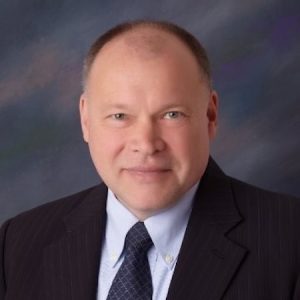
David Haslam: a new chairman for a new NICE
pharmafile | June 24, 2013 | Feature | Manufacturing and Production, Medical Communications, Research and Development, Sales and Marketing | CDF, Hasmam, NHS, NICE
When NICE was first set up in 1999, technology appraisals of new medicines were its sole focus, but over the intervening years the breadth and complexity of its work has grown enormously.
NICE now also puts together clinical guidelines on the management of single conditions, and provides guidance on public health and medical technologies.
Since April this year, NICE’s remit has been extended even further, and it will now also produce guidance on best practice in social care. This additional role reflects a wider move towards trying to more closely integrate health and social care in England. To reflect this new expanded role, the NICE acronym covers a new official extended title – the National Institute for Health and Care Excellence.
There is general agreement that the NHS and social care services are currently not set up to co-ordinate their efforts in caring for the growing number of patients who have chronic diseases and complex care needs. Now NICE has been asked to create guidance across health and social care in order to help this system-wide move towards integration of services.
Meanwhile, three years after then-health secretary Andrew Lansley announced plans for a new pricing system for medicines – to include Value-Based Pricing (VBP) – the details of the planned system are still unknown, and apparently undecided – even though it is due to be introduced in January next year.
After much confusion, (and indeed many U-turns) the Department of Health confirmed in March that NICE will have a central role in the VBP system, including undertaking an assessment of the costs and benefits of different medicines, drawing on its world-leading expertise.
It says NICE will be responsible for the ‘full value assessment of medicines’ under the future system – although quite what constitutes a ‘full value assessment’ has still not been made clear.
The Department of Health says NICE will build on its current drug evaluation processes by giving it broader scope to assess a medicine’s benefits and costs. The aim is to make sure that the price the NHS pays for new medicines is more closely linked to their value to NHS patients and society.
Quite what this means for the QALY, NICE’s method of assessing value in medicines, remains unclear. I spoke to Professor David Haslam at the annual NICE conference in Birmingham in May, his first ever conference as NICE chairman, and just a few weeks into the job.
The interview reveals that Haslam is not keen to speak out on the issue of the proposed new pharmaceutical pricing system, wary of interfering in a process already underway – indeed his comments suggest that a settlement between pharma and the government may be close at hand.
At the same time, it is clear Haslam will be a stout defender of NICE when it faces future controversies, and expresses here his support of the QALY appraisal methodology, as well as airing misgivings about the Cancer Drugs Fund.
As NICE chairman to Sir Andrew Dillon’s chief executive role, how do you view your role and responsibilities?
Well the role of the chairman in an organisation like NICE is very much to focus on strategy and governance – and not on the day-to-day aspects of how the organisation is run. That’s a role for which Andrew and his extremely able executive team are right for – so my responsibility is to ensure the strategy is right and watch the governance.
Sir Michael Rawlins has made the NICE chairman role his own during his 14-year tenure – I think you’ve referred to him as ‘the NICE guy, in every sense’; How will you put your own emphasis on the role?
I think my responsibility is to cover the whole breadth of NICE’s ‘products’, if I can put it that way. All the way from technology appraisals through to the development of quality standards, through to public health, our work in social care and so on. I think probably the reason I was appointed, with my background in general practice is that at a generalist, I have got a view across that whole spectrum. I would be very surprised if anyone could be an expert across that entire spectrum – and I am certainly not.
And in contrast Sir Mike came from a secondary care background..
Mike’s background was absolutely wonderful for what NICE needed at that stage, which was this extraordinary attention to clinical detail and evidence, pharmacology and so on, and no-one in the world could have done it better than him.
And the remit has now spread out into social care and quality standards, and public health standards, which makes it not just a different name, but a different organisation. It’s a very broad spread now.
How should the pharmaceutical industry pay attention to that agenda of integrating health and social care?
I am absolutely determined that we don’t lose anything that we have developed (built up) in the technology appraisal end of our work. So the fact that others have been added-on to NICE shouldn’t in any way be of concern to the pharmaceutical industry.
Our focus on their bit of the forest is just as great as it was before. And I am determined that it will remain that way. Now the fact that we have got these other challenges as well, is obviously a challenge for us that we are going to take our eye off the ball of technology appraisals.
So are the budgets for supporting technology appraisals ring-fenced, or might they be under pressure from NICE’s other work programmes?
That is just the sort of area I can’t tell you about, that’s Andrew Dillon’s area. The key thing is that we don’t lose the world reputation that we have got in technology appraisals.
Looking back at the long-running debacle around the Alzheimer’s drugs appraisal, the QALY – the means by which NICE assesses the value of drugs – was at the centre of the row, and remains controversial. Do you believe it should stay, or should it be modified?
I haven’t seen a better methodology than the QALY. Obviously this is an area where there isn’t one right answer for the world that is written in stone, but I have yet to see anything better, and the QALY is something than can be looked at, gradually adapted – the whole question about what other matters that we take into account – which takes us on to VBP – that is there for an ongoing evolution. I have no intention or belief that we or anyone else wants to dump the QALY.
Does that mean you are an advocate or a supporter of it?
Well, I absolutely recognise that there is a problem in every healthcare system in the world of insufficient resources for infinite demand. So you have to work out a methodology that allows you to maximise your ‘bangs for your bucks’. As far as I can see, looking at the world options for doing this, the QALY certainly seems like one of the best ways of doing it, if not the best.
That doesn’t mean that we won’t continue to keep an eye on it and make sure – we are not digging our heels in and saying nothing changes – we will always be interested in new evidence and so on, but the way NICE works is transparent, trustable, so we will look at the evidence.
There is talk of something called the ‘Full Value Assessment’ replacing the QALY – what is your understanding of that?
Well we are absolutely up for helping the government get the maximim value for the price it purchases at, but in terms of details at the moment, we just don’t have them. Having said that, we know there is a very short timeframe, we know this has got to be delivered by January 2014, we are confident that while it will be challenging, we will be able to meet that timeframe. Put simply, I am optimistic, and we are nearly there, but we are not there with the detail yet.
I understand Sir Mike had been involved in some negotiations on VBP, have you taken over from him in that?
I haven’t been involved in any negotiations on VBP at all. I honestly think I am too new in post, and we are too close to getting the guidance from government, so I think it would be unhelpful for me to throw my two penny’s worth in now.
What are your thoughts on the Cancer Drugs Fund?
My views on the Cancer Drugs Fund are relatively straightforward. I have been a general practitioner for 35 years, I absolutely understand the trauma of having cancer, the fear that it brings to people.
I also recognise that there are other conditions that are as serious – for instance heart failure is known to have a worse prognosis than many if not most cancers. So there are two things here. Firstly, there is a slight illogicality in focusing on cancer as opposed to life threatening diseases in general, which of course includes cancer, but none of that takes away from the importance of cancer.
Secondly, we need to be absolutely clear about what the evidence base is for the benefits that come from the CDF. At the moment I simply don’t know what the evidence is, if there is evidence.
My role and NICE’s role is to be evidence-based, and I understand the tremendous political difficulty of dealing with topics like cancer, I absolutely do. But it feels to me that you need a level playing field across life threatening conditions.
Are you talking there about collecting data from the NHS to see if the Cancer Drugs Fund is actually improving outcomes?
Ideally, yes. You want to know has the cancer drugs fund made a significant difference, has it saved lives, has it produced the maximum bangs for your bucks for patients with life threatening conditions.
One of your responsibilities will be to communicate with NHS England – who do you talk to there?
Well we are still developing our relationships. My direct link is with Sir Bruce Keogh, so he and I tend to meet. Obviously Andrew Dillon meets the rest of the NHS England team as well. So between us we are absolutely determined to build up very strong relationships between the two organisations.
NICE and NHS England have different jobs to do, and the last thing the system needs is any duplication, repetition or confusion, so the more communication we have, the less likely that is to happen.
And is the Department of Health still the commissioner of NICE in that sense?
Yes…well, it depends what we are talking about. Our budget comes from the Department of Health. But the commissioning of the standards work, for instance, now comes from NHS England. So as with everyone else in the NHS, we are having to learn to work out these new relationships, and it is early days. I think you will understand that there are complexities in this, but our main sponsors are the DH, our budget comes from the DH, but some of our commissioning comes via NHS England.
Sir Michael Rawlins was outspoken in his criticism of what he saw as high drug prices – perhaps increasingly so – what is your view on this issue?
I think there was a perception that if a drug was too expensive, it was somehow NICE’s fault. So quite often in the media it was portrayed that it was NICE’s responsibility that this drug wasn’t available. But it takes two to tango, and the determination of the drug price is obviously not NICE’s responsibility.
I am absolutely certain, and I have said it many times, that the pharmaceutical industry generally is a force for good, it is determined to produce benefits for the population. And they have got a business to run as well, I am absolutely aware of that, it is a question of us working out between us how to maximise value you get for your price. Which brings us back to the VBP question, which I don’t have the details on!
Is it part of your remit to talk to the industry?
Well, Andrew Dillon and I have met the ABPI once so far, I have informally met Stephen Whitehead on a couple of occasions. I am determined to have good personal and professional relationships.
Sir Mike Rawlins and I toured the States for a week in March and met a number of representatives of the pharmaceutical industry over there, and my impression was that there was a respect for what NICE does. There was a recognition that there was a job that needs to be done, even if there is a slight wish that it would be even nicer if it wasn’t necessary. But the simple fact is there isn’t enough funds to go round for all the healthcare, so you need some kind of methodology.
That conjures up a picture in my mind of you and Sir Mike touring the States in an open-top Cadillac!
Well, you could do a cartoon of that, but it wasn’t quite like that!
Looking back to the controversy around the Alzheimer’s drugs appraisal, and looking to NICE’s new role in bringing together health and social care standards, is there any sense that NICE would appraise them differently if it looked at it now?
Well, it is interesting, the first social care standard that we have done is in Alzheimer’s, around how Alzheimer’s patients are cared for in care homes. I think this is going to bring understanding into the organisation that allows us a broader perspective.
But not having been around at the time of the Alzheimer’s medicines decision, it would be difficult for me to comment on that now.
Biography
Professor David Haslam is chair of the National Institute for Health and Care Excellence (NICE).
He is also National Clinical adviser to the Care Quality Commission, immediate past-president of the British Medical Association, past-president of the Royal College of General Practitioners, and visiting Professor in Primary Health Care at de Montfort University, Leicester.
He was a GP in Ramsey, Cambridgeshire, for many years and has been chair of the NHS Evidence Advisory Committee, co-chair of the NHS Future Forum Information subgroup, an expert member of the NHS National Quality Board, chair of the NQB Quality Information Committee, and National Clinical adviser to the Care Quality Commission.
He is a fellow of the Royal College of GPs, a fellow of the Faculty of Public Health, a fellow of the Academy of Medical Educators, and a fellow of the Royal College of Physicians.
David was chairman of Council of the RCGP from 2001 to 2004, and was also a member of the NHS Modernisation Board, vice chairman of the Academy of Medical Royal Colleges, a member of the Postgraduate Medical Education Training Board, a member of NHS Medical Education England, and co-chair of the MMC Programme Board from 2006-9.
He has written 13 books, mainly on health topics for the lay public and translated into 13 languages, and well over a thousand articles for the medical and lay press.
He was awarded the CBE in 2004 for services to Medicine and Health Care.
Related Content
Under-Secretary of State for Health Innovation and Safety visits new building on University of Huddersfield’s NHIC
Dr Zubir Ahmed MP, the Under-Secretary of State for Health Innovation and Safety, has visited …

Digital mental health technologies – a valuable tool in supporting people with depression and anxiety
The potential benefits of digital mental health technology for managing depression, anxiety and stress, together …

A community-first future: which pathways will get us there?
In the final Gateway to Local Adoption article of 2025, Visions4Health caught up with Julian …