CME Spotlight: Uniting European CME
pharmafile | December 20, 2010 | Feature | Medical Communications | CME, Continuing medical education, Eugene Pozniak
I started writing this month’s column while still in Berlin, one of my favourite cities in Europe, and also the venue of the third annual meeting of the European CME Forum.
It is exactly 30 years since I first visited the place as a schoolboy on a trip deeper into Soviet territory, proceeding by train to Moscow then Leningrad (present day Saint Petersburg). Berlin was our first stop having left London. In 1981 it was a bustling, yet curious construct of bipartisan mistrust, the bright lights of the merged British, French and American sectors in the west; and the dour Soviet Zone in the east. Most of our short time was spent among the bright lights of West Berlin, but we did venture to East Berlin for a highly formalised day trip, to have our first taste of the Soviet system.
What struck me was the sudden disparity – within 40 minutes (the length of time it took to cross the border of about 100 metres) – we went from a colourful, overactive city centre to a grey-brown mass of buildings – naked of any neon or advertising boards, with Lowry-esque figures quietly scuttling about their daily lives.
As well as visiting the usual tourist attractions of the east, I remember that we stopped off near Friedrichstrasse Station, and went on an escorted walk, turning onto Unter den Linden, to be met with a chilling view of the iconic Brandenburg Gate, at the end of a deserted boulevard -set in a deadly no-man’s land and the imposing Embassy of the USSR.
Today, we could walk from the venue of the European CME Forum meeting, close to where the coach parked three decades previously, and enjoy the stunning view of the gate now with the banks and embassies of Pariser Platz rebuilt in unashamedly modern style, but in the precise positions that they had previously occupied. The once solitary and august embassy of the occupying power now a mere curiosity, representing Russia in a row of equally formidable, yet rather more stylish neighbours.
European CME meeting
Berlin seemed to be an appropriate choice for a European CME meeting, being at the crossroads of Europe and having gone through an extensive process of reinvention, rebuilding and transformation.
CME in Europe certainly feels as thought it is at an intersection itself, with many hands helping to mould it. Before the meeting I was thinking that European CME may have started to stagnate: pharma companies were holding back a little with their support, and the traditional medical communications agencies – once a keen group driving the CME agenda on behalf of providers – seemed to be presenting fewer CME activities. Word from the CME bodies pointed towards a situation where the environment was getting stricter, further limiting commercial organisations in CME. I was somewhat concerned. The day before the European CME Forum, the Good CME Practice Group met for their Autumn meeting, and progressed plans to develop a set of core principles into practical and validated guidance for providers. At the same time there was a meeting for the delegates from pharma which continued the work started in Montreal in June, where people shared ideas on how to progress the dialogue of what the role of pharma should be in European CME, and how they can progress the discussion externally with groups like EFPIA, as well as internally to maximise support of CME by senior management. That Monday afternoon also saw a meeting of the Rome CME-CPD Group, a collaboration of leading CME accreditation bodies across Europe and beyond. On reflection, with so much dialogue taking place it seemed rather churlish to start the European CME Forum meeting with quite the negative approach I was thinking of when I was first preparing my introductory slides the week before! I made some amendments.
Over 80 highly motivated participants met for the European CME Forum to discuss latest issues and future directions.
While there were fewer delegates in the room than in previous years, the number from pharma was higher – including from the US – and there were more people who worked directly in CME itself.
“Vous sortez du secteur Américain, You are leaving the American Sector, Вы выезжаете из Американского сектора”
The iconic sign that had once been visible from Western districts close to the Berlin Wall as the US underlined their responsibility for the entire city under the four-power agreement, seems to aptly encapsulate the role that some US pharma is adopting in European CME. It is not that the Americans are coming, but that they are here – and not through a change in business direction, but by virtue that many companies have US head offices. What the meeting highlighted for me was that without rigorous pan-European guidance from the CME bodies; and in the absolute absence of any guidance from EFPIA or the regulators, there is little reason for pharma companies to engage extensively with CME on a regional level.
They may support CME tactically in local countries, but once it comes to the larger multinational activities this is a role that can be maintained by someone centrally (if the company even goes this far).
While there is no clear voice giving direction there will only be scant attention paid by pharma. In Europe, CME may fall within the remit of a single person within a medical department, but the voice of experience from the US (for companies with a strong presence there) will continue to be heard.
In these still early days some companies may decide that there may not be any tangible benefit in devolving the funding of CME to European centres. But in the US the situation is quite different: with large sources of finance in the hands of experienced funders of CME, this may even lead to the bizarre situation where US providers – familiar with the US grant request proposal systems – end up being the ones having the largest budgets to pursue CME activities in Europe!
European CME providers
So who will be the providers of CME in Europe? Over the past 12 months we have seen the decline in the traditional communications agencies in this sector, albeit with a rise in interest from the publishers accustomed to the ‘hands-off’ funding model that running peer-review journals brings – but there has been a significant increase in specialist education providers, as typified by participants of the Good CME Practice. This group is working to develop clear and detailed guidance to be made available to anyone wishing to work within the European CME environment. Their initial work was presented at the meeting, showing how Europeans can develop principles for engaging with CME that clarifies roles and responsibilities – enabling providers to demonstrate to both CME accreditation bodies, and potential financial supporters – that they are competent and know how to work appropriately in CME. This is certainly an area that will increase as more funds and regulations come into place.
The overall message that I took from the European CME Forum meeting is that clarity of roles, explicit guidelines and rules of engagement need to be developed for each sector operating within European CME, and for each of these to continue in the dialogue with each other. But it was encouraging to see that after two days of discussion and debate that in a poll taken at the end of the meeting, 84% of the people in the room said that they believed that there was a strong future for CME in Europe.
It would be wonderful to see CME unite, grow and prosper just as Berlin has in recent years.
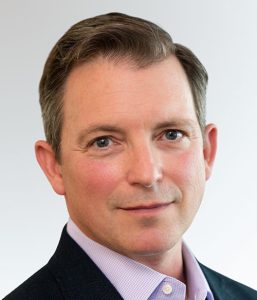
Eugene Pozniak is managing director of Siyemi Learning and programme director of European CME Forum. Email: epozniak@siyemi.org Information about the Good CME Practice Group can be found at www.gCMEp.eu
Related Content

AZ launches US digital tool ‘DoctorsNotes’ in US
AstraZeneca has launched a new online tool in the US called DoctorsNotes to help medical …

Lucid opens second office
UK medical education firm Lucid has opened a second office in Hammersmith, London. In addition to …

Doctors, medical education and pharma – the way ahead
InPharm CME event Roy Pounder, Andrew Powrie-Smith, Richard Marchant, Roy Lilley, Kieran Walsh and Chuka …