A chronic problem for the health service
pharmafile | July 27, 2011 | Feature | Sales and Marketing | NHS, long term conditions
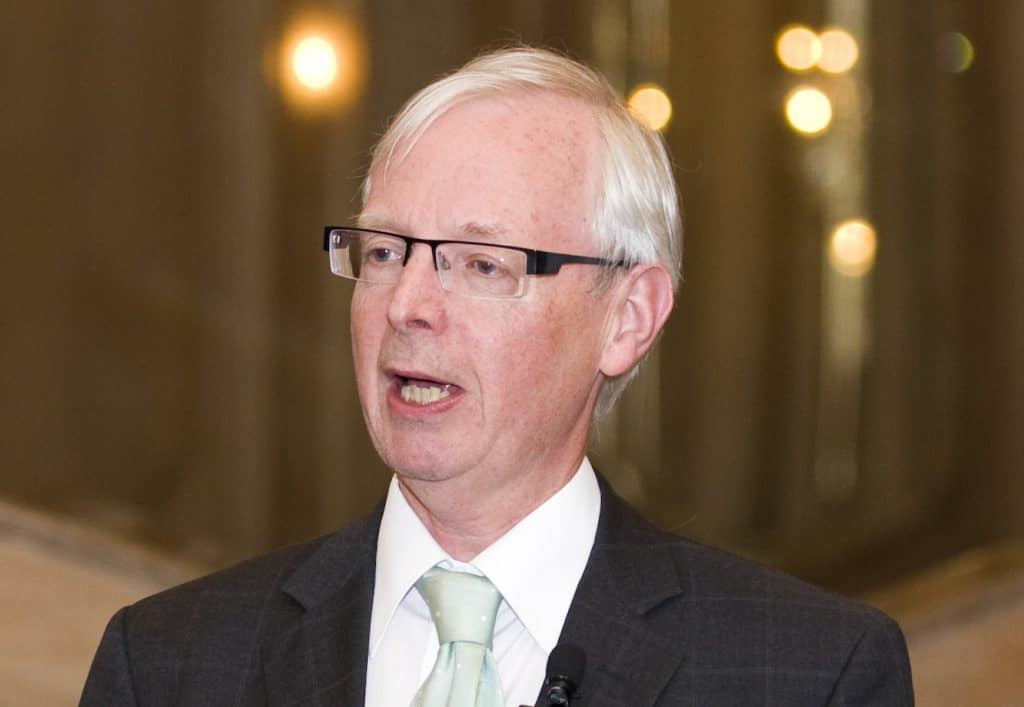
Sir John Oldham is not widely known outside the Department of Health, but he might just have the most difficult job in the whole NHS.
Sir John is in charge of improving how the national health service deals with Long Term Conditions and Urgent Care – two of the most costly and complex problems facing the service.
He remains a practicing GP, but has a track record in implementing large-scale projects in primary care, in the UK and abroad. But none of his previous projects match the scale of this challenge.
He is part of the QIPP team who have arguably the most important – and the most difficult project in the health service today – leading the NHS to produce £15-20 billion in efficiency savings over the next four years.
Long-term conditions are especially important to QIPP, because they account for an estimated 70% of the total health and social care budget.
An example of this is in hospital admissions, with the main cause being people with more than one long-term condition.
Furthermore, the number of people with long-term conditions is forecast to rise 250% by 2050.
Addressing the PM Society’s annual lecture in London in May, Sir John warned that the scale of the challenge should not be underestimated. “I have to tell you, if we continue to manage people with long-term conditions as we do now, the NHS and social care system are not sustainable.”
He says this is a ‘tsunami of need,’ threatening not only health in developed nations, but also endangering the economic health of countries like the UK.
He believes tackling the problem requires far greater integration and co-ordination within health and social care – and believes the pharma industry can also make a direct contribution to these efforts.
Long-term conditions, long-term solutions
Unscheduled and emergency admissions to hospital represent one of the biggest problems in the NHS – for patients, it means their condition is out of control and puts them at greater risk. For the health service, they are the most costly hospital stays.
To tackle this, the QIPP team has two central objectives in this area. The first is a set of target for GPs to reduce unscheduled admissions of patients with long-term conditions by a 20% by the end of 2013/14. Furthermore, A&E attendance also had to be cut by 10% and length of stay by 25 per cent.
The second component of the strategy is patient empowerment. The QIPP team says it wants to “maximise the number of patients controlling their own disease through systematic knowledge transfer and care planning”.
This is based on evidence from a number of studies which suggests empowered ‘expert’ patients have better outcomes.
The Department of Health sees re-design of patient services as one of the ways of bringing down unscheduled admissions, with the emphasis on greater co-ordination and integration of care between health and social care.
The aim is to prevent severe episodes, rather than simply treat them when they arise. This involves identifying those at most risk, and creating a local integrated team in health and social care in the community.
Sir John says the old system must be left behind, moving from a ‘biomedical model’ of care to a ‘social medical model’ of care.
He says the existing system is often farcical in its lack of co-ordination. “The idea that we can continue to have this Monty Python-esque queue of case managers outside a person’s house, each of them with one disease hat on, when the person inside has three or four, that’s not sustainable. It fragments the care.”
He says the pharma industry has a direct role in helping patients becoming expert in managing their condition. “We need to systematically transfer knowledge to patients about their own condition. We need to maximise the number who can co-manage their condition, not just because it is a nice thing, but because it improves the clinical outcomes of people.”
Sir John said the challenge could only be met if patients with long-term conditions were empowered and educated to manage their own conditions. He cited one persuasive piece of evidence from the Cochrane Review.
A review of 18 studies of patients taking anticoagulants showed self-monitoring and self-management produced a halving of thromboembolic events and all-cause mortality, with no effect on the number of major bleeds.
Sir John says there are some early signs of success. “We are getting some results, I have been working round the country with some teams, and collectively we have an aggregate reduction in unscheduled emergency admissions of 17%, but also signs that the clinical outcomes are better than they were.”
“So when people say you can’t have improved quality and lower cost, they are talking nonsense. Any of you from industry know that that is true.”
The effort we require will take us all working together in partnership. Industry, clinicians, primary, secondary care, clinicians and managers, working together that is how we will create sustainability in the NHS.
The public, politics and reforming the NHS
One of the barriers to re-designing and reconfiguring services is the general public’s attachment to their local general hospital.
There is growing evidence that creating specialist centres produces better outcomes for patients, but the closure of A&E and maternity wards, for example, are almost always opposed by local communities.
Sir John addressed the issue candidly saying: “People equate the National Health Service with National Health buildings. In my view long-term conditions is where mental health was 20 years ago. People were warehoused in 1,000 bed units and stayed there for a long time.”
But he acknowledges that communities are suspicious of any moves to change or close services, even if it promises to improve the standard of care.
“It only takes one voice and there will be placards, and the MP will be there, the newspapers, and the minister. But at some point in time, however, there will be an adult debate, because the figures demand it.”
He says the £15 billion ‘Nicholson Challenge’ is an opportunity for the NHS to get ahead of the curve.
“The changes we are making with QIPP, we would have to make anyway, at some point in time, what we are lacking is the mature public debate.
“If we don’t tackle this, it will impair the competitiveness of our country. When it changes from being a healthcare debate to an economic debate, then you will start to get a mature debate. Will that happen in the next two years? I suspect not.”
He says there needs to be greater public focus on variation in the health service between areas – pointing out a 14 times variation in hip replacements across this country, and a four times variation in the cost of knee replacement.
“None of those decisions are a political decision, they are a clinical decision. As resources get pinched, patients and the citizens of this country are the shareholders of the NHS, we need to treat them as the shareholders of the NHS.”
The pharma industry’s potential role
Sir John says pharma must first of all understand the challenge posed by long-term conditions.
“I certainly know some companies are putting a lot of effort into understanding that. I think there is a huge opportunity in actually working with patients in helping them co-manage their condition, a huge opportunity in helping people learn about their conditions.”
Sir John says he has been talking to the ABPI and individual companies for the past 12 months, trying to entice them to provide funding to create e-learning tools.
He says the idea is to provide to patients with interactive e-learning tools to help them manage their long-term conditions.
“There have been no takers yet, but I tell you this, the first one that does it competently, I will go around talking incessantly about that product. So there is an incentive.
“I am talking about an interactive learning experience, modular learning. I also think that pharma should thinking hard – the way that other industries do – about ways to align yourself with the efficiency and effectiveness agenda.”
He urged pharma companies not to launch new drugs which merely ‘tweaked the molecule’ of existing medicines.
“That is the thing that gets a bad name – stopping the drug then twisting the molecule a little bit. Because your short-term gain will actually be the healthcare sector’s further little bit of erosion.”
He also called on pharma to align itself with the NHS efficiency agenda. “What we want are neighbourhood care teams, multidisciplinary people looking out for a patient. I want you to treat the whole patient, and I want you to act as a team. There is no reason whatsoever why pharma couldn’t be a member of that team, delivering care in that locality.”
Virtual wards and telehealth technology
Sir John says he has seen some of the country’s telehealth schemes in action, and says the most technologically simple are often the best. At the same time, he said elderly patients with chronic illnesses should not be underestimated in their ability to manage their conditions with new technology.
“Shortly it will be the Facebook generation who will want to download an app about their diabetes on their phone. They will be quite happy to input their data about blood pressure and get some information, and pull in resources as they need them.”
He says a technological revolution is coming to healthcare, and that it can make a big difference to how services are provided.
One of the most promising concepts is that of ‘Virtual Wards’. These combine predictive modeling to identify high-risk patients with a telehealth ‘hospital-at-home’ service.
Virtual wards are being piloted in several areas across England, and could be the way forward. The first one opened in Croydon, South London in 2004, where there are currently 10 virtual wards open, with the capacity to care for 1,000 high-risk patients. Researchers at the Nuffield Trust are currently evaluating the costs and benefits of the virtual wards in Croydon, and others in Devon and Wandsworth.
The research will be completed in late 2011, and aims to find out how much it costs to run a virtual ward, and what effect – if any – the approach can have on demand for health and social care services.
Despite the new concerted efforts to tackle the problems underlying unplanned admissions and problems with long-term conditions, the trends in disease and behaviour are often very hard to understand, let alone control.
The last ten years have seen emergency readmissions increase by 50%, but there are several factors identified as root causes.
The coalition government has pointed the finger at incentives introduced by Labour to cut lengths of hospital stay, which health secretary Andrew Lansley says has caused some to be discharged prematurely, only to return soon afterwards.
In response to this problem, payment to hospitals will now be withheld for readmissions occurring within 30 days of discharge which are judged to have been ‘avoidable’.
Many expert commentators have welcomed this move, as it puts greater responsibility on hospitals to oversee the long-term well-being of patients. However, others point out it is just one somewhat simplistic lever in a complex system, and cannot address the most fundamental problems in the system or address patient needs.
For instance, one issue is the lack of out-of-hours care available from GPs, which is another likely factor behind rising hospital admissions – this has not, however, been addressed by the ongoing reform programme.
There is also considerable scepticism among some GPs and elsewhere in the health service about how achievable the targets to reduce admission really are. But there are now a number of local projects involving closer collaboration between health and social care, which show early signs of success in producing joined-up care and lowering costs.
These will have to be expanded and duplicated right across the health service if the NHS is to have a chance of meeting its tough QIPP targets.
Andrew McConaghie
Ten things you need to know about long-term conditions
1. Around 15 million people in England, or almost one in three of the population, have a long-term condition. This number has fallen in recent years: as people become better able and supported to manage their condition, some no longer report having one.
2. Half of people aged over 60 in England have a long-term condition.
3. While the number of people in England with a long-term condition is likely to remain relatively steady, the number of people with comorbidities is expected to rise by a third in the next ten years.
4. People with long-term conditions are the most frequent users of healthcare services. Those with long term conditions account for 29% of the population, but use 50% of all GP appointments and 70% of all in patient bed days.
5. It is estimated that the treatment and care of those with long-term conditions accounts for 70% of the primary and acute care budget in England. This means around one-third of the population account for over two-thirds of the spend.
6. 7.1 million people have been clinically identified as having hypertension. It is estimated that the same number again have unidentified hypertension, meaning that over a quarter of the population has the condition.
7. Common mental health problems affect about one in seven of the adult population, with severe mental health problems affecting one in a hundred.
8. The proportion of people with a limiting long- term condition in work is a third lower than those who don’t.
9. Long-term conditions fall more heavily on the poorest in society: compared to social class I, people in social class V have 60% higher prevalence of long-term conditions and 60% higher severity of conditions.
10. Around 170,000 people die prematurely in England each year in total, with main causes being cancers and circulatory diseases. And those with long-term conditions are likely to have a lower quality of life.
Source: DH
Related Content
Under-Secretary of State for Health Innovation and Safety visits new building on University of Huddersfield’s NHIC
Dr Zubir Ahmed MP, the Under-Secretary of State for Health Innovation and Safety, has visited …

Digital mental health technologies – a valuable tool in supporting people with depression and anxiety
The potential benefits of digital mental health technology for managing depression, anxiety and stress, together …

A community-first future: which pathways will get us there?
In the final Gateway to Local Adoption article of 2025, Visions4Health caught up with Julian …