Can Europe really agree to speed up pricing and reimbursement?
pharmafile | March 6, 2012 | Feature | Sales and Marketing | Europe, European Commission, GSK, Sir Andrew Witty, pricing and reimbursement
The European Commission has called for faster decisions to allow new medicines to enter the market faster.
The Commission says the time taken for national pricing and reimbursement of medicines should be made within 120 days for innovative medicines, while approvals for generics should be completed in just 30, instead of the 180 days seen today.
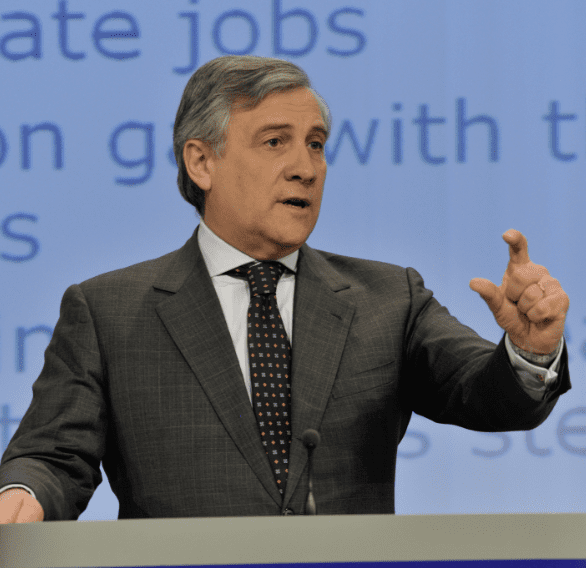
The proposals put forward by European Commission vice president Antonio Tajani have been welcomed by the research-based industry and the generics sector, but will be less popular with member states.
Most aspects of health policy are beyond the remit of the Brussels, and member states continue to maintain very distinct health systems, of which pricing and reimbursement is a key component.
But the Commission is now citing a EU Directive and legal cases which mean it can call for a Europe-wide harmonisation of pricing and reimbursement, and indeed enforce it, punishing any country which delays decisions above an agreed time limit.
Wary of opposition, the Commission is also selling the proposed reforms as a way for member states to save money.
European Commission vice president Antonio Tajani, responsible for Industry and Entrepreneurship, said: “We need faster decisions leading to pricing and reimbursement to maintain a dynamic pharmaceutical market and to offer citizens better access to pharmaceuticals. Our proposal will lead to substantial savings for public health budgets, for example by allowing earlier market entry of generic products. It also creates a more predictable environment with greater transparency for pharmaceutical companies, thus improving their competitiveness.”
A Commission report on the sector in 2009 found ‘long and cumbersome’ pricing and reimbursement decisions, with delays to some decisions going up to 700 days for innovative medicines, and up to 250 days for generics.
EFPIA director general Richard Bergström says: “This proposal is a welcome step in the right direction to address some of the procedural shortcomings in national pricing and reimbursement systems. It respects Member States competence in healthcare. Further steps are needed to tackle the challenges to patient access to medicines.”
Bergström also highlighted what the industry see as one of the biggest problems in Europe, international reference pricing. Through this system, countries peg their medicines prices to others in Europe, so that when price cuts are enforced in their neighbours, this automatically triggers cuts elsewhere, even if the need for savings is not as great.
“Especially in times of economic crisis, the focus of Member States on pricing measures such as international or therapeutic reference pricing poses a threat to the long-term innovative capability of Europe and hinders access to medicines.
“This is even more worrying if emergency price cuts under exceptional circumstances such as in Greece lead to automatic and arbitrary price cuts in 15 other Member States,” Bergström concluded.
‘Systematic delays’
The Commission’s proposals coincides with outspoken remarks from several of European pharma’s leaders.
Sir Andrew Witty, GSK chief executive and current EFPIA president has hit out at what he calls ‘systematic delays’ to pricing and reimbursement.
He says drug budget cuts in Europe are undermining the industry and not addressing the biggest cost pressure in healthcare.
In an interview with the BBC, Sir Andrew Witty said there were systematic delays to drugs in the UK, and in particular, to cancer treatments.
Sir Andrew says the last few years has seen price cuts of around 5% across Europe, which means a loss of annual revenue for his company of about £300 million. Witty added: “We’re seeing oncology drugs being systematically delayed from introduction and reimbursement.
“We’re seeing a variety of the more innovative, and yes more expensive medicines, being delayed in a whole series of different diseases across Europe.
“Ultimately it’s one of those situations where the drift will be imperceptibly happening, but when you look back in five or 10 years, a huge gap will have opened up.”
He underlined the fact that medicines represent a relatively small proportion of health expenditure. “You could shut down the entire European drug industry, you could have every drug for free – you’d still have 90% of the problem you started with.”
These comments have been echoed by numerous other pharma leaders, but industry execs say there is little sympathy from health ministers for the effects austerity measures are having on Europe’s pharma sector in the long-term. If the Commission can push through an agreement on harmonising pricing and reimbursement times across Europe, it will be a significant improvement for pharma.
But the sector’s leaders know that achieving a consensus in Europe – or at least a compromise – on health reform is often drawn out and painfully slow.
Related Content

Sobi’s Aspaveli receives European Commission approval for treatment of two rare kidney diseases
Sobi has announced that its Aspaveli (pegcetacoplan) has received approval from the European Commission (EC) …

GSK’s Exdensur receives MHRA approval for asthma and rhinosinusitis
GSK’s Exdensur (depemokimab), a twice-yearly biological medicine, has received approval from the UK Medicines and …

European Commission approves HIV prevention injection
The European Commission (EC) has granted marketing authorisation for Gilead Science’s Yeytuo (lenacapavir), the first …