Challenges in oncology R&D
pharmafile | November 18, 2015 | Feature | Manufacturing and Production, Research and Development | Dixie-Lee Esseltine, Takeda, Takeda oncology, Velcade, multiple myeloma, oncology
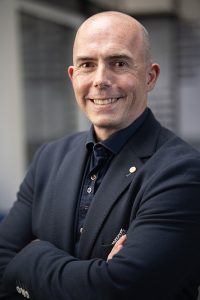
Pharmafile put questions on the challenges pharma companies face when working in oncology R&D to Dixie-Lee Esseltine, vice president of oncology clinical research at Takeda US.
What’s the background of Takeda in oncology?
We have been in the oncology R&D area for a number of years. We’re quite familiar with the challenges of developing clinical trials to generate evidence to support the health authorities’ approval, and allowing drugs to get to market.
What are the challenges that companies come up against when breaking into oncology?
I think in the clinical trials area, we struggle with two major things: the first is getting the number of patients we need. That’s a really important challenge, because without sufficient numbers you don’t have sufficient power in your trials to try and address your hypothesis for testing. That’s where we have been looking into trial designs and alternate statistical approaches so that we might use an earlier market of response as a surrogate say, for survival, which is the gold-standard for many of the drugs we would like to develop in oncology.
The other thing is trying to reduce the time it takes to do these clinical trials, and make them more efficient and faster, without losing the rigour. The health authorities have helped in that regard by thinking of ways to have accelerated pathways to approval, where you can get a little bit more speed in the process if you have some of the surrogate data to justify it.
The other helpful thing that the FDA has instituted is Breakthrough Designation, to look at a molecule in its early stages if they see really extraordinary activity meeting a need that hasn’t been addressed. They will work more closely and more often with companies to try and develop it in the most expedient way. So I think regulators are trying to help.
The scientists behind the molecules are trying to help by looking for downstream markers of their drug’s activity, and seeing if we can have markers that predict their activity. And the medical and statistical teams are helping by trying to come up with innovative designs that may allow us to bring drugs forward faster. So we have more capability than we ever did; when we see the molecules we have a better understanding compared to 15 years ago.
Do you have concerns about market access, even at the R&D stage?
Market access concerns all of us now. We’re trying to develop drugs that really create meaningful survival for patients, we’ve got better strategies and research that allow us to understand the probability of getting those approved. But that’s not helpful unless the patient can get access quickly.
This is an area of tremendous study now in oncology; there are many groups working on this, but I’ve been impressed with ASCO’s efforts to give us a framework in order to understand the value of products. It’s a good sign that people are trying to give us a framework of data that might speak better to a drug’s value. If patients can’t get a drug for one reason or another, then as a physician I would feel I’m not doing my job. Something has to be done about that.
How has Takeda been making use of alternative study designs when bringing products to market?
An example is in the development of Velcade (bortezimib). The initial study that received accelerated approval from the FDA was really a single arm study. That was able to be accomplished because it was showing durable, complete responses, the extent to which had not been seen before in multiple myeloma.
This is what made people think this is a drug that probably should be approved now, because it had already shown unprecedented benefit in patients. We could have done a Phase III trial against the standard of care – and we subsequently did do that. But that’s not so easy to do now, as there are more drugs with the ability to give deep responses.
We’ve tried things like using randomised Phase II studies, and along with others looking at ‘basket trials’, where you test an agent either in combination with standard of care as a single agent, or in a number of combinations with standard of care and seeing what the outcomes are. This allows you to quickly screen a bunch of molecules to see which one might be the best to purse to the more advanced stages of development.
It’s easier when we have a targeted therapy, that’s a little easier because you can enrich your population for those patients that have a personalised treatment and then you decide which is the best combination partner.
Our late-stage trials to date have been by and large more conventional. That’s where we’re trying to make a dent in time and efficiency. We’re looking very closely at how we handle, collect and analyse our data. There are so many things that can be improved on to optimise this process.
What does the future hold for oncology research?
Even in five years we would still struggle with producing drugs that could also have a good quality of life for patients; we’re struggling with trying to minimise side effects without compromising efficacy. I would bet we’ll have better supportive care, but I think this disease will still be a burden for many patients; either without effective drugs or because the price of the benefit is still pretty hard on the patients.
Over the next five years there’ll be new drugs; we have a number in the pipeline now that are potentially exciting, and we’ll have made incremental gains. There may be some game-changers; that’s certainly what I’m hoping for.
Related Content

BMS’ Opdivo/Yervoy combination accepted by Scottish Medicines Consortium for colorectal cancer
Bristol Myers Squibb (BMS) has announced that its Opdivo (nivolumab) has been accepted, in combination …

Astellas Pharma’s Vyloy accepted by Scottish Medicines Consortium for gastric cancer
Astellas Pharma, a pharmaceutical company creating medicines to address unmet medical needs, has announced that …

Von Willebrand disease – increasing awareness and access to vital care
Pharmafile talks to Anthea Cherednichenko, Vice President Franchise Head Haematology and Transplant at Takeda about …