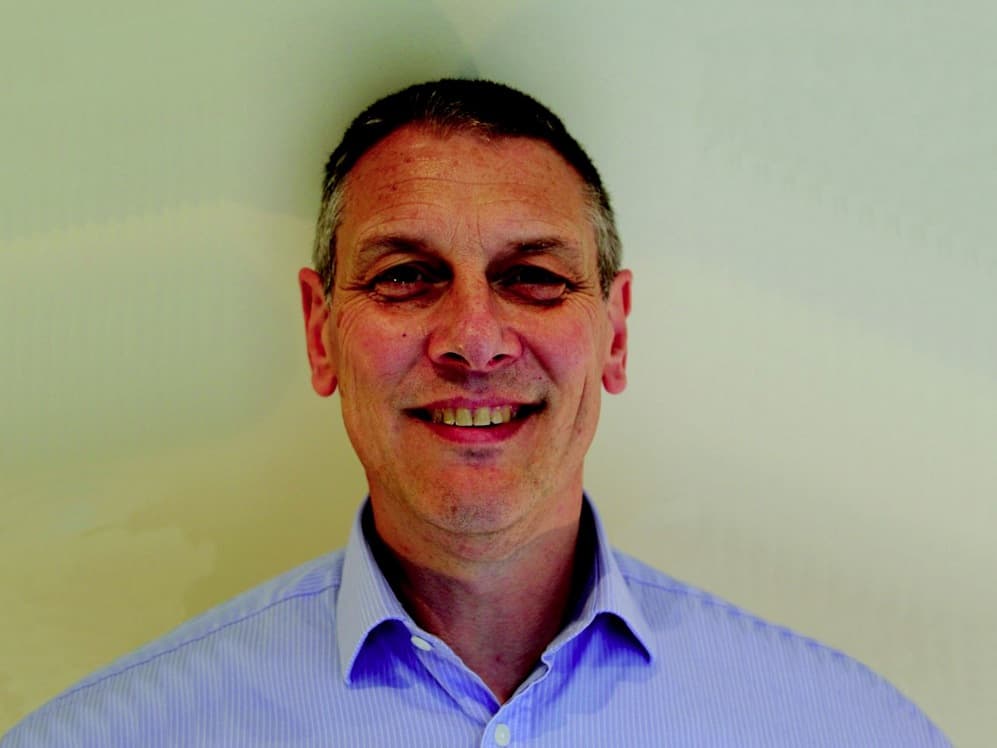
Working Life: NHS England pharma officer Dr Bruce Warner
pharmafile | January 26, 2015 | Feature | Manufacturing and Production, Medical Communications, Research and Development, Sales and Marketing | NHS England, Working Life, bruce warner, pharma officer
How did you find your way into your current role?
I have had a very eclectic career for a pharmacist and never in my wildest dreams would I have imagined being in my current role when I qualified in 1985.
I started my career in community pharmacy, and that is still where I consider my roots to be. After working for a large multiple in the North West, I realised I wanted to own my own pharmacies and so worked for a small independent pharmacy on the Wirral to gain experience of this aspect of the profession.
In the late 80s my wife (who is also a pharmacist) and I bought two community pharmacies in Sheffield, and ran them successfully between us for about 14 years. During this time I completed an MSc in community pharmacy at the University of Derby.
I realised after about 10 years that I wanted to try something different, so I sold one of our pharmacies and I went to work as a practice pharmacist and covered the prescribing adviser’s maternity leave at the local health authority in Sheffield.
Primary care groups (PCG) came along and I had a split post as a prescribing adviser between the then PCG (later a primary care trust) and the local acute trust, looking at guidelines and formularies.
After about four years I realised I wanted to do some further study and had the opportunity to join the staff at the University of Derby to set up an MSc in primary care pharmacy (based on my own MSc dissertation), and to undertake a DPharm.
My research was in medication errors, and as I finished my doctorate in 2006 a job came up at the National Patient Safety Agency in their ‘Safe Medication’ team under Professor David Cousins. I was successful in getting that post, which shaped my future career.
After about two years I became head of primary care, ambulance and specialist services at the NPSA and was then made an associate director, responsible for all of the clinical work that the NPSA undertook.
In 2012 the NPSA was closed down as a result of the Arms Length Body review and I was lucky to be moved into NHS England as the deputy director of patient safety. It was from there that I was approached about the deputy chief pharmaceutical officer’s role.
How is your field changing?
Pharmacy has always been a clinical profession, but has not always been perceived as such, particularly in primary care. I think we are at the point now when people are just beginning to understand the full potential that pharmacy has and the key role it can play in helping to alleviate some of the problems that the NHS faces.
Pharmacists are very patient-focussed, and train for five years before they are qualified. Many then go on to further study and qualifications and so they really are the experts in medicines use. We simply cannot afford not to use those skills and that knowledge in their fullest clinical sense to achieve better outcomes for our patients.
The ‘supply’ element of pharmacy is already being taken over by technology. This will allow us to use pharmacists for what they do best: providing a clinical role to our patients and helping them get the greatest benefit from their medicines. This is what the medicines optimisation agenda is really all about.
I think in the future we are likely to see an even greater interaction between pharmacists or pharmacy technicians, individual patients and carers, and indeed with other members of the extended healthcare team: whether for achieving better outcomes and quality through medicines optimisation, or for making public health interventions designed at keeping people well.
We need to focus on these relationships and set the conditions to allow them to flourish, and we all have a part to play in making that happen.
What are the most enjoyable things about your role?
Being able to help shape the future of my profession is a tremendous privilege, and something that I take extremely seriously. I am constantly humbled by the pharmacists and other pharmacy staff that I meet in their dedication, professionalism and innovation. Being able to shout about those things on behalf of my profession makes me extremely proud.
I also enjoy being part of a wide and often diverse pharmacy team. Pharmacy is a very small world and I have always found people to be incredibly helpful and in the profession for all the right reasons.
What are some of the most common misconceptions about your field?
Many people still see pharmacy as a supply function, and don’t appreciate the clinical expertise that goes into making sure people get the greatest benefit possible from taking their medicines.
They also see community pharmacy as a very commercial world, which of course it is in just the same way as general practice, but it is so much more than that. Almost without exception, the community pharmacists I meet are dedicated to their patients and their profession, and the ‘extra mile’ they go for their patients is sometimes staggering. Caring is not just for nurses.
I also think that there are misconceptions about the relationships between GPs and community pharmacists. I have always found that on a personal and individual professional level GPs and pharmacists tend to get on very well.
Is there someone in your field who has inspired you or from whom you have learnt a lot?
Too numerous to mention, and I have an awful lot of people to be thankful to for the chances they have given me over my career and the belief they have had in me.
If I had to select three they would be David Cousins, whose determination and focus on patient safety taught me to always keep the end point in sight, and Martin Bennett at the Wicker Pharmacy in Sheffield, who has community pharmacy and doing the right thing for the right reasons in his bones.
I would also single out Steve Morris, who I used to job-share with and is now the chief pharmacist for South Australia. Steve has an uncanny knack of seeing through the nonsense and still acts as my sounding board, which I think is essential when doing a job at this level.
Is there someone (or something) outside your field who has been a source of inspiration for you?
Suzette Woodward (formerly director of patient safety at the NPSA), who saw something in me that I didn’t see myself and taught me that there is always more than one way to get things done. Suzette is always able to see the bigger picture and puts things in perspective for me, which is something I really value.
What’s the secret to a happy work life?
Playing to people’s strengths. In that way they enjoy what they do and do it well, which in turn makes doing your own job much easier. Also, to treat people as you would want to be treated.
That not only makes you feel good, but again gets the best out of people, which in itself is very fulfilling. You also need a very supportive family and friendship group who understand the demands of the job and equally help you keep your feet on the ground.
If you had advice for anyone starting out in your field now, what would it be?
Always keep your eyes open for opportunity and be brave enough to take those opportunities when they come along. Pharmacy is what you make it and it is a very exciting time to be starting out in the profession.
Also, always treat your patients as if they were members of your own family – every one of them is somebody’s mother, daughter, father, son, grandparent or loved one. Always ask yourself if this is how you would want your own family treated.
Dr Bruce Warner’s career timeline
1998-2002
Health authority prescribing adviser, Sheffield Health
1999-2002
Prescribing adviser, Sheffield Teaching Hospitals
2002-2006
Senior lecturer-practitioner, University of Derby
2006-2009
Senior pharmacist, National Patient Safety Agency
2009-2010
Head of primary care, ambulance and specialist programmes, National Patient Safety Agency
2010-2012
Associate director of patient safety, National Patient Safety Agency
2012-2014
Deputy director of patient safety, NHS England
2014-present
Acting deputy chief pharmaceutical officer, NHS England.
Related Content
NICE recommends treatment for rare genetic eye disorder
The National Institute for Health and Care Excellence (NICE) has issued final draft guidance recommending …

Defining neighbourhood working: big picture or local lens?
In the first of the Gateway to Local Adoption series, Visions4Health caught up with Dr Nick Merrifield …
NHS ConfedExpo 2025: a platform for change in UK health and care
This year’s NHS ConfedExpo took place on 11 to 12 June at Manchester Central, bringing …