New research reverses HIV-related immune suppression
pharmafile | December 21, 2016 | News story | Research and Development | HIV, UNC School of Medicine
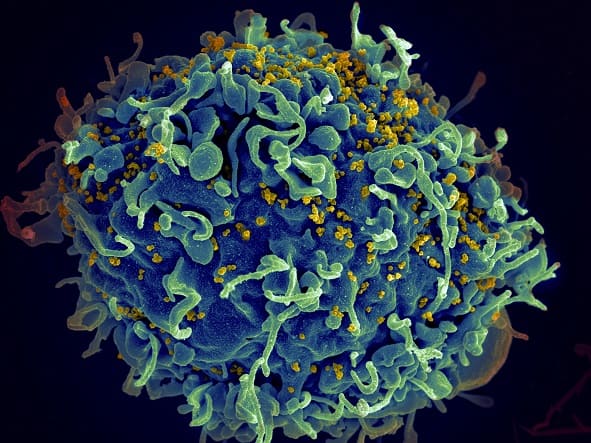
The UNC School of Medicine has released new research which appears to offer a new approach to HIV treatment which negates immune dysfunction associated with combined anti-retroviral therapy (cART).
The effect has been a constant thorn in the side of cART use, slowing T-cell recovery and accelerating HIV progression despite near-complete replication suppression of the virus. The new method focuses on cellular protein persistent type I interferon (IFN-I) signalling to encourage greater immune recovery and viral suppression by reducing the number of active T-cells that the virus can use to replicate.
Researchers injected HIV-infected mice with antibodies designed to target their human IFN receptors to reverse immune hyper-activation, which resulted in lower rates of T-cell exhaustion, reverse HIV-specific T-cell function and HIV reservoir when combined with cART. This could lead the possibility of deactivating chronic immune response, a consistent factor in the progression of the disease even in patients who have seen viral replication successfully suppressed.
“cART stops the growth of the virus but cannot achieve HIV-1 eradication,” said first author Liang Cheng. “The virus rebounds quickly when cART is discontinued because there are reservoirs of HIV-1 that persist during cART; therapy does not work against these reservoirs. The recovered adaptive immune response to HIV can help to eliminate the HIV-1 reservoirs and control the virus rebound after cART discontinuation.”
Lishan Su, UNC’s professor of microbiology and immunology and a member of the UNC Institute for Global Health and Infectious Diseases, explained why these findings are so crucial:
“First, this technique may be of help to those patients whose viral replication is suppressed but who are unable to fully recover immunologically. Second, it may help to control or reduce HIV-1 reservoirs in all cART-treated patients. And this could potentially help cure HIV infection.”
Matt Fellows
Related Content

European Commission approves HIV prevention injection
The European Commission (EC) has granted marketing authorisation for Gilead Science’s Yeytuo (lenacapavir), the first …
HIV vaccine candidate successfully optimised for industrial production
Sumagen Canada Inc, a biotech company based in both South Korea and Canada has partnered …

ViiV Healthcare shares data for two-drug regimen for HIV-1 maintenance therapy
GSK has announced that ViiV Healthcare, a specialist HIV company predominantly owned by GSK with …