Eight in ten survive skin cancer
pharmafile | July 22, 2013 | News story | Research and Development, Sales and Marketing | Yervoy, Zelboraf, melanoma, skin cancer
The vast majority of men and women diagnosed with malignant melanoma are now surviving the disease, according to a new report from Cancer Research UK.
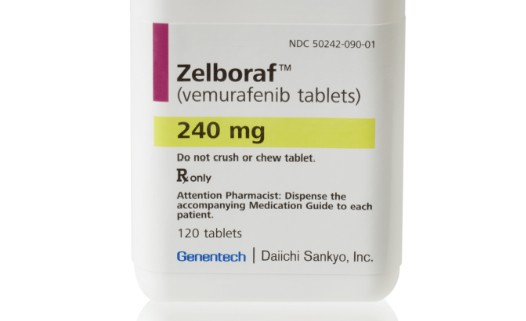
Improvements in drug treatment since the 1970s, when only half of patients beat this most dangerous form of skin cancer, are among the main reasons for the change, the charity – which even namechecks Roche’s Zelboraf (vemurafenib) – says.
Among the key findings are that ten-year survival has now reached 80% in men and 90% in women – a sharp contrast to 38% in men and 58% in women 40 years ago.
Professor Richard Marais, director of Cancer Research UK’s Paterson Institute for Cancer Research at the University of Manchester, said: “Research funded by Cancer Research UK has underpinned the development of new drugs like vemurafenib.”
“Although these drugs do not cure skin cancers, they can give patients with advanced melanoma valuable extra months and show the progress we are making,” he said.
As well as drug development, earlier diagnosis and greater awareness of the condition’s symptoms are also key, the report adds.
Malignant melanoma disproportionately affects young people and is now the second most common cancer in people aged 15-34 in the UK, with 2,000 people dying from the disease annually in this country.
Rates of malignant melanoma have risen faster than any other common cancer, and it is estimated that overall cases of melanoma will rise by 52% by 2030 – the biggest projected increase of any other cancer.
It is thought this rise is down to sunbathing habits and the advent over the last few decades of cheap travel to hotter countries.
“Cancer Research UK research was behind the discovery that faults in a gene called BRAF contribute to over half of all cases of melanoma,” said the charity’s chief executive Harpal Kumar. “Since then, our scientists have led efforts to develop drugs that target this gene.”
Zelboraf does just this, treating patients with the BRAF V600 gene, a gene mutation which is expressed in around 50% of patients with inoperable metastatic melanoma, mutation positive unresectable or metastatic melanoma.
It has been shown to work very quickly against patients’ cancer – although this response does not usually last long, and is often followed by treatment resistance.
Last year it was one of two ‘breakthrough’ skin cancer drugs approved by NICE – the other was Bristol-Myers Squibb’s Yervoy (ipilimumab) – for NHS use to treat advanced melanoma, despite their high cost.
Yervoy costs on average around £20,000 per dose and each patient will receive four doses. Zelboraf costs around £1,750 per week, but the patient access scheme agreed between Roche and the Department of Health will mean the NHS will pay less.
The two rival treatments have shown a broadly similar efficacy, extending the median survival of patients by up to four months compared to existing chemotherapy treatment.
In contrast to Zelboraf, Yervoy is slow to take effect, and only about one in four patients respond, but these responses can be very long-lasting. The brand could emerge as the better treatment for patients in earlier stages of disease, when immunotherapy has a better chance for success.
It is also unlikely to benefit patients who have aggressive disease or a large tumour, so Zelboraf is likely to be more beneficial to these patients. Both drugs can be used as first or second line treatment, but most analysts agree that Yervoy will be favoured as the front line treatment ahead of Zelboraf.
Adam Hill
Related Content

Five facts about UV exposure and sun safety
1We can acclimatise to UV exposure. For example, we’re more likely to burn if there’s …
INDEPENDENT PARSORTIX STUDY HIGHLIGHTS BENEFITS OF COMBINED DNA ANALYSIS IN MELANOMA
Multi-analyte approach has potential to guide personalised cancer care CTC mutation profiles associated with more …

Iovance’s Amtagvi gains FDA accelerated approval for melanoma treatment
Iovance Biotherapeutics has announced that the US Food and Drug Administration (FDA) has approved Amtagvi …