GSK ruling: Another failing, but will the industry learn?
pharmafile | July 4, 2012 | News story | Medical Communications, Sales and Marketing | GSK, fraud, legal, marketing fine
Court papers surrounding GSK’s $3 billion fraud charge make for grim reading, and further damages an industry that already struggles with its reputation.
InPharm reported on the Court’s decision earlier this week – but delving into the Court’s papers one finds some deeply distressing conduct.
In the early 2000s, GlaxoSmithKline undertook a marketing campaign, aimed primarily at doctors and the media, to push its antidepressants Paxil and Wellbutrin, amongst other drugs.
But it turns out that this campaign was designed to increase the off-label use of these drugs for conditions that they were not indicated to treat.
Paxil is licensed in the US for the treatment of major depressive disorder and other mental diseases – but notes written by GSK’s sales reps show that they were pushing the drug for a host of unapproved uses – including for depression in children and adolescents.
A number of these notes have been published by the Court and come from various meetings reps were having with doctors who trying to push Paxil off-label.
One rep discussed a JAACAP article about Paxil’s use in children, which had been submitted by GSK but with its efficacy highly exaggerated, and safety concerns downplayed.
“Left water fountain. Reviewed [article on] Paxil adolescent MDD. Emphasized significance vs. placebo, study size…Had reviewed article. Cited data to help underscore to parents/patients Paxil’s utility here. Also important if liability an issue.”
06/27/01 Milwaukee, WI.
This was a particularly bad practice as the studies GSK had conducted in this patient population showed that it was not effective. Even worse, these studies found that using Paxil in people under 18 could actually be harmful, as it increased the risk of suicidality in children.
GSK continued to downplay these risks during sales calls and promotion events, and it wasn’t until these trial results were uncovered in 2004 that a black box warning was issued by the FDA to all antidepressants in Paxil’s class, including Paxil itself.
Putting patients’ safety at risk in order to increase a sales margin is unacceptable – and is one of many reasons why people do not trust the industry.
The use of bribes
Another reason is the bribing of doctors, something rife in GSK in the early 2000s, as the Court’s findings show.
Many trips were used to push their drugs off-label, and meetings between sales reps and doctors were held at expensive resorts such as the El Conquistador Resort & Golden Spa in Puerto Rico, the Rio Mar Beach Resort in Hawaii, and the Renaissance Esmeralda Resort & Spain Palm Springs in California.
GSK would pay for the doctors’ lodgings, airfare, and a $750 honorarium – they would also pay their speakers $2,500 each.
Following the meetings, GSK would then provide spa treatments, hunting trips, dinners, evening entertainment, golf, deep-sea fishing and, of all things, balloon rides.
Even though it was spending a lot of money of these meetings, it was still getting a decent ROI when the doctors went home and started prescribing these drugs to children with depression.
A memo from GSK’s marketing director in November 2000 showed that prescriptions increased due to these meetings – in fact the drug saw $900,000 additional revenue in 2000, which its marketing director at the time puts down to just one lavish meeting between doctors and reps in the same year.
The doctors involved also have a lot to answer for – but it was GSK who were offering excessive incentives to prescribe a drug for uses that it was not approved for.
The firm was certainly not alone in this type of behaviour and governments across the world are now trying to make such payments more transparent – but this is a serious breach of trust by both pharma and healthcare professionals, and is not far back enough in time for us to be able to say that it’s just past behaviour.
Senior executives named
The Court made direct mention of GSK’s Lafmin Morgan, a man who served for more than 20 years in finance, sales, commercial strategy and marketing roles across multiple therapeutic areas for the firm.
His most recent role at GSK was vice president, commercial model innovations, in which he led GSK’s effort to build a new sales and marketing model for the company’s entire US business – he worked at GSK until July 2010, when he moved to Talecris Biotherapeutics.
In 2001, when much of this off-label marketing was rife, he was GSK’s US marketing director, and is mentioned in one sales representative’s call notes when discussing a doctor’s interest in doing more meetings about off-label uses for Wellbutrin.
“Wellbutrin Speakers Training – Jamaica – Interacted several times. He was interested in meeting someone from Marketing about soft money – I told him to talk to Lafmin Morgan – which he did.”
As mentioned above, Morgan became a major force in US sales operations for the firm until his departure in 2010.
This begs the question: just how much did Morgan know about what was going on, and was it right for him to have such a big hand in the firm’s marketing direction if he was paying out ‘soft money’ (a direct cash payment for a particular project) for off-label drug promotion?
It also seems to go against Sir Andrew Witty’s claim that this behaviour came from the past – ten years’ ago is not a long time, and one of the men seemingly in the middle of it stayed at the company until 2010.
And it gets even more senior that that: Chris Viehbacher, formerly head of US operations at GSK has also been named in the suit – he left the firm in 2008 and went on to become the chief executive of Sanofi. Also mentioned is Jean-Pierre Garnier who was chief executive of the firm between 2000 and 2008, and is now Actelion’s chairman.
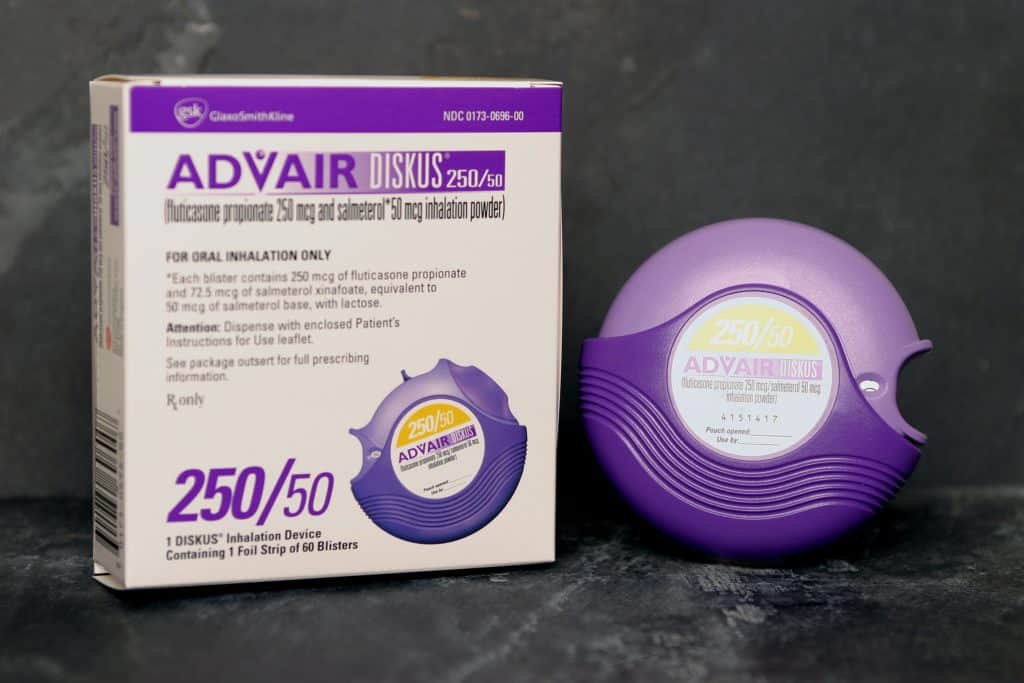
Garnier and Viehbacher are both specifically mentioned in relation to the off-label promotion of Advair/Seretide, GSK’s biggest selling drug, for types of asthma that it was not approved to treat.
In a sales message to GSK executives in 2001 Garnier instructed the entire Advair sales force to promote the drug as necessary for all asthma patients, including first line treatment for patients with mild asthma, which is was not approved for.
And the more the sales reps pushed for Advair for all uses, the more their own bonuses would go up.
On a stage at Las Vegas during the drug’s launch, Garnier took to the stage in a pre-arranged bit and said: “What is the number one reason why you should love to be a GSK sales rep? ADVAIR’S BONUS PLAN! Yeah!”
This seems a different message to what the public and media are told, which is that people work for pharma because of the patients.
Many of the executives involved are not only still around, but are holding senior positions within the industry, making it difficult for the public to see just how they can be named in a serious fraud charge, and yet run pharma firms ethically.
Using the media
As a journalist, looking at GSK’s use of the media is particularly galling. The firm used the PR company Cooney/Waters to publicise results of Wellbutrin, amongst others, in off-label uses.
For Wellbutrin, Cooney/Waters, at the behest of GSK, promoted the drug off-label for sexual dysfunction and weight loss in patients with depressive symptoms, but not depression itself.
The Court’s papers highlight one particular full page spread by The Sun newspaper in 2000, which described Wellbutrin as ‘The pill doctors say will help you to slim’ – even though it was not licensed for weight loss.
The story came with a picture of slim female model in swimwear, a pack shot of Wellbutrin, and a case study from Jan Lucas, who says she lost weight using the drug.
All of this media drive for off-label uses – which GSK called ‘Operation Hustle’ – certainly worked for the firm.
In 2001, a year after it started the media push, GSK noted that Wellbutrin’s “use for treatment of antidepressant induced sexual dysfunction has increased due to product positioning”. Sales increased 34% from 2000 – 2001, far in excess of the market rate growth for antidepressants.
The end of off-label promotion?
GSK is not the first company to be found guilty of this sort of behaviour, with Pfizer, J&J, Abbott and Lilly all being fined billions of dollars for similar marketing practices in the past few years.
The US government is trying to tackle this behaviour head on, and from 2013 the so-called Sunshine Act will make all pharma firms declare any and all payments to doctors.
But this does not preclude pharma from promoting drugs off-label, or use the media to push their agenda.
It will be more difficult – and some newspapers and internet wire services have become more wary of pharma’s ‘miracle drug’ stories, but not all have.
The bottom line is that off-label promotion works as a revenue generator – and has traditionally brought in more than the fines pharma has to pay if they are caught.
This seems to be a behavioural problem within the industry and one it will not lose overnight – perhaps the best example is to follow the Leveson enquiry into UK press standards, and set up public enquiry into the ethics of the industry.
Ben Adams
Related Content

GSK’s Exdensur receives MHRA approval for asthma and rhinosinusitis
GSK’s Exdensur (depemokimab), a twice-yearly biological medicine, has received approval from the UK Medicines and …

Multiple myeloma treatment approved in Japan
GSK’s Blenrep (belantamab mafodotin) combinations have been approved by Japan’s Ministry of Health, Labour and …

US FDA expands Jemperli (dostarlimab-gxly) plus chemotherapy approval to all adult patients with primary advanced or recurrent endometrial cancer as the first and only immuno-oncology-based treatment to show an overall survival benefit
PHILADELPHIA–GSK plc today announced the US Food and Drug Administration (FDA) has approved Jemperli (dostarlimab-gxly) in combination …