Charity attacks Scottish decision on Zytiga
pharmafile | March 14, 2012 | News story | Sales and Marketing | Janssen, NICE, PAS, Prostate Cancer Charity, Zytiga
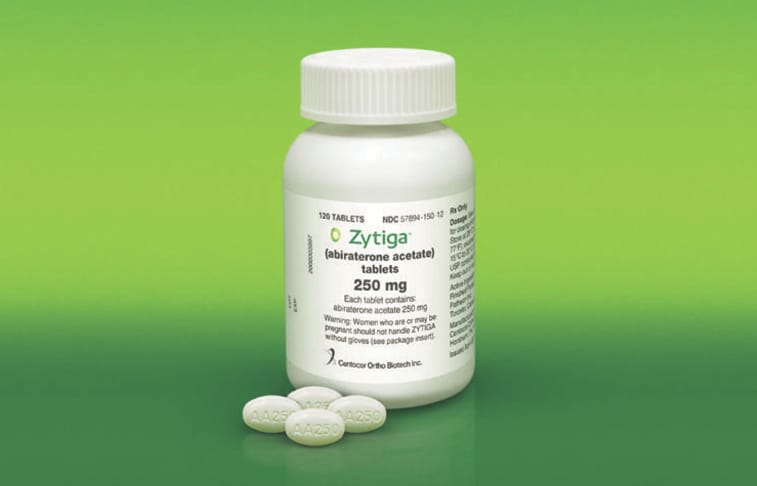
Scotland’s medicines regulator has turned down Janssen’s prostate cancer pill Zytiga, leading to a backlash from charities.
The Scottish Medicines Consortium (SMC) has followed NICE in choosing not to recommend Zytiga (abiraterone acetate), because it did not offer sufficient value for NHS Scotland.
Although the All Wales Medicines Strategy Group approved the drug for use last month, the Welsh authorities’ decision may not stand when NICE offers its final guidance in May.
The Prostate Cancer Charity has criticised the SMC’s decision not to recommend the drug.
Its chief executive Owen Sharp, said: “The SMC’s decision to deny abiraterone on the NHS in Scotland is a cruel swipe to hundreds of men dying of prostate cancer.
“The SMC’s decision to deny this breakthrough drug to men across the country must be overturned as a matter of urgency. This decision sends yet another clear message that investing in treatments for men and prostate cancer is simply not a priority for the NHS in Scotland.”
Sharp said that those in charge of making these decisions – including Janssen – were focused only on the price of a drug, rather than its value or the needs of men.
He added: “We have some hope that NICE may reverse its decision on review, a luxury not afforded to Scottish men. We urge the SMC to urgently reconsider their ruling on this lifeline drug.”
The opinion of the SMC and NICE is that Zytiga’s ability to increase survival by more than three months compared to placebo, does not outweigh its price tag of £35,160 per year.
The manufacturer produced a patient access scheme (PAS), but the Scottish regulator said Janssen “did not present a sufficiently robust economic analysis to gain acceptance by SMC”.
The drug is currently approved in Europe as a second line treatment with steroid prednisone for metastatic castration-resistant prostate cancer (mCRPC), in men whose disease has progressed after chemotherapy.
Janssen estimated that 115 patients would be eligible in Scotland during the first year, with 205 patients by year five: without the PAS, SMC said the regime would have a net cost of £2.54 million in year one, rising to £4.52 million in year five.
While accepting that it was clinically effective, SMC rejected Zytiga on the basis of its high cost per QALY gained versus prednisolone alone: £52,230 with the PAS.
The SMC also had a problem with incremental cost effectiveness ratios (ICERs) plus what it called ‘additional upwards uncertainty’.
Estimating Zytiga’s future effectiveness versus one of the current lower price alternatives – chemotherapy agent mitoxantrone – SMC’s calculations suggested there was still too much doubt over Janssen’s drug.
“The main issue regarding the cost effectiveness of abiraterone was the high ICERs,” the SMC said in the notes on its decision.
Despite this setback, Janssen still has high hopes for Zytiga: earlier this month, early results from a Phase III study suggested that, in addition to its current indication, the drug could also increase the chances of survival for patients who have not had chemotherapy.
Adam Hill
Related Content

NICE recommends daratumumab quadruplet for newly diagnosed multiple myeloma
NICE has published final draft guidance recommending daratumumab with bortezomib, lenalidomide and dexamethasone (D-VRd) for …

NICE recommends allergy immunotherapy tablets for younger children
NICE has recommended two sublingual immunotherapy tablets for children with moderate to severe allergic rhinitis …

NICE backs atogepant for acute migraine treatment
NICE has issued Final Draft Guidance recommending AbbVie’s AQUIPTA (atogepant) as an option for the …